
Introduction
Fleas and ticks are common external parasites that can make dogs uncomfortable and may sometimes cause more serious health problems. A dog with fleas may scratch, bite, or lick its skin frequently, while ticks can attach to the skin and remain unnoticed if the coat is thick.

Protecting dogs from these parasites is an important part of regular pet care. There are many flea and tick products available, including topical treatments, collars, and shampoos. The right choice depends on the dog’s age, weight, health, lifestyle, and the advice of a veterinarian.
Why Flea and Tick Prevention Matters
Fleas can reproduce quickly, which means a small problem can become difficult to control if it is ignored. Repeated flea bites can cause intense itching, and some dogs are particularly sensitive to flea saliva. Heavy flea infestations can also be especially concerning for puppies and smaller dogs.
Ticks are another concern because they attach to animals and feed on blood. Some ticks can transmit diseases to dogs. Regular prevention and checking your dog after outdoor activities can help reduce the chance of an infestation.
Signs Your Dog May Have Fleas or Ticks
Fleas are small and can sometimes be difficult to spot, particularly in dogs with dark or thick coats. Ticks may also hide around areas such as the ears, neck, between the toes, or under the collar.
Frequent Scratching: Your dog may scratch or bite certain areas of the body more often than usual.
Small Dark Specks: Flea dirt may appear as tiny dark particles in the coat or around the skin.
Visible Ticks: A tick may look like a small bump attached firmly to the skin.
Red Skin: Repeated bites and scratching can cause irritated or damaged areas.
Restlessness: A dog dealing with parasites may appear uncomfortable and have difficulty settling down.
Different Types of Flea and Tick Treatments
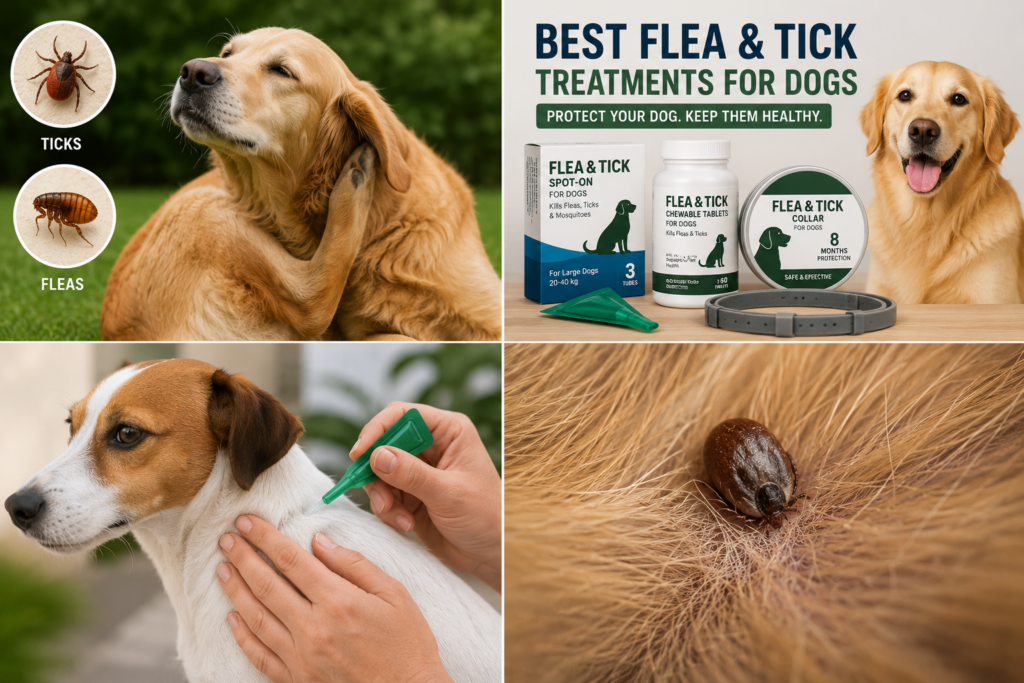
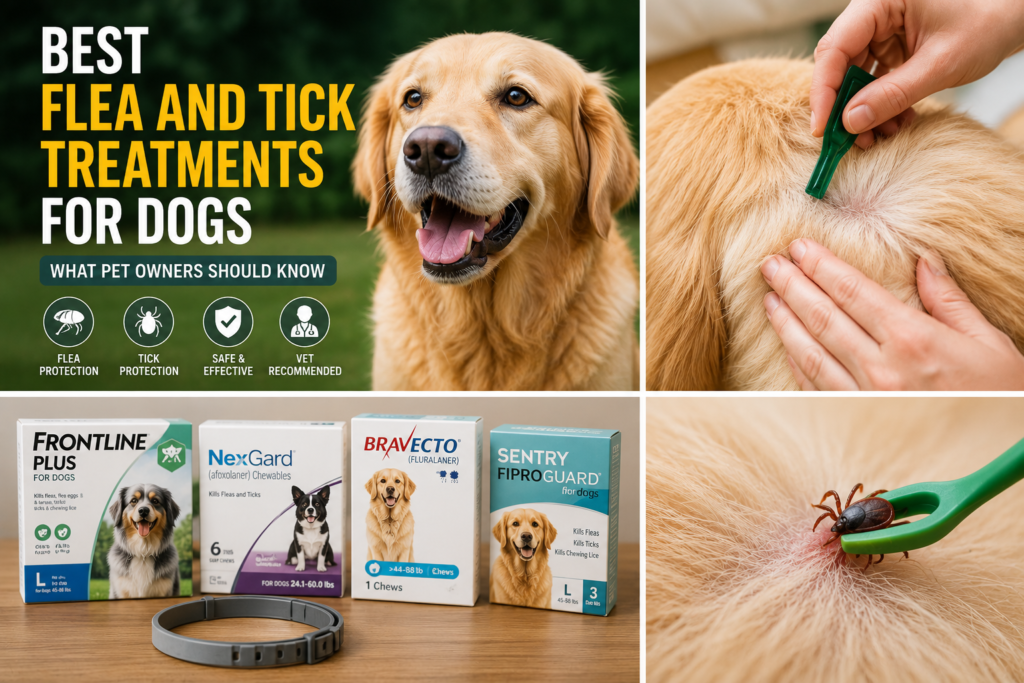
Flea and tick prevention products come in several forms. Topical treatments are usually applied directly to the dog’s skin, while oral products are given by mouth. Some dogs may also use specially designed parasite-control collars.
Each type has different instructions and coverage. Some products target fleas, some target ticks, and others are designed to protect against multiple parasites. Pet owners should read the label carefully and choose products specifically intended for dogs.
Topical Flea and Tick Treatments
Topical treatments are applied to specific areas of a dog’s skin, usually according to the instructions provided with the product. They can be convenient for owners who prefer not to give medication by mouth.
The effectiveness of a topical product depends on using it correctly and according to its schedule. Pet owners should avoid applying products intended for another animal species and should follow age and weight restrictions carefully.
Oral Flea and Tick Treatments
Oral flea and tick products are designed to be given by mouth. Some are available as chewable products that can be easier to administer to dogs that dislike topical treatments.
The duration of protection varies between products, so owners should follow the specific instructions rather than assuming every product works for the same length of time. A veterinarian can help determine whether an oral option is suitable for a particular dog.
Flea and Tick Collars
Parasite-control collars are another option for some dogs. These collars are designed to provide ongoing protection when used according to the manufacturer’s instructions.
A collar should fit correctly without being excessively tight or loose. Pet owners should also monitor the skin around the collar for irritation and follow all safety instructions included with the product.
How to Choose the Right Treatment
Choosing a flea and tick treatment should be based on the individual dog rather than simply selecting the most popular product. A puppy, senior dog, small breed, or dog with an existing health condition may have different requirements.
Your dog’s lifestyle also matters. A dog that spends a lot of time outdoors may have different parasite exposure than a dog that rarely leaves the home. Your veterinarian can help you choose an appropriate prevention strategy.
Important Safety Tips
Flea and tick products should always be used exactly as directed. Using more than the recommended amount does not provide better protection and may increase the risk of an unwanted reaction.
Check the Weight Range: Use a product designed for your dog’s current weight and follow the package instructions.
Use Dog-Specific Products: Never assume a flea or tick product made for another animal is safe for dogs.
Follow the Schedule: Apply or give the product at the recommended intervals to maintain protection.
Watch for Reactions: Contact a veterinarian if your dog develops unusual symptoms after receiving a parasite treatment.
Treating the Home During a Flea Problem
When a dog has fleas, treating the pet alone may not completely solve the problem. Flea eggs and immature stages can exist in the environment, including bedding, furniture, and other areas where the dog spends time.
Regular cleaning can help reduce the number of fleas in the environment. Wash suitable bedding and vacuum areas where your dog frequently rests. If an infestation is severe, professional pest-control advice may also be necessary.
When Should You Contact a Veterinarian?
Contact a veterinarian if your dog has a heavy parasite infestation, severe skin irritation, unusual weakness, or other symptoms that concern you. Puppies, elderly dogs, and dogs with existing health conditions may require particular attention.
You should also speak with a veterinarian before starting a new flea or tick product if your dog takes other medications or has previously reacted to parasite treatments. Professional advice can help reduce the risk of choosing an unsuitable product.
People Also Ask (PAA)
What is the best flea and tick treatment for dogs?
The best option depends on the dog’s age, weight, health, lifestyle, and parasite exposure. A veterinarian can recommend a suitable product for the individual dog.
How often should dogs receive flea and tick prevention?
The schedule depends on the specific product. Some treatments are given monthly, while others may provide protection for a different period. Always follow the product’s instructions.
Can indoor dogs get fleas?
Yes. Fleas can enter homes through other animals, people, or the environment. Even dogs that spend most of their time indoors can be exposed.
How do I know if my dog has ticks?
Run your hands over your dog’s body and check areas such as the ears, neck, legs, paws, and around the collar. A tick may feel like a small bump attached to the skin.
Can fleas make dogs sick?
Fleas can cause intense itching and skin irritation. Heavy infestations can be more serious, particularly for young or small dogs.
Should I treat my house if my dog has fleas?
Environmental control may be necessary because flea life stages can remain in areas where a dog lives. Cleaning and veterinary or pest-control guidance can help address an infestation.
Frequently Asked Questions
1. Can puppies use flea and tick medicine?
Some products are specifically approved for puppies of certain ages and weights, while others are not. Always check the product requirements and ask a veterinarian before treating a young puppy.
2. Can I use a cat flea treatment on my dog?
You should not assume that a product made for cats is appropriate for dogs. Different species can have different safety requirements, so use only products specifically labeled for your dog.
3. Do flea shampoos provide long-term protection?
A flea shampoo may help remove or kill parasites during bathing, but it may not provide the same lasting protection as a dedicated preventive product. Follow veterinary advice for ongoing prevention.
4. Should dogs receive flea and tick prevention all year?
Parasite exposure can vary by location and season, but fleas can survive in suitable indoor environments. Ask your veterinarian about the prevention schedule appropriate for your area and dog.
5. What should I do if my dog reacts to a flea treatment?
Stop and seek veterinary advice if your dog develops concerning symptoms after a product is used. Keep the product packaging available so the veterinarian can identify exactly what was given or applied.
Conclusion
Flea and tick prevention is an important part of keeping dogs comfortable and protecting their overall health. Different options are available, including topical treatments, collars, and other parasite-control methods.
The right treatment depends on the individual dog and should always be used according to its instructions. Regular prevention, routine checks, good household hygiene, and veterinary guidance can help keep flea and tick problems under control and give your dog a safer and more comfortable life.