
Introduction
Vomiting is something many dog owners may notice at some point in their pet’s life. Sometimes a dog may vomit after eating too quickly or swallowing something that does not agree with its stomach. In other situations, vomiting can be connected to an infection, digestive problem, medication, toxin, or another health condition.
A single mild episode does not always mean that a dog has a serious illness. However, repeated vomiting, severe symptoms, or changes in your dog’s behavior should not be ignored. Understanding the possible causes and knowing when veterinary care is needed can help owners respond appropriately.
What Is Vomiting in Dogs?
Vomiting is the active expulsion of stomach contents through the mouth. It is different from simple regurgitation, which usually happens with less effort and may involve food coming back up shortly after eating.
The appearance of vomit can vary depending on what the dog has eaten and how long the material has been in the stomach. While owners may notice food, liquid, or foam, the appearance alone cannot reliably determine the cause of the problem.
Common Causes of Vomiting
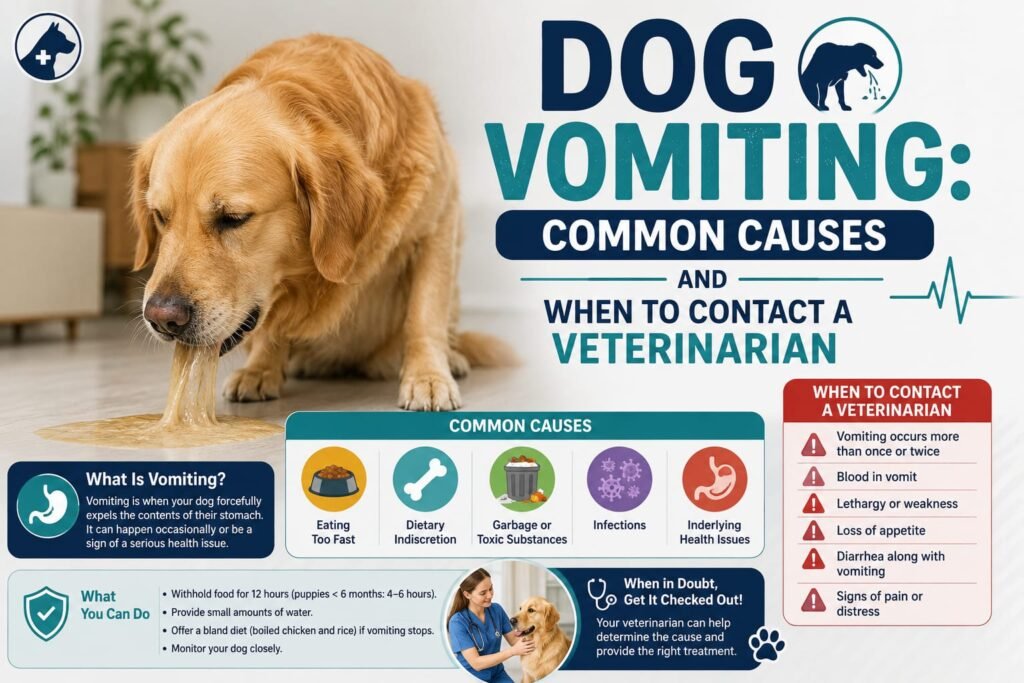
Dogs can vomit for many different reasons. Eating too quickly, consuming unfamiliar food , or getting into garbage can cause temporary stomach upset.
Other possible causes include intestinal parasites, infections, dietary intolerance, foreign objects, certain medications, and underlying health conditions. Because the causes are so varied, persistent vomiting should be evaluated rather than treated as a minor digestive issue.
Eating Something Unusual
Dogs are naturally curious and may eat things they should not. Table scraps, spoiled food, garbage, toys, or other objects can sometimes lead to vomiting.
If you know or suspect that your dog swallowed a potentially dangerous substance or object, contact a veterinarian promptly. Do not wait for additional symptoms before asking for professional advice.
Food Changes and Digestive Upset
A sudden change in diet can sometimes upset a dog’s digestive system. Introducing a new food too quickly may lead to vomiting, loose stools, or reduced appetite in some dogs.
When changing your dog’s regular food, a gradual transition may help the digestive system adjust. If vomiting continues despite returning to a familiar diet, veterinary advice may be appropriate.
Vomiting Caused by Parasites
Certain intestinal parasites can contribute to digestive problems in dogs. Puppies can be particularly vulnerable to some parasites, although adult dogs can also become infected.
Parasite prevention and appropriate veterinary testing can help identify and manage these problems. Do not assume that every episode of vomiting is caused by worms, because many other conditions can produce similar symptoms.
Medications and Toxic Substances
Some medications can cause digestive side effects in certain dogs. Accidental exposure to inappropriate medicines, chemicals, or other toxic substances can be much more serious.
Never Give Human Medicine: Do not give your dog human medication unless a veterinarian specifically tells you to do so.
Keep Dangerous Products Away: Store medicines, cleaning products, chemicals, and other potentially harmful substances where your dog cannot reach them.
Act Quickly After Possible Poisoning: Contact a veterinarian immediately if you believe your dog has swallowed something potentially toxic.
What to Do When Your Dog Vomits
If your dog vomits once but otherwise appears normal, observe it closely and monitor for additional symptoms. Make sure the dog has access to appropriate water, but avoid making sudden changes to its diet or giving medication without veterinary advice.
Do not force your dog to eat or drink large amounts at once. If vomiting continues or your dog becomes weak, uncomfortable, or unusually quiet, contact your veterinarian.
Signs That May Accompany Vomiting
Vomiting can occur alongside other symptoms that provide useful information about your dog’s condition. Owners should pay attention to changes in appetite, energy, bowel movements, and general behavior.
Loss of Appetite: Refusing food can be concerning when it continues or occurs with other symptoms.
Diarrhea: Vomiting combined with significant diarrhea may increase the risk of dehydration.
Weakness: Unusual tiredness or difficulty standing can indicate that veterinary attention is needed.
Abdominal Discomfort: A dog that repeatedly changes position, appears uncomfortable, or reacts unusually when its abdomen is touched may require evaluation.
When Vomiting Requires Veterinary Attention
Repeated vomiting should not be ignored, particularly when it occurs several times in a short period or continues over time. Puppies, senior dogs, and dogs with existing health problems may need especially careful monitoring.
Seek veterinary advice if vomiting is accompanied by blood, significant abdominal pain, breathing problems, collapse, or other serious changes. If you suspect your dog swallowed a foreign object or toxic substance, contact a veterinarian promptly.
Preventing Some Causes of Vomiting
Although not every cause can be prevented, owners can reduce certain risks by keeping harmful substances out of reach and monitoring what their dogs eat. Regular parasite prevention and appropriate veterinary care can also help support digestive health.
Avoid giving large amounts of unfamiliar food or frequent table scraps. Keep small toys, household objects, medications, and chemicals away from dogs that tend to chew or swallow things.
People Also Ask (PAA)
Why is my dog vomiting?
Dogs can vomit because of dietary changes, eating something unusual, parasites, infections, medications, toxins, foreign objects, or other health problems. The cause cannot always be determined from vomiting alone.
When should I worry about my dog vomiting?
Repeated vomiting, blood in the vomit, severe weakness, abdominal pain, collapse, or suspected poisoning or foreign-object ingestion are reasons to contact a veterinarian promptly.
Can eating too fast make a dog vomit?
Eating too quickly can contribute to digestive upset in some dogs. If your dog frequently becomes sick after eating, discuss the pattern with your veterinarian.
What should I do after my dog vomits?
Monitor your dog closely for additional vomiting and other symptoms. Avoid giving medications without veterinary guidance, and contact a veterinarian if the problem continues or your dog appears unwell.
Can worms cause vomiting in dogs?
Certain intestinal parasites can contribute to digestive symptoms, including vomiting. However, vomiting has many possible causes, so testing may be needed to identify the problem.
Should I give my dog medicine for vomiting?
Do not give medication unless it has been recommended or prescribed by a veterinarian. The appropriate treatment depends on why the dog is vomiting.
Can vomiting cause dehydration?
Repeated vomiting can contribute to fluid loss and dehydration. Dogs that cannot keep water down or show signs of weakness should receive veterinary advice.
Frequently Asked Questions
1. Is one episode of vomiting dangerous for a dog?
A single episode may not always indicate a serious problem if the dog otherwise appears normal. However, owners should monitor closely for additional symptoms.
2. Can I feed my dog after it vomits?
Feeding decisions depend on the dog’s condition and the possible cause of vomiting. If vomiting continues or the dog seems unwell, contact a veterinarian for specific guidance.
3. Why is my dog vomiting yellow liquid?
Yellow liquid can contain bile, which may appear when the stomach is relatively empty. However, repeated vomiting should still be discussed with a veterinarian.
4. What if my dog vomits blood?
Blood in vomit can be a sign of a serious problem and should receive prompt veterinary attention.
5. Can puppies vomit because of worms?
Some parasites can cause digestive problems in puppies, but vomiting can have many causes. A veterinarian can recommend appropriate testing and treatment.
Conclusion
Vomiting in dogs can result from something as simple as dietary upset or from a more serious medical problem. Paying attention to how often your dog vomits and whether other symptoms appear can help you decide when professional advice is needed.
Owners should avoid giving human medication or attempting to treat an unknown cause at home. If vomiting is repeated, severe, accompanied by concerning symptoms, or linked to possible poisoning or foreign -object ingestion, contacting a veterinarian promptly is the safest choice.