
Introduction
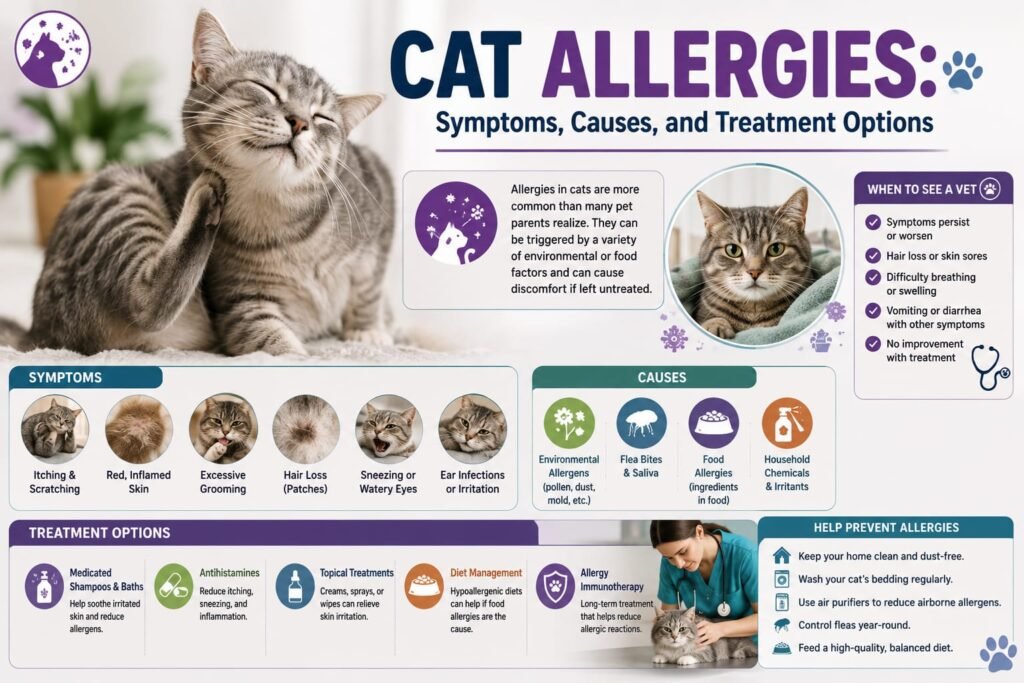
Cats can develop allergies when their immune system reacts strongly to substances that are normally harmless. These reactions may affect the skin, digestive system, eyes, or breathing . Some cats experience occasional symptoms, while others may deal with recurring problems that require veterinary attention.
Cat allergies can be caused by different things, including certain foods, environmental substances, flea bites, or contact with irritating materials. Because several conditions can produce similar symptoms, identifying the actual cause is an important part of helping an affected cat.
What Are Allergies in Cats?
An allergy occurs when a cat’s immune system reacts abnormally to a particular substance. The substance that triggers the reaction is called an allergen.
The reaction can vary from one cat to another. Some cats mainly develop itchy skin, while others may experience digestive problems, sneezing, watery eyes, or other changes. A veterinarian can help determine whether allergies are responsible for these symptoms.
Common Signs of Cat Allergies
Allergy symptoms are not always easy to recognize because cats may hide discomfort. Changes in grooming habits or skin condition can sometimes be the first noticeable signs.
Excessive Scratching: A cat may scratch certain areas repeatedly because of skin irritation.
Frequent Licking: Some cats lick their body more often when their skin feels itchy or uncomfortable.
Red or Irritated Skin: Areas of the skin may become inflamed or develop small bumps.
Hair Loss: Repeated scratching and licking can cause patches of missing fur.
Sneezing or Watery Eyes: Environmental reactions may sometimes affect the eyes or respiratory system.
Common Causes of Cat Allergies
Cats can react to several types of allergens. Flea bites are one possible trigger, while environmental substances such as dust, pollen, or certain molds may affect some cats.
Food ingredients can also cause allergic reactions in some animals. Because symptoms can look similar across different types of allergies, owners should avoid assuming the cause without proper evaluation.
Flea Allergy in Cats
Flea-related allergies can cause intense itching in some cats. Interestingly, a cat does not necessarily need to have a large number of visible fleas for a reaction to occur.
A cat may scratch, lick, or chew certain areas of its body after being bitten. Effective flea control is therefore an important part of managing cats that are sensitive to flea bites.
Food Allergies in Cats
Food allergies can occur when a cat reacts to a particular ingredient in its diet. Symptoms may include persistent itching or digestive problems, although these signs can also have many other causes.
Identifying a food allergy usually requires a carefully managed dietary approach under veterinary guidance. Randomly changing foods multiple times can make it harder to determine which ingredient may be responsible.
Environmental Allergies
Cats may react to substances present in their surroundings. Possible environmental triggers can include pollen, dust, certain molds, or other materials.
Environmental allergies can sometimes be difficult to manage because completely removing the trigger may not be possible. A veterinarian can help determine whether the symptoms are consistent with an environmental allergy or another condition.
How Veterinarians Diagnose Allergies
There is no single symptom that proves a cat has an allergy. A veterinarian may consider the cat’s medical history, diet, flea-control routine, skin condition, and pattern of symptoms.
The veterinarian may also need to rule out other problems that can cause itching, hair loss, skin irritation, or digestive changes. Finding the underlying cause is important because treatment depends on what is actually affecting the cat.
Treatment Options for Cat Allergies
Treatment depends on the type and severity of the allergy. Veterinary care may focus on reducing exposure to the suspected trigger and managing the symptoms affecting the cat.
Flea Control: Appropriate flea prevention can be important when flea allergy is suspected.
Dietary Management: A veterinarian may recommend a controlled diet when a food-related allergy is being investigated.
Skin Support: Certain veterinary treatments may be recommended to help manage itching or irritated skin.
Environmental Management: Reducing exposure to known environmental triggers may help some cats.
How Owners Can Support an Allergic Cat
Owners can help by keeping track of when symptoms appear and what may have happened before they started. Recording changes in food, flea prevention, household products, and outdoor exposure can provide useful information for a veterinarian.
Avoid using human creams, allergy medicines, or other treatments unless a veterinarian specifically recommends them for your cat. Cats can react differently to medications, and some products intended for people may be unsafe for pets.
When Should You Contact a Veterinarian?
Contact a veterinarian if your cat has persistent itching, repeated hair loss, damaged skin, recurring ear problems, or ongoing digestive symptoms. These signs can have several possible causes and may require professional evaluation.
Seek prompt veterinary attention if your cat develops significant swelling, difficulty breathing, severe weakness, or another sudden and serious reaction. Rapid changes can require immediate assessment.
People Also Ask (PAA)
What are the most common signs of allergies in cats?
Common signs can include excessive scratching, licking, hair loss, irritated skin, sneezing, watery eyes, and sometimes digestive problems.
What causes allergies in cats?
Possible triggers include flea bites, certain food ingredients, environmental allergens, and contact with irritating substances.
Can cats be allergic to their food?
Yes. Some cats can develop reactions to particular food ingredients, although similar symptoms can also be caused by other conditions.
How do I know if my cat has a flea allergy?
Flea allergy may cause intense itching, licking, scratching, and skin irritation. A veterinarian can help determine whether fleas or another problem is responsible.
Can indoor cats have allergies?
Yes. Indoor cats can still encounter potential allergens such as dust, household materials, cleaning products, or other environmental substances.
Can cat allergies go away?
Some allergy problems can be managed effectively when the trigger is identified and exposure is reduced. The long-term outlook depends on the specific type of allergy.
Should I give my cat human allergy medicine?
Do not give human allergy medicine to your cat unless a veterinarian specifically recommends it. The appropriate medication and amount depend on the individual animal.
Frequently Asked Questions
1. Can allergies cause hair loss in cats?
Yes. Excessive licking and scratching caused by itchy skin can lead to broken or missing fur.
2. Can allergies make a cat sneeze?
Some environmental reactions may be associated with sneezing or watery eyes. However, respiratory symptoms can have other causes, so persistent signs should be evaluated.
3. Can changing cat food help with allergies?
A controlled dietary trial may be recommended by a veterinarian when a food allergy is suspected. Simply switching between foods without a plan may not identify the trigger.
4. How can I help my cat with itchy skin?
The best approach depends on the cause. Veterinary evaluation can help determine whether fleas, food, environmental factors, parasites, or another condition is responsible.
5. Are cat allergies dangerous?
Many allergy cases can be managed, but severe reactions or significant skin problems require veterinary attention. Sudden breathing difficulty or major swelling should be treated as an urgent problem.
Conclusion
Cat allergies can cause a variety of symptoms, including itching, excessive grooming, hair loss, skin irritation, sneezing, and digestive changes. food ingredients, environmental substances, and other triggers can all play a role.
The most effective approach is to identify the underlying cause rather than treating symptoms randomly. With proper veterinary evaluation, appropriate flea control, dietary management when needed, and suitable treatment, many allergic cats can receive better long-term comfort and support.