
Introduction
Dogs can develop allergies for many different reasons, and the signs are not always easy to understand. A dog that constantly scratches, licks its paws, or develops repeated skin irritation may be reacting to something in its environment, or surroundings.
Allergies can affect dogs of different ages and breeds. Some reactions may be mild and occasional, while others can continue for weeks or return throughout the year. Understanding the possible causes and recognizing unusual changes early can help pet owners decide when professional veterinary care is needed.
What Causes Allergies in Dogs?
A dog’s immune system can react strongly to substances that are normally harmless. These substances are called allergens. Depending on the individual dog, an allergen may come from the environment, food, insects, or another source.
Environmental allergens can include pollen, dust mites, mold, and other particles found around the home or outdoors. Flea bites can also trigger intense itching in some dogs. Food-related reactions are another possibility, although not every case of itching or digestive trouble is caused by a food allergy.
Common Symptoms of Dog Allergies
Allergic reactions can appear in several different ways. Skin-related symptoms are particularly common, but some dogs may also develop digestive or respiratory changes depending on the type of reaction.
Frequent Scratching: Your dog may scratch its body repeatedly or seem unable to get comfortable.
Paw Licking: Constant licking or chewing of the paws can sometimes be associated with irritation or allergies.
Red or Irritated Skin: Areas of the skin may become red, inflamed, or unusually sensitive.
Repeated Ear Problems: Some dogs with allergies experience recurring ear irritation or infections.
Digestive Changes: Certain food-related reactions may be accompanied by vomiting, diarrhea, or other digestive problems.
Environmental Allergies in Dogs
Environmental allergies are often connected with substances a dog encounters during everyday life. Seasonal changes can make certain allergens more noticeable, particularly when outdoor plants release pollen. Some dogs may experience symptoms mainly during particular times of the year, while others may have problems throughout the year.
Indoor environments can also contain potential allergens. Dust, mold, and dust mites may contribute to irritation in sensitive dogs. Because many different conditions can produce similar symptoms, a veterinarian may need to investigate the underlying cause instead of assuming that every skin problem is an allergy.
Food Allergies in Dogs
Food allergies are different from simple food intolerance, and the two should not automatically be treated as the same problem. A dog may react to a particular ingredient, but determining the cause can require careful evaluation.
Commonly discussed food allergens for dogs include certain animal proteins and other ingredients found in their diet. If a veterinarian suspects a food allergy, they may recommend a controlled dietary trial rather than repeatedly changing foods without a clear plan.
Flea Allergy Dermatitis
Flea bites can cause a particularly strong reaction in some dogs. A dog with flea allergy dermatitis may become extremely itchy even when only a small number of fleas are present. Scratching can damage the skin and create opportunities for secondary infections.
The lower back, tail area, and hindquarters may become particularly irritated, although affected areas can vary. Effective flea control is an important part of managing this type of allergy, and treatment should be selected with guidance appropriate for the dog’s age, weight, and health.
How Veterinarians Diagnose Dog Allergies
There is no single test that can identify every type of dog allergy. A veterinarian usually considers the dog’s symptoms, medical history, diet, environment, parasite prevention, and previous treatments when trying to identify the likely cause.
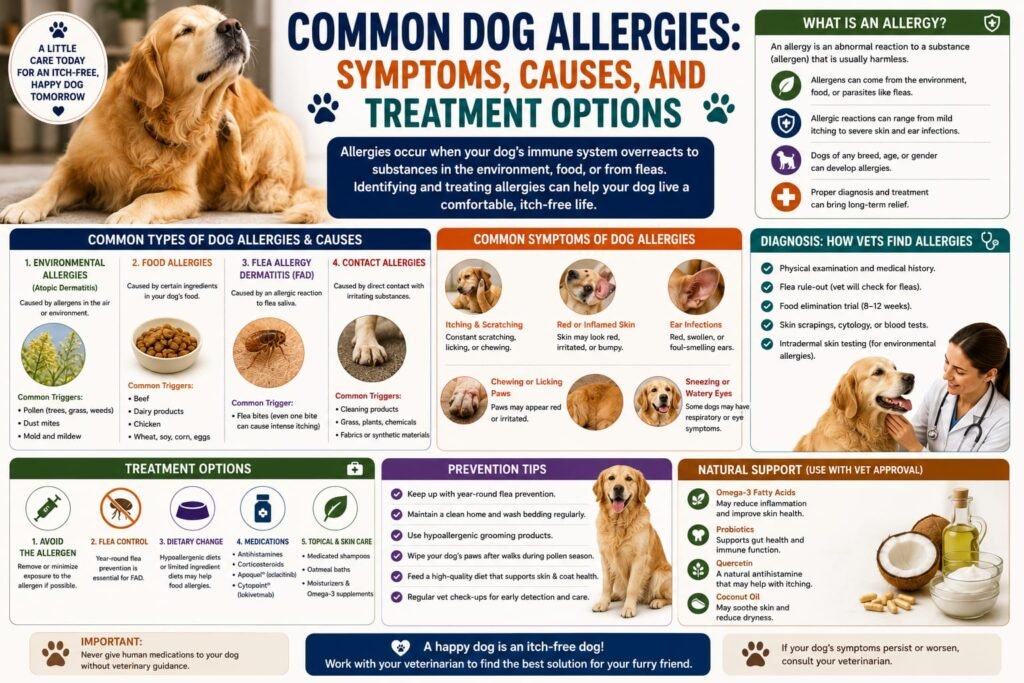
The veterinarian may also need to rule out other conditions that can look similar to allergies. Skin infections, parasites, hormonal problems, and other disorders can cause itching or irritation, so identifying the correct cause is important before starting long-term treatment.
Treatment Options for Dogs With Allergies
Treatment depends on what is causing the reaction and how severe the symptoms are. Some dogs may need better parasite control, while others may require dietary changes or veterinary treatment for skin and ear problems.
Veterinarians may recommend medications or other treatments to control itching and inflammation when appropriate. The exact option depends on the individual dog, so pet owners should not give human allergy medicine or other medication without first discussing it with a veterinarian.
Helping Your Dog at Home
Home care can support a dog’s comfort, but it should complement professional treatment rather than replace it. Keeping bedding clean and reducing exposure to known irritants may be useful for some dogs. Regular grooming can also help remove dirt and environmental particles from the coat.
If your veterinarian recommends a dietary change, follow the plan carefully and avoid giving additional foods or treats that could interfere with the evaluation. Keeping a simple record of symptoms can also help you notice whether itching or irritation changes with seasons, foods, or environmental exposure.
Important Allergy Care Tips
Pet owners can make allergy management easier by paying attention to patterns instead of focusing only on individual episodes. If symptoms repeatedly appear after outdoor activity, a change in food, or exposure to a particular environment, this information may be useful during a veterinary visit.
Keep Flea Prevention Consistent: Follow a veterinarian-recommended flea prevention routine throughout the year when appropriate.
Watch for Skin Damage: Frequent scratching can lead to wounds, hair loss, or secondary infections.
Track Recurring Symptoms: Note when itching, ear problems, digestive issues, or other signs appear and how long they last.
When Should You Contact a Veterinarian?
A veterinarian should evaluate persistent itching, recurring ear problems, significant skin irritation, hair loss, or digestive symptoms that do not resolve. Waiting too long can allow scratching and inflammation to cause additional skin damage.
Emergency veterinary care may be necessary if a dog develops facial swelling, severe breathing difficulty, collapse, or another sudden and serious reaction. These symptoms can indicate a severe allergic response and should be treated as urgent.
People Also Ask (PAA)
What are the most common allergies in dogs?
Environmental allergies, flea-related allergies, and reactions to certain food ingredients are among the allergy problems that dogs can experience. Similar symptoms can also be caused by other health conditions.
How can I tell if my dog has an allergy?
Frequent scratching, paw licking, skin irritation, recurring ear problems, and some digestive changes may be signs of an allergy. A veterinarian can help determine whether an allergy is actually responsible.
What is the best treatment for dog allergies?
The right treatment depends on the cause of the allergy. A veterinarian may recommend parasite control, dietary management, medications, or other care depending on the dog’s individual condition.
Can dog allergies go away on their own?
Some mild symptoms may improve when a dog is no longer exposed to a particular trigger, but recurring or severe symptoms should be evaluated by a veterinarian rather than left untreated.
What foods commonly cause allergies in dogs?
Dogs can react to different food ingredients, and there is no single food that causes allergies in every dog. A veterinarian may use a controlled diet trial to identify a suspected food trigger.
Can fleas cause severe itching in dogs?
Yes. Dogs that are sensitive to flea saliva can develop intense itching after flea bites. Consistent flea prevention is an important part of managing flea-related allergies.
When should I take my dog to the vet for allergies?
Contact a veterinarian when itching continues, skin becomes damaged, ear problems keep returning, or symptoms are getting worse. Sudden facial swelling, breathing difficulty, or collapse requires urgent veterinary attention.
Frequently Asked Questions
1. What are the most common signs of allergies in dogs?
Frequent scratching, paw licking, irritated skin, recurring ear problems, and certain digestive symptoms can occur with allergies. These signs can also have other causes.
2. Can dogs develop allergies to their food?
Yes, some dogs can develop reactions to specific food ingredients. A veterinarian may recommend a carefully controlled diet trial to investigate a suspected food allergy.
3. Can fleas cause allergies in dogs?
Yes. Some dogs are highly sensitive to flea saliva, and even a small number of flea bites can cause intense itching and skin irritation.
4. Can I give my dog human allergy medicine?
You should not give your dog human medication without veterinary guidance. The appropriate medicine and amount can depend on the dog’s size, health, other medications, and the cause of the symptoms.
5. Will dog allergies go away permanently?
That depends on the underlying cause. Some allergies can be managed by reducing exposure to the trigger, while others may require ongoing care to control recurring symptoms.
Conclusion
Dog allergies can be frustrating for both pets and their owners, especially when itching or irritation keeps returning. allergens, food-related reactions, and flea sensitivity are among the possible causes, but similar symptoms can also come from other health conditions.
The most effective approach is to identify the underlying problem with help from a veterinarian and then follow an appropriate treatment and prevention plan. By paying attention to recurring symptoms, maintaining parasite prevention, following recommended dietary changes, and seeking professional help when needed, pet owners can provide better long-term care for dogs affected by allergies.