
Introduction
Ear problems are fairly common in dogs and can cause noticeable discomfort when they become irritated or infected. A dog with an ear problem may shake its head frequently, scratch around the ear, or rub its head against furniture or the floor.
Some ear infections develop quickly, while others can return repeatedly. Dogs with floppy ears, allergies, excessive moisture in the ears, or certain skin conditions may be more likely to experience ear problems. Recognizing the early signs can help pet owners seek appropriate veterinary care before the condition becomes more serious.
What Causes Ear Infections in Dogs?
Dog ear infections can have several possible causes. Bacteria and yeast are common contributors, but parasites, allergies, moisture, foreign objects, and underlying skin problems can also play a role.
The shape of a dog’s ear can sometimes make the problem worse. Ears that are narrow or covered by heavy hair may have less airflow, allowing moisture and debris to remain inside. However, an infection should not be diagnosed based on appearance alone because different ear conditions can produce similar symptoms.
Common Signs of a Dog Ear Infection
Dogs often show changes in their behavior when their ears are uncomfortable. Some signs are easy to notice, while others may only become apparent when the condition has progressed.
Frequent Head Shaking: Your dog may repeatedly shake its head throughout the day.
Ear Scratching: Your dog may scratch one or both ears more often than normal.
Unpleasant Odor: A strong or unusual smell coming from the ear can be a warning sign.
Redness or Swelling: The inside of the ear may look irritated or swollen.
Ear Discharge: Wax, fluid, or unusual material may appear inside the ear.
Different Types of Ear Problems
Ear infections are often discussed in relation to the part of the ear that is affected. Problems closer to the outer ear are more visible, while infections deeper inside the ear can be more difficult to identify without a veterinary examination.
The cause can also differ between dogs. One dog may have an infection associated with yeast, while another may have a bacterial problem or an underlying allergy. This is why using the same ear treatment for every dog is not recommended.
The Connection Between Allergies and Ear Problems
Dogs with allergies can sometimes experience repeated ear irritation. Allergic skin inflammation may affect the ears as well as other parts of the body, making recurring ear problems an important clue for a veterinarian.
If a dog repeatedly develops ear infections, treating the infection alone may not solve the larger problem. An underlying allergy or skin condition may need to be investigated to reduce the chances of the ear problem returning.
How Veterinarians Diagnose Ear Infections
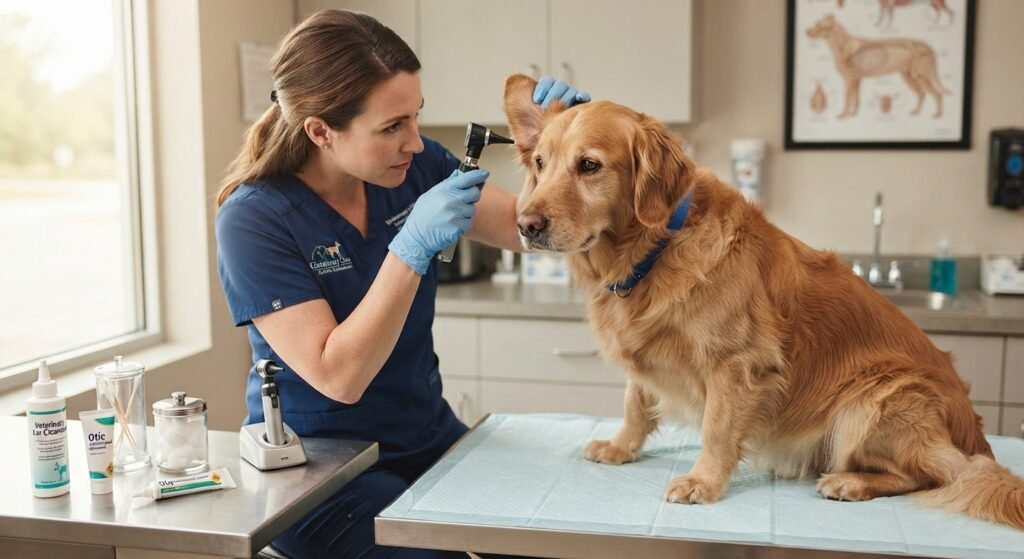
A veterinarian may examine the outer ear and use specialized equipment to look deeper inside the ear canal. They may also collect a small sample from the ear to determine what types of organisms or abnormal material are present.
This information can help the veterinarian choose an appropriate treatment. Because bacterial and yeast-related infections can require different approaches, identifying the likely cause is an important part of proper care.
Treatment Options for Dog Ear Infections
Treatment depends on the cause, location, and severity of the ear problem. A veterinarian may recommend cleaning the ear with a suitable veterinary product and may prescribe medication when an infection is present.
Some dogs require treatment for an underlying condition such as allergies or parasites. The treatment period can also vary, so owners should follow the veterinarian’s instructions even if the ear appears better before the recommended course is finished.
Why You Should Avoid Random Ear Medication
It may be tempting to use leftover medication from a previous ear infection, but this can be risky. The current problem may have a different cause, and some products may not be appropriate if the eardrum is damaged.
Human ear products should also not be used unless a veterinarian specifically recommends them. An incorrect product can irritate the ear further or make it harder to determine what is causing the problem.
Ear Care and Prevention Tips
Keeping a dog’s ears appropriately clean can be helpful for some pets, but excessive cleaning can also irritate sensitive ear tissue. The right routine depends on the individual dog’s ear structure, history, and veterinary recommendations.
Keep Ears Dry: Moisture can contribute to problems in some dogs, particularly after swimming or bathing.
Check Ears Regularly: Look for unusual redness, odor, discharge, or swelling.
Follow Cleaning Instructions: Use only products recommended for your dog and avoid inserting objects deep into the ear canal.
When Should You Contact a Veterinarian?
Contact a veterinarian if your dog has persistent head shaking, repeated scratching, strong ear odor, discharge, swelling, or obvious discomfort. Repeated ear problems also deserve professional evaluation because an underlying condition may be responsible.
More serious signs can include loss of balance, unusual head positioning, severe pain, or sudden changes in hearing. These symptoms may indicate that deeper parts of the ear are affected and should receive prompt veterinary attention.
People Also Ask (PAA)
What are the signs of an ear infection in a dog?
Head shaking, ear scratching, redness, swelling, unusual odor, and discharge are common warning signs. A veterinarian should confirm the cause.
Can dog ear infections go away on their own?
Some minor irritation may improve, but a suspected infection should not be ignored. Untreated infections can become more painful or develop into deeper ear problems.
What causes frequent ear infections in dogs?
Recurring infections can be associated with allergies, moisture, ear structure, parasites, or other underlying conditions. A veterinarian can investigate repeated problems.
Can I clean my dog’s infected ear at home?
Do not assume that every infected ear should be cleaned in the same way. Ask a veterinarian which cleaning method and product are appropriate for your dog’s condition.
Can allergies cause ear infections in dogs?
Allergies can contribute to recurring ear inflammation and may increase the likelihood of ear problems in some dogs.
Is a bad smell from a dog’s ear normal?
A strong or unusual odor is not something owners should ignore, especially when it occurs with scratching, redness, discharge, or head shaking.
When is a dog ear infection an emergency?
Severe pain, loss of balance, unusual head positioning, significant swelling, or other sudden neurological changes require prompt veterinary attention.
Frequently Asked Questions
1. How do I know if my dog’s ear is infected?
Frequent scratching, head shaking, redness, swelling, unusual odor, and discharge can indicate an ear problem. A veterinarian can determine whether an infection is present.
2. Can I use human ear drops on my dog?
Human ear drops should not be used unless a veterinarian specifically tells you to use them. Dogs may require different products depending on the cause of the problem.
3. Why does my dog keep getting ear infections?
Recurring infections may be connected to allergies, moisture, parasites, ear structure, or another underlying condition. Veterinary evaluation can help identify the cause.
4. How long does a dog ear infection take to improve?
The recovery time varies depending on the cause and severity of the problem. Follow the treatment schedule provided by your veterinarian and arrange a follow-up if symptoms continue.
5. Can I prevent ear infections in my dog?
Regular veterinary checkups, appropriate ear care, keeping ears dry when necessary, and managing underlying allergies or skin problems may help reduce recurring ear issues.
Conclusion
Dog ear infections can cause significant discomfort and may become more difficult to manage when treatment is delayed. Head shaking, scratching, unusual odor, redness, swelling, and discharge are important signs that should not be overlooked.
Because different ear problems require different treatments, pet owners should avoid guessing at the cause or using leftover medication. A veterinarian can examine the ear, identify the likely source of the problem, and recommend appropriate care. With proper treatment and suitable ear care, many dogs can maintain healthier and more comfortable ears.