
Introduction
Healthy skin is an important part of a dog’s overall well-being. When a dog’s skin becomes irritated, owners may notice scratching, redness, dry patches, hair loss, unusual smells, or changes in the coat. These problems can affect dogs of any age and may have many different causes.
Some skin problems are temporary, while others can continue or return repeatedly. Allergies, parasites, infections, environmental factors, and underlying health conditions can all contribute to skin changes. Understanding the possible causes can help pet owners recognize when a dog needs professional veterinary care.
Why Do Dogs Develop Skin Problems?
A dog’s skin can react to many things in its environment. Contact with certain substances, flea bites, or changes in humidity can sometimes cause irritation. Other problems may begin because of bacteria, parasites, or an underlying medical condition.
It can be difficult to identify the exact cause by looking at the skin alone. Several different conditions can produce similar symptoms, which is why persistent or severe skin problems should be evaluated by a veterinarian.
Common Signs of Skin Problems in Dogs
Skin problems can affect different areas of the body and may look different depending on their cause. Some dogs develop obvious redness, while others mainly show changes in behavior because they feel itchy or uncomfortable.
Constant Scratching: Your dog may scratch its body repeatedly throughout the day.
Hair Loss: Small or large areas of missing fur may appear on the coat.
Red Skin: Irritated areas may look pink, red, swollen, or unusually sensitive.
Dry or Flaky Skin: You may notice flakes, rough patches, or changes in the normal texture of the skin.
Unusual Odor: A strong smell from the skin or coat can sometimes occur with certain infections or skin conditions.
Allergies and Dog Skin Problems
Allergies are a common reason dogs develop itchy or irritated skin. A dog may react to environmental allergens, flea bites, or certain ingredients in its diet. The location and pattern of itching can vary between individual dogs.
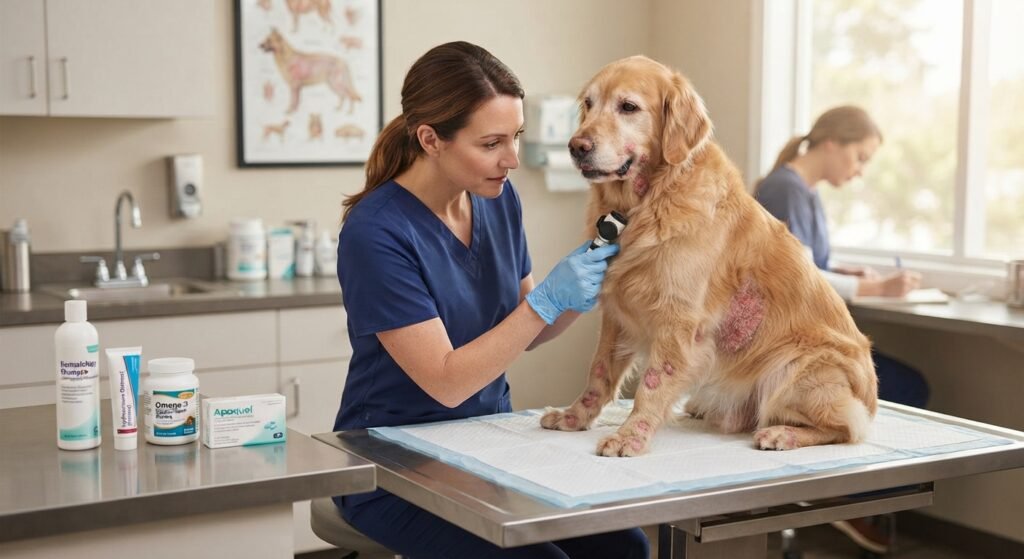
Allergy-related skin problems can become worse when a dog scratches or bites the affected area repeatedly. This can damage the skin and create an opportunity for secondary infections. A veterinarian can help determine whether an allergy is involved and recommend an appropriate management plan.
Fleas, Ticks, and Other Parasites
External parasites can cause significant skin irritation. Fleas are particularly important because some dogs develop a strong reaction to flea bites. Even a small number of fleas may cause intense itching in sensitive animals.
Ticks can also attach to a dog’s skin and may cause localized irritation. Regular parasite prevention and routine checks can help reduce the risk of infestations. If you notice an unusual parasite or a large number of them, veterinary advice can help determine the safest way to handle the situation.
Bacterial and Yeast Skin Infections
Bacteria and yeast can sometimes contribute to skin problems in dogs. These infections may develop on their own or occur after another problem, such as allergies, has damaged the skin barrier.
Signs can include redness, odor, greasy skin, crusting, hair loss, or increased itching. Because bacterial and yeast problems can require different treatments, owners should avoid choosing medication based only on the appearance of the skin.
Dry Skin in Dogs
Dry skin can occur for several reasons, including environmental conditions, frequent bathing, unsuitable grooming products, or other health factors. A dog with dry skin may scratch more often or develop visible flakes.
If dryness continues despite reasonable grooming and care, it is worth discussing the problem with a veterinarian. Persistent dry skin can sometimes be associated with allergies, nutrition-related issues, parasites, or other underlying conditions.
How Veterinarians Find the Cause
A veterinarian may ask about your dog’s diet, grooming routine, parasite prevention, environment, previous skin problems, and the timing of symptoms. They may then examine the skin and coat carefully to look for clues.
Additional testing may sometimes be needed. Depending on the situation, a veterinarian may examine samples from the skin or coat or recommend other tests. Finding the underlying cause is important because simply treating the itching may not solve the original problem.
Safe Treatment Options for Dog Skin Problems
Treatment depends on what is causing the skin condition. A veterinarian may recommend parasite control, specialized shampoos, dietary changes, prescription medication, or treatment for an infection when appropriate.
Owners should avoid using random creams, essential oils, or human medicines on irritated skin. Some products that are safe for people can be harmful to dogs, especially if the dog can lick the treated area.
Simple Skin-Care Tips at Home
Good everyday care can support healthy skin, although home care cannot replace veterinary treatment for a medical condition. Regular grooming can help owners notice changes early and keep the coat free from excessive dirt and debris.
Use Suitable Grooming Products: Choose products made specifically for dogs and appropriate for your pet’s skin needs.
Keep Bedding Clean: Wash your dog’s bedding regularly to reduce accumulated dirt and potential irritants.
Maintain Parasite Prevention: Follow a veterinarian-recommended flea and tick prevention routine.
When Should You Contact a Veterinarian?
A veterinary examination is recommended when itching is persistent, skin damage is spreading, hair loss is significant, or your dog appears uncomfortable. Repeated skin problems also deserve attention because an underlying allergy, parasite problem, or medical condition may be involved.
Seek prompt veterinary care if the skin is severely swollen, bleeding, producing significant discharge, or accompanied by serious changes in your dog’s behavior or overall health. Early evaluation can help prevent a relatively small skin problem from becoming more complicated.
People Also Ask (PAA)
What are the most common skin problems in dogs?
Dogs can experience allergies, parasite-related irritation, bacterial or yeast infections, and several other skin conditions. The exact cause needs to be determined for each individual dog.
Why is my dog scratching but has no fleas?
Itching can have many causes besides fleas. Allergies, infections, dry skin, parasites that are difficult to see, and other conditions can all cause scratching.
How can I treat my dog’s itchy skin?
The appropriate treatment depends on the cause. A veterinarian can determine whether the problem is related to allergies, parasites, infection, or another condition.
Can dog skin infections go away on their own?
Some minor irritation may improve, but an actual infection may require veterinary treatment. Persistent redness, odor, discharge, or worsening symptoms should be checked.
Can food cause skin problems in dogs?
Certain dogs can develop reactions to particular food ingredients. A veterinarian may recommend a controlled diet trial if a food-related problem is suspected.
Is coconut oil safe for a dog’s skin?
Do not assume that a home remedy is appropriate for every skin condition. Some products can irritate the skin or be problematic if repeatedly licked. Ask your veterinarian before using home treatments.
When should I worry about my dog’s skin?
Persistent itching, spreading redness, significant hair loss, sores, discharge, or obvious discomfort are reasons to contact a veterinarian.
Frequently Asked Questions
1. What causes itchy skin in dogs?
Itching can result from allergies, fleas, other parasites, infections, dry skin, and several medical conditions. Identifying the underlying cause is important for proper treatment.
2. Can I use human shampoo on my dog?
Human shampoos are not always suitable for a dog’s skin. It is generally better to use grooming products specifically formulated for dogs and follow veterinary advice when skin problems are present.
3. How often should I bathe my dog?
The ideal bathing schedule varies according to the dog’s coat, lifestyle, skin condition, and veterinary recommendations. Bathing too frequently can sometimes contribute to skin dryness or irritation.
4. Why does my dog have bald spots?
Hair loss can have many causes, including parasites, infections, excessive scratching, and other health conditions. New or expanding bald areas should be evaluated by a veterinarian.
5. Can allergies cause recurring skin infections?
Yes. Repeated scratching and skin inflammation associated with allergies can make secondary infections more likely in some dogs.
Conclusion
Dog skin problems can range from mild irritation to conditions that require ongoing veterinary treatment. Allergies, infections, dry skin, and other factors can all affect the appearance and comfort of a dog’s skin.
The best way to manage a persistent skin problem is to identify its underlying cause rather than simply treating the visible symptoms. Regular grooming, suitable skin care, and veterinary checkups can help keep your dog’s skin healthier and make it easier to recognize problems early.