
Introduction
Dogs may need medication at different stages of life for infections, allergies, pain, parasites, digestive problems, and other health conditions. Some medicines are prescribed for short periods, while others may be part of a longer treatment plan recommended by a veterinarian.
Understanding the purpose of common dog medications can help pet owners communicate more effectively with their veterinarian and follow treatment instructions correctly. However, every medication should be given according to professional veterinary guidance because the correct choice and dose can vary greatly between dogs.
Why Dogs May Need Medication
A veterinarian may recommend medication when a dog has a diagnosed condition that requires treatment or symptom management. The medicine chosen depends on the cause of the problem, the dog’s age, weight, health history, and other medications it may already be receiving.
Medication can help control an infection, reduce certain symptoms, manage parasites, or support recovery from an illness or injury. It is important to remember that medicine is only one part of treatment and should be combined with appropriate veterinary care.
Common Types of Dog Medications
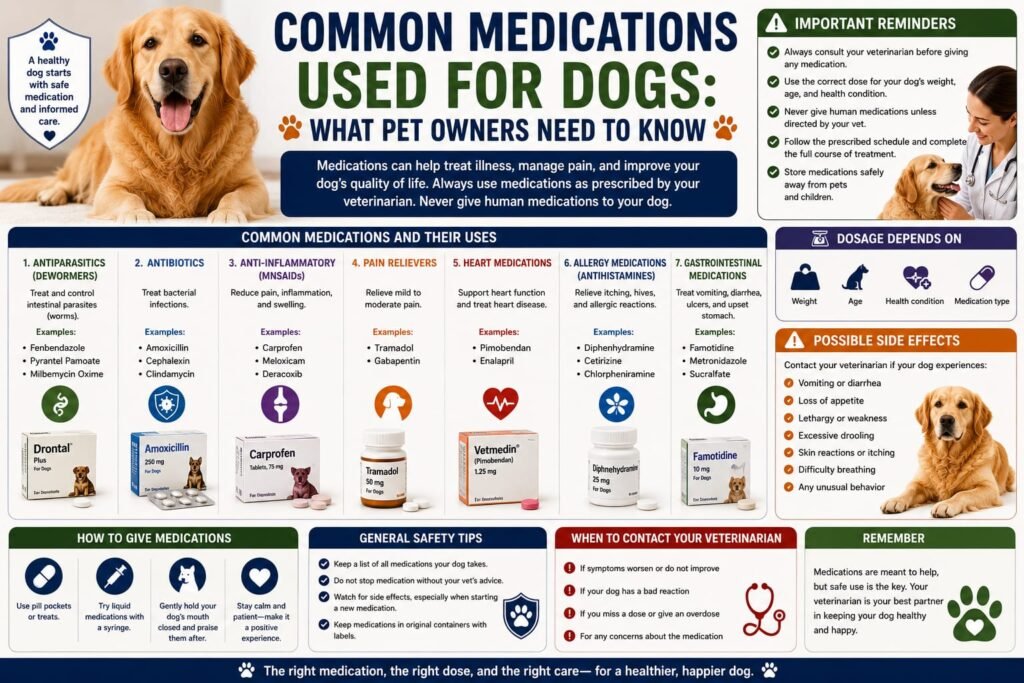
There are many categories of medicines used in veterinary care. Some are designed to treat a specific condition, while others help control symptoms or prevent certain health problems.
Antibiotics: These may be prescribed by veterinarians for certain bacterial infections.
Antiparasitic Medicines: These products can help protect dogs from parasites such as fleas, ticks, heartworms, or intestinal parasites, depending on the product.
Pain and Inflammation Medicines: Veterinarians may prescribe specific medicines to manage pain or inflammation when appropriate.
Allergy Treatments: Some dogs may receive veterinary treatment to help control allergy-related itching or inflammation.
Digestive Medicines: Certain products may be recommended for specific digestive problems under veterinary supervision.
Antibiotics for Dogs
Antibiotics are medicines used to treat certain bacterial infections. They do not treat viral infections, and they should not be given simply because a dog appears sick.
A veterinarian may choose an antibiotic based on the suspected infection and the dog’s individual circumstances. Owners should follow the prescribed instructions carefully and should not save leftover antibiotics for future illnesses.
Parasite Medications
Dogs can be exposed to several types of parasites, including fleas, ticks, heartworms, and intestinal worms. Different parasite medications are designed to target different organisms, so one product does not necessarily protect against every parasite.
Some parasite preventives are given orally, while others are applied to the skin or administered by a veterinarian. The appropriate product and schedule depend on the dog’s age, weight, lifestyle, health, and local parasite risks.
Pain and Anti-Inflammatory Medicines
Dogs may receive veterinary medication for pain associated with injuries, surgery, joint problems, or other conditions. Some medicines can also help manage inflammation when prescribed appropriately.
Pain medication should never be selected based on what works for a person. Certain human pain medicines can be dangerous for dogs, so owners should only use medication specifically recommended by a veterinarian.
Allergy and Itching Treatments
Dogs with allergies may develop itching, skin irritation, paw licking, or recurring ear problems. Depending on the cause, a veterinarian may recommend medication, parasite control, dietary management, or other treatments.
The goal is not always simply to stop the itching. Identifying what is causing the allergic reaction can be important for long-term management, particularly when symptoms keep returning.
Digestive Medications
Digestive problems such as vomiting or diarrhea can have many possible causes. In some cases, a veterinarian may recommend medication or supportive treatment, but the correct approach depends on why the symptoms are happening.
Owners should be cautious about giving over-the-counter human digestive medicines to dogs.
How to Give Medication Safely
Once a veterinarian has prescribed medication, owners should carefully follow the instructions on the prescription or product label. Give the medication at the recommended time and use the correct measuring device when liquid medicine is involved.
Check the Instructions: Understand the dose, timing, duration, and whether food should be given with the medicine.
Never Double a Dose: If a dose is missed or accidentally repeated, contact the veterinarian instead of guessing what to do next.
Store It Properly: Keep medication in the recommended storage conditions and away from pets and children.
Possible Medication Side Effects
Like medicines used in people, veterinary medications can sometimes cause side effects. The type and severity depend on the particular medication and the individual dog.
A dog may occasionally experience changes such as digestive upset or other reactions, but serious or unusual symptoms should not be ignored. Contact your veterinarian if your dog develops a concerning reaction after starting a new medicine.
Why You Should Not Share Medications
A medication prescribed for one dog may not be safe or appropriate for another dog. Differences in weight, age, medical history, allergies, and other medications can change how a dog responds to treatment.
Never give your dog’s medicine to another pet without veterinary advice. The same rule applies to leftover medication from an older illness. A new problem may require a completely different diagnosis and treatment.
When Should You Contact a Veterinarian?
Contact a veterinarian if your dog becomes unusually weak, develops a concerning reaction, refuses medication repeatedly, or does not improve as expected. If symptoms become suddenly severe, prompt veterinary attention may be necessary.
You should also contact your veterinarian if you accidentally give your dog too much medication. Keep the medicine packaging available because the product name and strength can help the veterinary team determine what happened.
People Also Ask (PAA)
What medications are commonly prescribed for dogs?
Veterinarians may prescribe antibiotics, parasite preventives, pain medicines, allergy treatments, digestive medicines, and other medications depending on the dog’s condition.
Can I give my dog human medicine?
You should not give human medicine to your dog unless a veterinarian specifically tells you to use a particular product and dose. Some human medications can be dangerous for dogs.
Do dogs need antibiotics for every infection?
No. Antibiotics are designed to treat certain bacterial infections and are not appropriate for every type of illness.
Can I use leftover medicine for my dog’s new illness?
No. The new problem may have a different cause and may require different treatment. Ask a veterinarian before giving any leftover medication.
What should I do if my dog refuses medicine?
Contact your veterinarian for advice. Depending on the medication, there may be another form or administration method that is easier for your dog.
What happens if my dog receives too much medicine?
Contact a veterinarian promptly and provide the medication name, strength , and approximate time it was given. Do not wait for symptoms before seeking advice.
How should dog medicine be stored?
Follow the storage instructions on the label or prescription. Keep medications securely away from pets and children.
Frequently Asked Questions
1. Can I stop my dog’s medication when it looks better?
Do not stop a prescribed medicine early unless your veterinarian tells you to. The appropriate treatment length depends on the medication and condition.
2. Can two dogs take the same medication?
Not necessarily. Medication and dosage are based on the individual animal, so never share prescriptions between dogs without veterinary approval.
3. Can dog medications cause vomiting?
Some medicines may cause digestive side effects, but vomiting can also indicate another problem. Contact your veterinarian if vomiting is persistent, severe, or concerning.
4. Should I give medicine with food?
It depends on the specific medication. Some medicines are intended to be given with food, while others have different instructions. Follow the veterinarian’s directions.
5. How can I keep track of my dog’s medication?
A simple written schedule, calendar, or phone reminder can help you record each dose and avoid accidentally missing or repeating one.
Conclusion
Medications can play an important role in treating and managing many health conditions in dogs. Antibiotics, parasite preventives, pain medicines , allergy treatments, and digestive medications are among the types that veterinarians may use depending on the individual dog’s needs.
The safest approach is to use medication only according to veterinary guidance and to follow the prescribed dose and schedule carefully. Never share medicines between pets or assume that a human medication is safe for dogs. When owners understand how to handle veterinary medicines responsibly.