
Introduction
As dogs grow older, their daily needs can change. Senior dogs may become less active, take longer to get up, or show less interest in activities they once enjoyed. Good nutrition, regular exercise, veterinary care, and a comfortable environment can all support healthy aging.
Some pet owners also consider supplements for older dogs. Supplements may contain ingredients intended to support joints, skin, digestion, or other areas of health. However, not every supplement is appropriate for every dog, and products should be selected with veterinary guidance.
What Changes as Dogs Get Older?
Aging affects dogs differently. Some senior dogs remain energetic for many years, while others gradually experience changes in mobility, appetite, sleep, or body condition.
Older dogs may also develop health conditions that require veterinary attention. A change in activity should not automatically be assumed to be a normal part of aging, especially when it happens suddenly or becomes progressively worse.
Why Owners Consider Supplements for Senior Dogs
Supplements are often considered as an additional part of a senior dog’s overall care routine. Depending on the ingredients, some products are marketed to support joint function, healthy skin, digestion, or general nutritional needs.
However, supplements should not replace a balanced diet or prescribed veterinary treatment. The most appropriate choice depends on the dog’s age, size, diet, health history, and current medications.
Common Ingredients in Senior Dog Supplements
Different supplements contain different combinations of ingredients. Some are designed specifically for joint support, while others focus on general nutritional support.
Omega-3 Fatty Acids: These are commonly included in products designed to support skin, coat, and normal inflammatory balance.
Glucosamine and Chondroitin: These ingredients are frequently found in products marketed for joint support.
Antioxidant Ingredients: Certain nutrients with antioxidant properties may be included in senior-focused formulas.
Digestive Support Ingredients: Some products contain ingredients intended to support normal digestive function.
Supplements for Joint Support
Mobility can become an important concern as dogs age. An older dog may become slower on walks, hesitate before climbing stairs, or have difficulty getting up after resting.
Joint-support supplements are commonly used by owners of senior dogs, but their suitability varies from dog to dog. If your pet has noticeable mobility changes, a veterinarian can help determine whether joint support, weight management, exercise changes, medication, or another approach may be appropriate.
Omega-3 Supplements for Older Dogs
Omega-3 fatty acids are commonly found in fish oil and certain other nutritional products. They are often included in supplements designed to support skin, coat, and overall wellness.
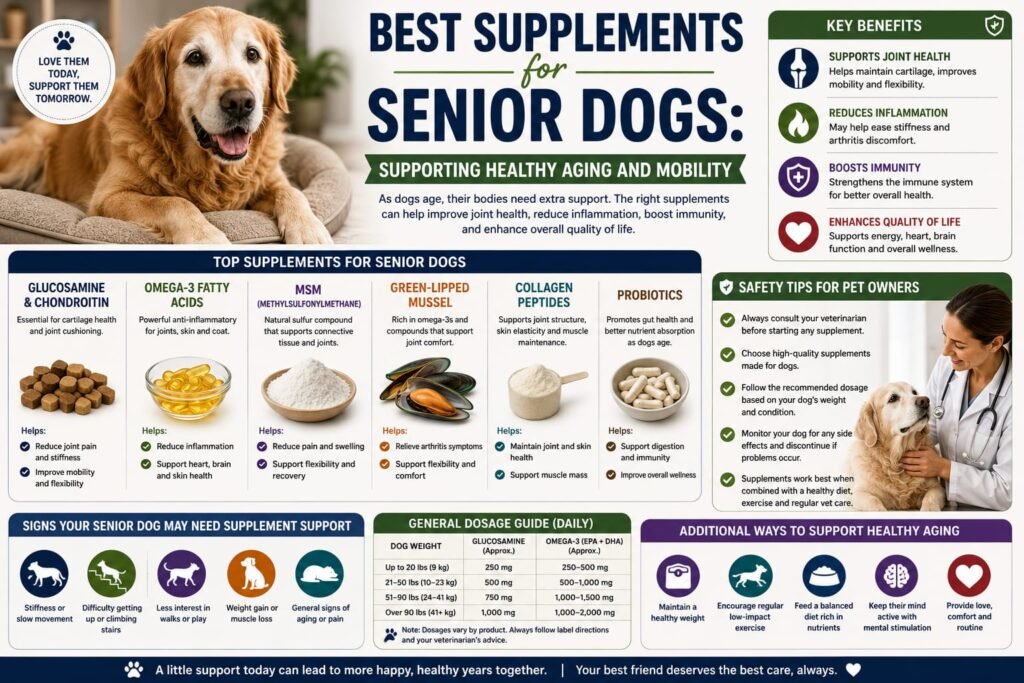
The amount and source of omega-3s matter, and supplements can interact with certain health conditions or medications. For this reason, it is best to discuss an omega-3 supplement with a veterinarian before adding it to a senior dog’s diet.
Digestive Support for Senior Dogs
Some older dogs experience changes in digestion or appetite. Maintaining a consistent diet and providing appropriate nutrition can help support normal digestive function.
Some supplements contain probiotics or other ingredients intended to support the digestive system. However, ongoing vomiting, diarrhea, appetite loss, or weight changes should not simply be treated with supplements because these symptoms may indicate an underlying health problem.
Choosing a Safe Supplement
The supplement market contains many products with different ingredients and quality standards. A product that is suitable for one dog may not be appropriate for another.
Look for products that clearly list their ingredients and recommended serving information. It is also useful to discuss the product with your veterinarian, especially if your dog takes prescription medication or has an existing medical condition.
How to Introduce a Supplement
When a veterinarian agrees that a supplement may be appropriate, introduce it according to the product or veterinary instructions. Avoid giving multiple new supplements at the same time because it can make it difficult to determine how your dog responds to each one.
Start Carefully: Follow the recommended amount rather than assuming that more will provide better results.
Monitor Your Dog: Watch for changes in appetite, digestion, energy, or other unusual reactions.
Keep the Veterinarian Informed: Tell your veterinarian about all supplements your dog receives.
Supplements Should Not Replace Veterinary Care
Supplements can be part of a dog’s overall wellness routine, but they should not be viewed as a substitute for diagnosis or treatment. A senior dog that suddenly becomes less active may have pain, dental problems, an illness, or another condition that requires professional attention.
Regular veterinary examinations become especially valuable as dogs age. These visits can help identify changes early and allow the veterinarian to recommend appropriate nutrition, exercise, medication, or other care.
When Should You Contact a Veterinarian?
Contact a veterinarian if your senior dog experiences sudden changes in mobility, appetite, weight, behavior, breathing, or energy. Persistent vomiting, diarrhea, weakness, or signs of pain also deserve professional attention.
Before starting a new supplement, speak with your veterinarian if your dog is taking medication, has an existing health condition, or has specific dietary restrictions. Professional advice can help prevent unsuitable combinations and unnecessary products.
People Also Ask (PAA)
What are the best supplements for senior dogs?
The appropriate supplement depends on the individual dog’s needs. Joint-support, omega-3, digestive, and nutritional products are commonly considered, but a veterinarian should help determine what is suitable.
Do senior dogs need supplements?
Not every senior dog needs supplements. A complete and balanced diet may provide the nutrients a dog needs, while some dogs may benefit from additional nutritional support based on their individual circumstances.
Are joint supplements helpful for older dogs?
Some joint supplements are designed to support mobility, but results can vary. A veterinarian can help determine whether a joint supplement is appropriate for your dog.
Can I give my senior dog multiple supplements?
Giving multiple supplements can increase the chance of unnecessary ingredients or interactions. Discuss the full supplement list with your veterinarian before combining products.
Can supplements replace medicine for senior dogs?
No. Supplements should not replace prescribed medication or veterinary treatment unless a veterinarian specifically recommends a change in the treatment plan.
How long does it take for a dog supplement to work?
The response depends on the type of supplement, ingredients, and individual dog. Some products may require consistent use over time, while others may not produce noticeable changes.
Are natural supplements always safe for dogs?
No. Natural does not automatically mean safe. Some natural ingredients can cause problems or interact with medications, so veterinary guidance is important.
Frequently Asked Questions
1. What should I look for in a senior dog supplement?
Look for clearly listed ingredients, appropriate serving information, and a product suited to your dog’s specific needs. Discuss the product with your veterinarian before starting it.
2. Can puppies take senior dog supplements?
Senior-focused supplements are not automatically appropriate for puppies. Puppies have different nutritional requirements, so any supplement should be selected with veterinary guidance.
3. Can supplements help a dog walk better?
Some products are marketed for joint and mobility support, but mobility problems can have many causes. A veterinarian should evaluate significant changes before relying on a supplement.
4. Can dog supplements cause stomach problems?
Some supplements may cause digestive changes in certain dogs. If your dog develops persistent vomiting, or appetite loss after starting a supplement, contact your veterinarian.
5. Should I give supplements to my dog every day?
The correct frequency depends on the specific product and your dog’s needs. Follow the product instructions or your veterinarian’s recommendation.
Conclusion
Senior dogs can benefit from thoughtful nutrition, regular veterinary care, and attention to changes in their daily behavior. Supplements may provide additional nutritional support for some dogs, particularly when selected for a specific need.
However, supplements are not a replacement for a balanced diet or professional veterinary treatment. Before adding a new product to your senior dog’s routine, consider the ingredients, your dog’s overall health, and any medications it already receives. owners can support their aging dogs while keeping safety and quality of life as the priority.