
Introduction
Intestinal parasites are a common concern for dog owners, especially in puppies and dogs that spend time outdoors. Worms can live inside the digestive system and may affect a dog’s nutrition, energy, digestion, and overall condition. Some infected dogs may show obvious symptoms, while others may have very few visible signs.
Deworming is an important part of responsible pet care, but not every deworming medicine works against every type of parasite. The right treatment depends on the parasite involved, the dog’s age, weight, health, and lifestyle. Veterinary guidance can help ensure that the appropriate product is used safely.
What Are Intestinal Worms in Dogs?
Intestinal worms are parasites that live inside a dog’s digestive tract. Common types include roundworms, hookworms, whipworms, and tapeworms. These parasites can enter a dog’s body in different ways, depending on the species.
Some dogs become infected by swallowing contaminated material, while others may acquire certain parasites through fleas, infected animals, or contaminated environments. Puppies can also become exposed to some parasites from their mother.
Common Signs of Worms in Dogs
The symptoms of intestinal parasites can vary considerably. Some dogs may appear healthy even when parasites are present, which is why routine veterinary care can be important.
Digestive Changes: Diarrhea, soft stools, or other changes in bowel movements may occur.
Weight Loss: A dog may lose weight despite eating normally.
Pot-Bellied Appearance: This can sometimes be seen in puppies with certain types of worms.
Visible Worms or Segments: Some parasites or segments may occasionally be noticed in stool or around the dog’s rear.
Low Energy: A significant parasite burden may contribute to weakness or reduced activity.
Different Types of Worms Dogs Can Get
Dogs can be affected by several different intestinal parasites. Roundworms are particularly common in puppies, while hookworms can cause significant problems because they feed on blood. Whipworms affect the large intestine, and tapeworms are often associated with the ingestion of infected fleas or other hosts.
Because these parasites are different, a dewormer that works against one type may not necessarily eliminate another. Identifying the likely parasite is therefore an important part of selecting appropriate treatment.
Why Puppies Need Special Attention
Puppies can be particularly vulnerable to intestinal parasites. Some worms can affect their growth and development, especially when infections are heavy. Puppies may also acquire certain parasites before or shortly after birth.
For this reason, puppy deworming should follow a schedule recommended by a veterinarian. Young dogs have different needs from adult dogs, and the appropriate medicine and dose depend on factors such as age and body weight.
How Deworming Medicines Work
Deworming medicines are designed to target specific parasites inside the dog’s body. Depending on the product, the medication may kill or disable certain worms so they can be eliminated from the digestive system.
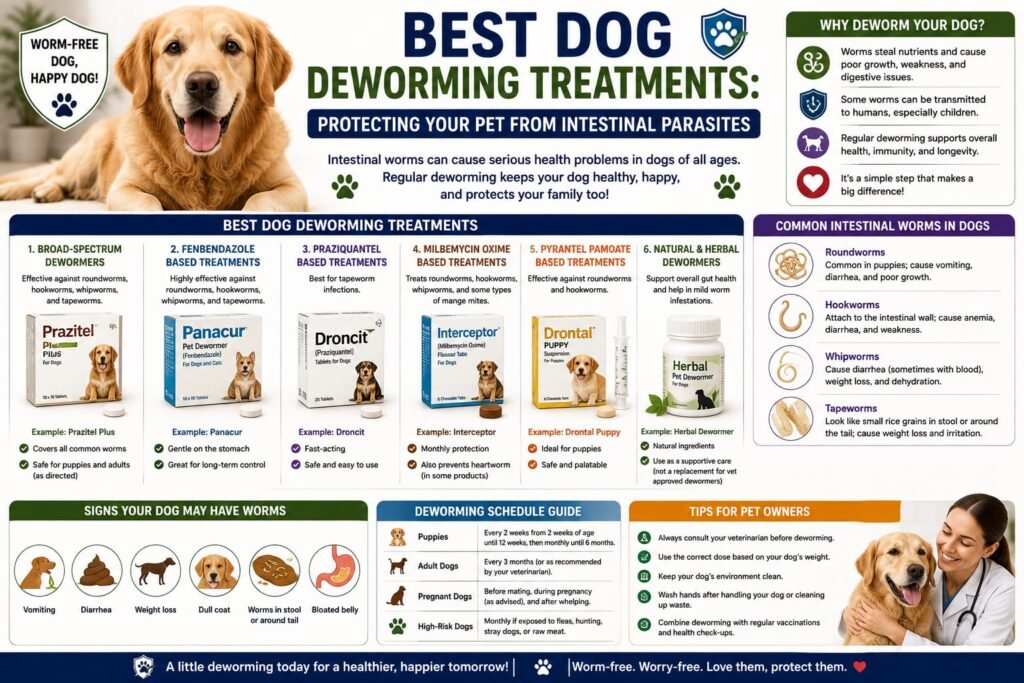
Different products cover different parasites. Some may target several common worms, while others are designed for particular types. Owners should therefore avoid choosing a dewormer based only on the word “worm” on the packaging.
Choosing the Right Deworming Treatment
The correct deworming treatment depends on the type of parasite and the individual dog. A veterinarian may recommend a stool examination or other testing when there is uncertainty about the cause of symptoms.
The dog’s weight is also important because medication doses are often calculated according to body size. Using an incorrect amount can reduce effectiveness or increase the risk of unwanted effects.
How Often Should Dogs Be Dewormed?
There is no single deworming schedule that is ideal for every dog. Puppies, adult dogs, hunting dogs, dogs that spend considerable time outdoors, and dogs living in different environments may have different parasite risks.
Your veterinarian can recommend a prevention and testing schedule based on your dog’s lifestyle and local parasite concerns. Following a consistent plan is generally more useful than waiting until visible worms appear.
Safe Deworming Practices
Owners should use only products that are appropriate for dogs and follow the instructions carefully. If a veterinarian prescribes a medication, give it exactly as directed.
Check Your Dog’s Weight: Make sure the treatment is intended for your dog’s current weight range.
Use the Correct Product: Different medicines target different parasites.
Follow the Schedule: Repeat treatments only when recommended by the product instructions or veterinarian.
Preventing Future Worm Infections
Deworming is only one part of parasite control. Good hygiene can also reduce exposure to parasites. Picking up dog waste regularly helps prevent contamination of the environment, while routine flea prevention can reduce the risk of certain tapeworm infections.
Dogs should also be discouraged from eating unknown animal waste or dead animals. Regular veterinary examinations and stool testing can help identify parasite problems before they become more serious.
When Should You Contact a Veterinarian?
Contact your veterinarian if your dog has persistent diarrhea, unexplained weight loss, repeated vomiting, weakness, blood in the stool, or visible worms. Puppies with significant digestive symptoms should receive particular attention.
You should also seek veterinary advice before starting a deworming medicine if you are unsure what type of parasite your dog may have. A veterinarian can determine whether testing is necessary and recommend an appropriate treatment.
People Also Ask (PAA)
What is the best dewormer for dogs?
The best dewormer depends on the type of parasite affecting the dog. Different medicines target different worms, so veterinary advice can help identify an appropriate treatment.
How do I know if my dog has worms?
Possible signs include digestive changes, weight loss, reduced energy, a swollen abdomen, or visible worms or segments. Some dogs may show no obvious signs.
How often should I deworm my dog?
The recommended schedule depends on the dog’s age, lifestyle, parasite exposure, and veterinary recommendations. Puppies often require a different schedule from adult dogs.
Can puppies get worms?
Yes. Puppies can become infected with certain intestinal parasites at a young age, which is why veterinary-recommended parasite control is important.
Can dogs get worms from other dogs?
Dogs can be exposed to some parasites through contaminated environments and infected feces. The exact transmission method depends on the parasite.
Can worms make a dog lose weight?
Yes. Certain intestinal parasites can interfere with a dog’s health and may contribute to poor weight gain or weight loss.
Can I use an over-the-counter dewormer for my dog?
Some products maybe suitable for certain situations, but the correct treatment depends on the parasite and the individual dog. Ask a veterinarian before choosing a product.
Frequently Asked Questions
1. Are dog worms dangerous?
Some intestinal parasites can cause serious health problems, particularly in puppies , small dogs, or animals with heavy infections. Prompt diagnosis and appropriate treatment can reduce these risks.
2. Can I deworm my dog without a stool test?
Sometimes veterinarians may recommend treatment based on the dog’s history and symptoms, while in other cases testing can help identify the specific parasite. Your veterinarian can determine what is appropriate.
3. Can humans get worms from dogs?
Some canine intestinal parasites can potentially infect people. Good hygiene, regular waste removal, and appropriate parasite control can help reduce the risk.
4. Why does my dog keep getting worms?
Repeated infections may occur because of continued exposure to contaminated environments, fleas, infected animals, or other sources. Identifying the source can help improve long-term parasite control.
5. Can deworming medicine cause side effects?
Some dogs may experience temporary digestive changes or other reactions depending on the medication. If your dog develops severe or unusual symptoms, contact a veterinarian.
Conclusion
Intestinal worms can affect dogs of all ages, but puppies and dogs with greater parasite exposure may require particular attention. Symptoms can include digestive changes, reduced energy, or visible parasites, although some infected dogs may show very few signs.
Choosing the correct deworming treatment is important because different medicines target different parasites. Regular veterinary care, appropriate parasite prevention, good hygiene, and a suitable deworming plan can help protect your dog and support a healthier life.