
Introduction
Ear problems can be uncomfortable for cats and may affect their behavior, sleep, and daily activities. A cat with an ear problem may scratch around its ears, or become less comfortable when the affected area is touched.
Ear infections can have different causes, including parasites, bacteria, yeast, allergies, or other underlying problems. Because several conditions can produce similar symptoms, proper veterinary examination is important before choosing a treatment.
What Is a Cat Ear Infection?
A cat ear infection occurs when inflammation or infection affects part of the ear. The problem may involve the outer ear or, in more serious cases, deeper areas of the ear.
Cats can develop ear problems at any age, although some underlying conditions may make certain cats more susceptible. Early attention can help prevent a minor ear problem from becoming more complicated.
Common Signs of Ear Problems
Cats often show changes in behavior when their ears are uncomfortable. Some signs may be easy to notice, while others can be subtle.
Head Shaking: Your cat may repeatedly shake its head because of irritation or discomfort.
Ear Scratching: Frequent scratching around or inside the ear can indicate an underlying problem.
Unusual Ear Odor: A strong or unpleasant smell coming from the ear may occur with certain ear conditions.
Ear Discharge: Wax, dark material, fluid, or other discharge may be visible inside or around the ear.
Sensitive Ears: A cat may pull away or become irritated when you try to touch the affected ear.
Common Causes of Cat Ear Infections
Ear problems can develop for several reasons. Ear mites are one possible cause, particularly in kittens and cats that have been exposed to other animals.
Bacteria and yeast can also contribute to ear infections, sometimes following irritation or another underlying problem. Allergies, foreign material, and changes in the ear environment may also play a role.
Ear Mites in Cats
Ear mites are tiny parasites that can live inside a cat’s ear canal. They can cause intense itching and may lead to frequent scratching and head shaking.
A cat with ear mites may have dark, crumbly material in its ears. Because other ear conditions can look similar, a veterinarian should confirm the cause before treatment is selected.
How Ear Infections Are Diagnosed
A veterinarian will usually examine the cat’s ears and look for signs of inflammation, discharge, parasites, or other abnormalities. In some situations, a sample from the ear may be examined to help identify the cause.
Finding the underlying problem is important because treatment for parasites may be different from treatment for bacterial or yeast-related infections. Treating the wrong cause may allow the problem to continue.
Treatment Options for Cat Ear Problems
Treatment depends on what is causing the ear problem and how severe it is. A veterinarian may recommend cleaning the ear, prescription medication, parasite treatment, or another appropriate approach.
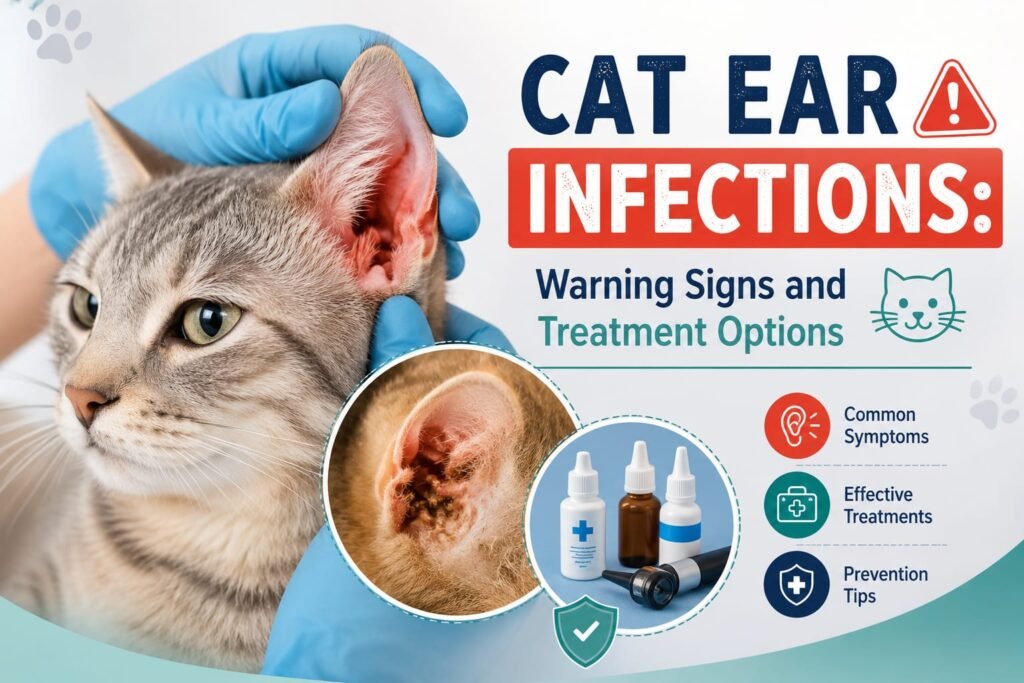
Parasite Treatment: If mites or another parasite are responsible, an appropriate veterinary-approved treatment may be recommended.
Prescription Medication: Bacterial or yeast-related infections may require medication selected by a veterinarian.
Ear Cleaning: Some cats may need their ears cleaned with a suitable veterinary-recommended product.
Why You Should Avoid Random Ear Drops
It can be tempting to use leftover medication or human ear drops when a cat appears to have an ear infection. This can be risky because different ear problems require different treatments.
Some products may irritate an already inflamed ear, while certain medications may be inappropriate if the deeper structures of the ear are affected. Always ask a veterinarian before putting medication or cleaning products into your cat’s ears.
Caring for Your Cat During Treatment
Follow the treatment instructions provided by your veterinarian and complete the recommended course even if your cat appears to improve quickly. Stopping treatment too early may allow the underlying problem to return.
Keep your cat’s environment clean and monitor its ears for changes. If your cat becomes increasingly uncomfortable or develops new symptoms during treatment, contact the veterinarian again.
When Should You Contact a Veterinarian?
Contact a veterinarian if your cat repeatedly shakes its head, scratches its ears, develops discharge, has a strong ear odor, or appears painful when the ear is touched.
More serious signs include loss of balance, unusual head positioning, severe swelling, or sudden changes in hearing or behavior. These symptoms can indicate that the problem may involve deeper parts of the ear and should receive prompt veterinary attention.
Preventing Future Ear Problems
Regular observation can help owners notice changes before an ear problem becomes severe. Check your cat’s ears occasionally without inserting objects deep into the ear canal.
Keeping parasite prevention up to date may also help reduce certain causes of ear problems. If your cat repeatedly develops ear infections, ask your veterinarian whether an underlying allergy or another condition could be contributing to the problem.
People Also Ask (PAA)
What are the signs of an ear infection in a cat?
Common signs include head shaking, ear scratching, unusual odor, discharge, redness, and sensitivity around the ears.
How can I tell if my cat has ear mites?
Dark ear debris, intense itching, scratching, and frequent head shaking can occur with ear mites. A veterinarian can examine the ear and confirm the cause.
Can cat ear infections heal on their own?
Some mild ear irritation may improve, but an actual infection may require appropriate treatment. It is safer to have persistent symptoms evaluated by a veterinarian.
Can I clean my cat’s infected ear at home?
Ask your veterinarian before cleaning an infected ear. The appropriate cleaning method depends on the condition of the ear and the underlying cause.
Can allergies cause ear problems in cats?
Yes. Allergies can contribute to inflammation and recurring ear problems in some cats.
Why does my cat keep shaking its head?
Repeated head shaking can be caused by ear irritation, mites, infection, foreign material, or other problems. Persistent head shaking should be evaluated.
Can ear infections cause balance problems in cats?
Problems affecting deeper parts of the ear can sometimes interfere with balance. A cat showing loss of balance or unusual head positioning should receive prompt veterinary attention.
Frequently Asked Questions
1. Are cat ear infections painful?
They can be uncomfortable or painful, particularly when inflammation is significant. A cat may show this by scratching, shaking its head, or avoiding contact around the ear.
2. Can kittens get ear infections?
Yes. Kittens can develop ear problems, including those caused by parasites such as ear mites.
3. How long does a cat ear infection take to improve?
The recovery time depend on the underlying cause and severity. Follow the veterinarian’s treatment plan and arrange a follow-up if symptoms do not improve.
4. Should I use cotton swabs inside my cat’s ears?
Avoid inserting cotton swabs deep into the ear canal. They can push debris further inside or potentially injure the ear.
5. What happens if a cat ear infection is not treated?
An untreated ear problem can become more severe and may potentially affect deeper structures of the ear. Persistent symptoms should therefore be evaluated by a veterinarian.
Conclusion
Cat ear infections and other ear problems can cause itching, discomfort, discharge, odor, and changes in normal behavior. Because these symptoms can have several different causes, identifying the underlying problem is an important part of choosing the right treatment.
Pet owners should avoid using random medications or human ear products without veterinary guidance. Early examination, appropriate treatment, and regular observation can help protect a cat’s ear health and reduce the risk of recurring problems.