
Introduction
Vomiting can happen to cats for many different reasons. Sometimes a cat may vomit after eating too quickly, swallowing hair, or eating something that does not agree with its stomach. Other cases, vomiting can be connected to parasites, infections, foreign objects, medication, or an underlying health problem.
A single episode does not always mean that a cat has a serious illness. However, repeated vomiting or vomiting accompanied by other unusual symptoms should not be ignored. Paying attention to your cat’s behavior, appetite, hydration, and overall condition can help you recognize when veterinary care may be needed.
What Is Vomiting in Cats?
Vomiting is the active removal of stomach contents through the mouth. It usually involves abdominal contractions and other visible effort before the material is expelled.
Vomiting is different from regurgitation, which can happen with little warning and may involve recently swallowed food. Understanding the difference can provide useful information for a veterinarian when trying to determine what may be affecting your cat.
Common Causes of Cat Vomiting
Cats may vomit after eating something unusual, consuming food too quickly, or swallowing hair during grooming. Occasional stomach upset can occur without indicating a serious illness.
However, vomiting can also be associated with intestinal parasites, infections, dietary problems, medications, foreign objects, and certain medical conditions. Repeated vomiting should therefore be evaluated rather than automatically attributed to hairballs or food.
Hairballs and Grooming
Cats naturally swallow some hair while grooming themselves. Much of this hair passes through the digestive system, but some cats may occasionally form hairballs that are later vomited.
Frequent vomiting should not automatically be considered a normal hairball problem. If your cat repeatedly vomits, loses weight, becomes less active, or shows changes in appetite, a veterinarian should investigate the cause.
Eating Too Quickly or Changing Food
Some cats may experience digestive upset after eating too quickly or receiving unfamiliar food. Sudden dietary changes can also affect the digestive system.
When changing a cat’s food, a gradual transition may be appropriate for many cats. If vomiting continues after a food change or happens repeatedly, discuss the problem with your veterinarian.
Parasites and Other Digestive Problems
Certain parasites can affect a cat’s digestive system and may contribute to vomiting. Cats can also develop digestive problems for many other reasons.
A veterinarian may recommend stool testing or other examinations when parasites or another gastrointestinal problem are suspected. Treatment should be based on the likely cause rather than using random medication.
Foreign Objects and Dangerous Substances
Cats can sometimes swallow string, plastic, small toys, plants, or other objects. Some foreign materials can become stuck in the digestive tract and cause serious problems.
Watch What Your Cat Chews: Keep small objects, string, and potentially dangerous materials away from cats that like to chew or play with them.
Avoid Toxic Substances: Household chemicals, certain plants, and inappropriate medications can be dangerous.
Act Quickly: If you believe your cat swallowed a dangerous object or substance, contact a veterinarian promptly.
Signs That May Occur With Vomiting
The symptoms occurring alongside vomiting can be important. A cat that vomits once but remains active and behaves normally may be different from a cat that becomes weak or refuses food.
Loss of Appetite: Refusing food, especially for a prolonged period, can be concerning in cats.
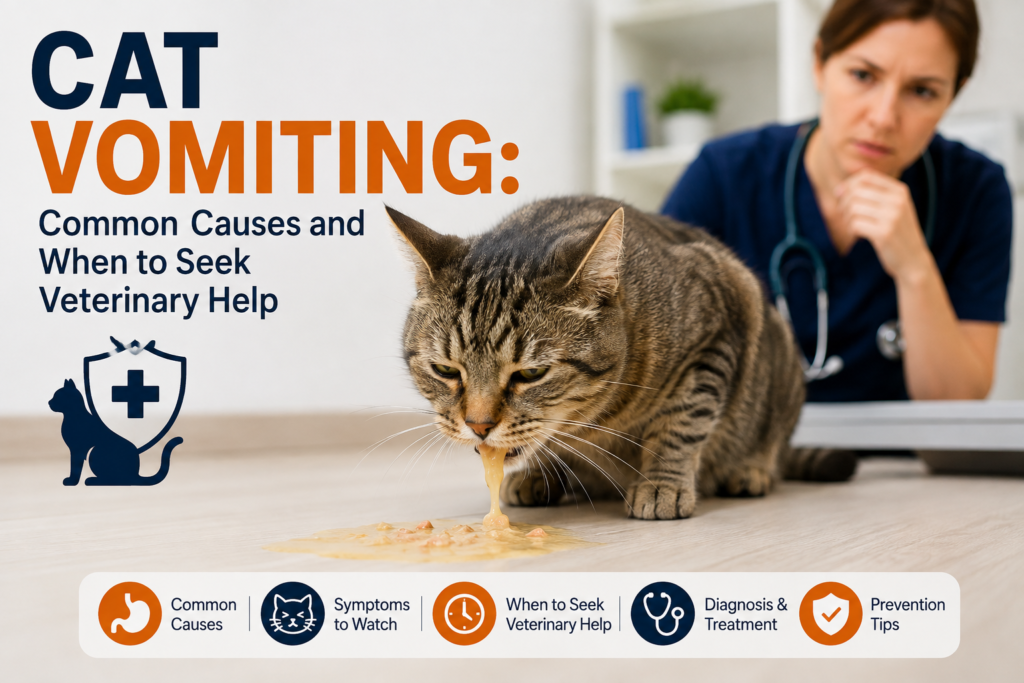
Low Energy: Unusual weakness or hiding more than normal may indicate that your cat is not feeling well.
Diarrhea: Vomiting combined with diarrhea can increase fluid loss.
Abdominal Discomfort: Restlessness, unusual posture, or sensitivity may indicate discomfort.
What Should You Do After Your Cat Vomits?
If your cat vomits once and otherwise appears normal, monitor it carefully for additional symptoms. Keep fresh water available and avoid introducing unfamiliar foods or treats.
Do not give human medication or attempt to treat repeated vomiting without veterinary guidance. If your cat continues vomiting, cannot keep fluids down, or becomes unusually weak, contact a veterinarian.
When Should You Contact a Veterinarian?
Contact your veterinarian if vomiting happens repeatedly, continues over time, or occurs alongside significant changes in appetite, energy, weight, or behavior.
Veterinary attention is particularly important if there is blood in the vomit, severe weakness, abdominal pain, breathing difficulty, collapse, or suspected ingestion of a foreign object or toxic substance.
How Veterinarians Investigate Vomiting
A veterinarian may ask about your cat’s diet, recent behavior, medications, parasite prevention, and possible exposure to unusual foods or substances. A physical examination can provide additional information.
Depending on the situation, the veterinarian may recommend blood tests, stool testing, imaging, or other diagnostic procedures. These tests can help identify the underlying cause instead of treating vomiting without knowing why it is happening.
Preventing Some Causes of Vomiting
Owners can reduce certain risks by keeping dangerous substances and small objects away from cats. Providing a consistent diet and introducing food changes gradually may also help reduce digestive upset.
Regular veterinary examinations and appropriate parasite prevention can support overall health. Cats that frequently develop hairballs or vomiting episodes should be discussed with a veterinarian rather than assuming the problem is harmless.
People Also Ask (PAA)
Why is my cat vomiting?
Cats can vomit because of hairballs, dietary changes, eating too quickly, parasites, infections, foreign objects, medications, toxins, or other health conditions.
Is it normal for cats to vomit?
Occasional vomiting can happen, but frequent or repeated vomiting is not something owners should simply ignore. Persistent symptoms should be discussed with a veterinarian.
Can hairballs cause cats to vomit?
Yes. Hairballs can sometimes be vomited , but frequent vomiting should not automatically be blamed on hairballs because other health problems can cause similar symptoms.
When should I worry about my cat vomiting?
Repeated vomiting, blood, severe weakness, abdominal discomfort, refusal to eat, or suspected poisoning or foreign-object ingestion are reasons to contact a veterinarian promptly.
Can changing cat food cause vomiting?
Yes. A sudden dietary change can upset some cats’ digestive systems. Gradual food transitions may be easier for many cats.
What should I give my cat after vomiting?
The appropriate response depends on the cause and severity. Avoid giving human medication and contact your veterinarian if vomiting continues or your cat appears unwell.
Can worms cause vomiting in cats?
Some intestinal parasites can contribute to vomiting and other digestive symptoms. Veterinary testing can help determine whether parasites are involved.
Frequently Asked Questions
1. Why does my cat vomit after eating?
Eating too quickly, dietary changes, hairballs, and other digestive problems can contribute to vomiting after meals. Repeated episodes should be evaluated by a veterinarian.
2. Can vomiting cause dehydration in cats?
Repeated vomiting can cause fluid loss. A cat that cannot keep water down or becomes weak should receive veterinary attention.
3. Should I change my cat’s food if it keeps vomiting?
Do not repeatedly change foods without veterinary guidance. Frequent diet changes can make it harder to identify the actual cause.
4. Can kittens vomit more easily?
Kittens can develop vomiting for many reasons, including parasites, dietary problems, infections, and other conditions. Persistent vomiting in a kitten deserves veterinary attention.
5. Can medication cause vomiting in cats?
Some medications can cause digestive side effects. If vomiting begins after your cat starts a medicine, contact your veterinarian before changing or stopping the treatment.
Conclusion
Cat vomiting can have many possible causes, ranging from minor digestive upset and hairballs to parasites, foreign objects, toxins, or underlying medical conditions. Looking at the frequency of vomiting and your cat’s overall condition can help determine how seriously the situation should be taken.
Pet owners should avoid giving human medicines or attempting to treat repeated vomiting without professional advice. If vomiting continues, occurs with other concerning symptoms, or may be connected to a toxic substance or swallowed object, contacting a veterinarian promptly is the safest choice.