
Introduction
Giving medicine to a cat can sometimes be difficult for pet owners. Many cats dislike having their mouths handled or may become nervous when they notice something unusual. If medication is necessary, trying to force the process can make both the cat and owner stressed.
A calm approach can make medication time easier. The best method depends on the type of medicine, the cat’s personality, and the instructions provided by the veterinarian. Owners should always follow the prescribed dose and never change the medication routine without professional advice.
Why Cats Resist Medicine
Cats naturally prefer familiar routines, and medicine can introduce an unfamiliar taste, smell, or handling experience. Some cats may hide, scratch, or become nervous when they realize medication is being prepared.
Understanding this reaction can help owners remain patient. Rushing or becoming frustrated may make future medication sessions more difficult, so preparing everything before approaching the cat can be helpful.
Prepare Before Giving the Medicine
Having everything ready before handling your cat can make the process shorter and more organized. Read the medication instructions carefully and make sure you know the correct amount and timing.
Choose a quiet area with fewer distractions. If your cat becomes nervous easily, avoid chasing it around the house because this can increase fear and make future medication sessions harder.
Giving Oral Medication
Some medications are given by mouth as tablets, capsules, or liquids. The exact method depends on the medication and the instructions from the veterinarian.
Stay Calm: Speak gently and use slow movements so your cat does not become unnecessarily frightened.
Use the Correct Position: Keep your cat secure without squeezing or restraining it excessively.
Follow the Instructions: Give only the prescribed amount and use the technique recommended by your veterinarian.
Using Liquid Medicine
Liquid medication may come with a syringe or another measuring device. Always use the measuring device provided or one recommended by your veterinarian rather than estimating the amount.
The liquid should be administered carefully according to the medication instructions. If your cat repeatedly spits out the medicine or you are unsure how much was swallowed, contact your veterinarian before giving another dose.
Giving Tablets or Capsules
Some tablets can be given directly, while others may have specific instructions about whether they can be given with food. Never crush, split, or mix a medication with food unless your veterinarian or pharmacist confirms that doing so is safe.
If your cat refuses a tablet, ask the veterinarian whether another form of the same medication may be available. Some medicines may come in liquid or other formulations.
Making Medicine Time More Comfortable
A calm environment can make the experience easier. Use a familiar room and avoid loud noises or sudden movements while preparing the medication.
After the medicine has been given successfully, a suitable reward or positive interaction may help create a more positive association with the routine, provided the reward is appropriate for your cat and does not interfere with the medication.
What If Your Cat Scratches or Bites?
Some cats may scratch or bite when frightened. Do not continue struggling with a cat that is becoming highly distressed or aggressive.
Avoid Force: Excessive restraint can increase fear and may result in injury.
Ask for Help: A veterinarian or veterinary staff member can demonstrate safer handling techniques.
Protect Yourself: If your cat regularly becomes aggressive during medication, seek professional guidance rather than repeatedly attempting difficult handling alone.
Mistakes to Avoid
Owners should never guess medication doses or give extra medicine because they believe the first dose was not swallowed. Some medications can be dangerous when given incorrectly.
Do not use medication prescribed for another cat or another animal. Also avoid giving human medicine unless a veterinarian specifically instructs you to do so.
When to Contact Your Veterinarian
Contact your veterinarian if your cat repeatedly refuses medication, vomits after receiving it, develops unusual symptoms, or if you accidentally give the wrong amount.
If you are unable to administer an important medication safely, tell the veterinarian rather than simply stopping treatment. The veterinary team may be able to suggest another formulation or show you a safer technique.
Creating a Regular Medication Routine
Cats often become more comfortable when routines are predictable. Try to give medication at approximately the recommended times and use the same calm environment when possible.
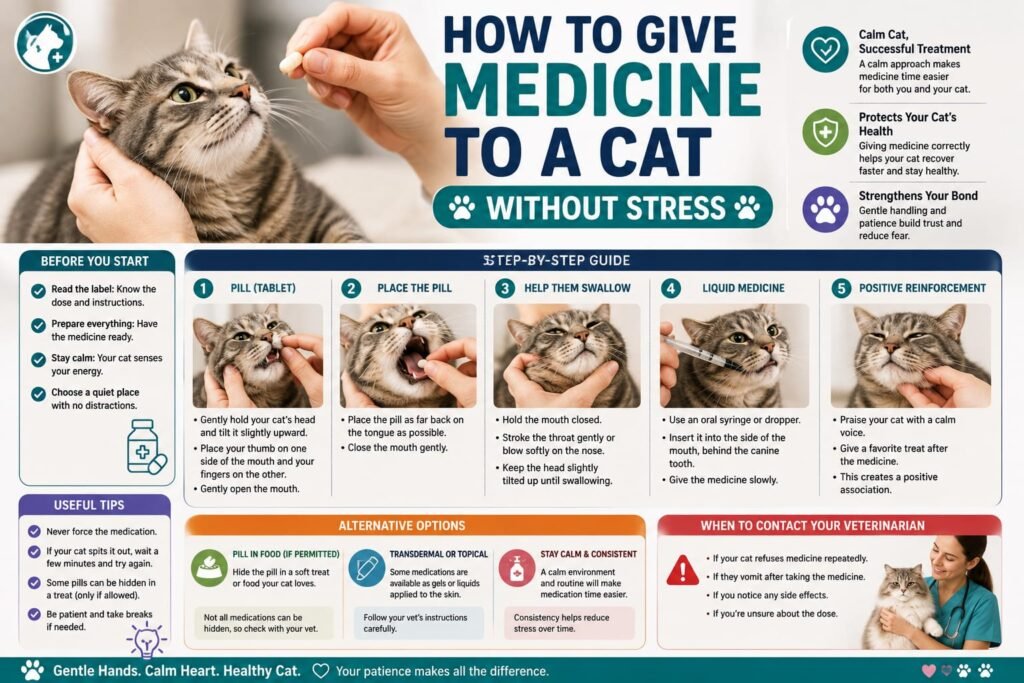
Prepare the medication before bringing your cat into the area. Keeping the process short and calm can help prevent medication time from becoming a major source of stress.
People Also Ask (PAA)
What is the easiest way to give medicine to a cat?
The easiest method depends on the type of medication and the individual cat. Following veterinary instructions and using calm, gentle handling can make the process easier.
Can I hide my cat’s medicine in food?
Some medications can be given with food, but others must be given separately. Always check with your veterinarian before mixing medicine into food.
What should I do if my cat spits out medicine?
Do not automatically give another dose. Contact your veterinarian or veterinary pharmacist for advice because the correct action depends on how much medicine was swallowed.
Can I crush my cat’s tablets?
Not every tablet can safely be crushed. Ask your veterinarian or pharmacist before changing the form of any medication.
How can I stop my cat from scratching during medicine?
Use appropriate handling techniques and avoid excessive force. If your cat becomes highly distressed or aggressive, ask a veterinary professional to demonstrate a safer approach.
What if I accidentally give my cat too much medicine?
Contact your veterinarian promptly and provide the medication name, amount given, and time it was administered.
Can a veterinarian show me how to give medicine?
Yes. Veterinary staff can often demonstrate appropriate techniques for giving specific medications and handling your cat safely.
Frequently Asked Questions
1. Should I give my cat medicine at the same time every day?
If the medication has a specific schedule, follow the veterinarian’s instructions as closely as possible. Consistency can make the routine easier to manage.
2. Can I mix liquid medicine with wet food?
Only do this if your veterinarian confirms that the medication can be given with food and that your cat is likely to consume the complete amount.
3. Why does my cat foam at the mouth after medicine?
Some medicines have an unpleasant taste that can cause excessive salivation or foaming. If the reaction is severe or you are concerned, contact your veterinarian.
4. Should I stop medication if my cat seems better?
Do not stop prescribed medication simply because your cat appears better. Ask your veterinarian before changing or ending a treatment plan.
5. What if my cat refuses every type of medicine?
Tell your veterinarian. Depending on the medication, there may be another formulation or an alternative treatment approach that is easier to administer.
Conclusion
Giving medicine to a cat does not have to become a stressful experience when owners prepare carefully and use calm handling. Understanding the medication instructions, keeping the environment quiet, and avoiding unnecessary force can make the process safer for both the cat and the owner.
Most importantly, medication should always be given according to veterinary instructions. If your cat refuses treatment, or you are uncertain about the correct dose, contact your veterinarian instead of guessing or changing the treatment yourself.