
Introduction
Fleas are small parasites that can cause significant discomfort for cats. A cat with fleas may scratch, lick, bite its skin, or groom itself more frequently than usual. Flea bites can also cause irritated skin and intense itching.
Choosing the right flea treatment is important because cats can be particularly sensitive to certain chemicals. A product that is designed for dogs or another animal may be unsafe for cats. For this reason, pet owners should always check that a flea treatment is specifically labeled for cats and use it according to veterinary guidance and the product instructions.
What Are Fleas?
Fleas are tiny parasites that feed on the blood of animals. They can move between pets and environments, making them difficult to control once they become established.
A cat may pick up fleas outdoors, from another animal, or from an environment where fleas are already present. Fleas can also survive in different stages of their life cycle around the home, which is why treating the cat alone may not always solve the problem.
Common Signs of Fleas in Cats
Some cats show obvious signs of flea activity, while others may have only subtle changes in behavior. Regularly checking your cat’s coat can help you notice problems earlier.
Frequent Scratching: Your cat may repeatedly scratch areas around the neck, back, or other parts of the body.
Excessive Grooming: A cat may lick or bite its fur more often than normal because of itching.
Hair Loss: Continuous scratching and grooming can cause areas of thinning or missing fur.
Skin Irritation: Flea bites can produce small irritated areas or scabs, especially in sensitive cats.
Flea Allergy in Cats
Some cats are highly sensitive to flea saliva. Even a small number of flea bites can cause intense itching in an allergic cat.
A flea-allergic cat may scratch, lick, or chew its skin repeatedly. If the irritation continues, the skin can become damaged. Veterinary treatment may be necessary to control the reaction and prevent further skin problems.
Types of Flea Treatments for Cats
Flea-control products are available in several forms. Depending on the product, treatments may be applied to the skin, given orally, or used in other ways specifically approved for cats.
Different products work in different ways and may target different stages of the flea life cycle. Your veterinarian can help determine which type is appropriate based on your cat’s age, weight, health, lifestyle, and exposure to fleas.
Choosing a Safe Flea Treatment
Safety should always be a major consideration when selecting a flea product. Never assume that a treatment made for another animal is automatically safe for cats.
Use Cat-Specific Products: Choose products clearly labeled for cats and appropriate for your cat’s age and weight.
Follow Instructions: Use the amount and application method stated on the product label or recommended by your veterinarian.
Check Before Combining Products: Using multiple flea treatments together without professional advice may increase the risk of unwanted reactions.
Why Dog Flea Products Can Be Dangerous
Some flea products made for dogs contain ingredients that can be harmful to cats. Certain chemicals can cause serious reactions in cats because their bodies process some substances differently.
Never apply a dog flea treatment to a cat unless a veterinarian specifically confirms that the product is appropriate. If a cat is accidentally exposed to a potentially toxic flea product, contact a veterinarian promptly.
Treating the Home for Fleas
Flea control often requires attention to the environment as well as the cat. Flea eggs and immature stages can exist in areas where pets sleep or spend time.
Wash suitable bedding regularly and clean areas where your cat frequently rests. Vacuuming carpets, furniture, and other appropriate surfaces can also help reduce environmental flea stages.
Treating Multiple Pets
If you have more than one pet, flea control may need to include every animal in the house hold. Treating only one pet may allow fleas to continue moving between animals.
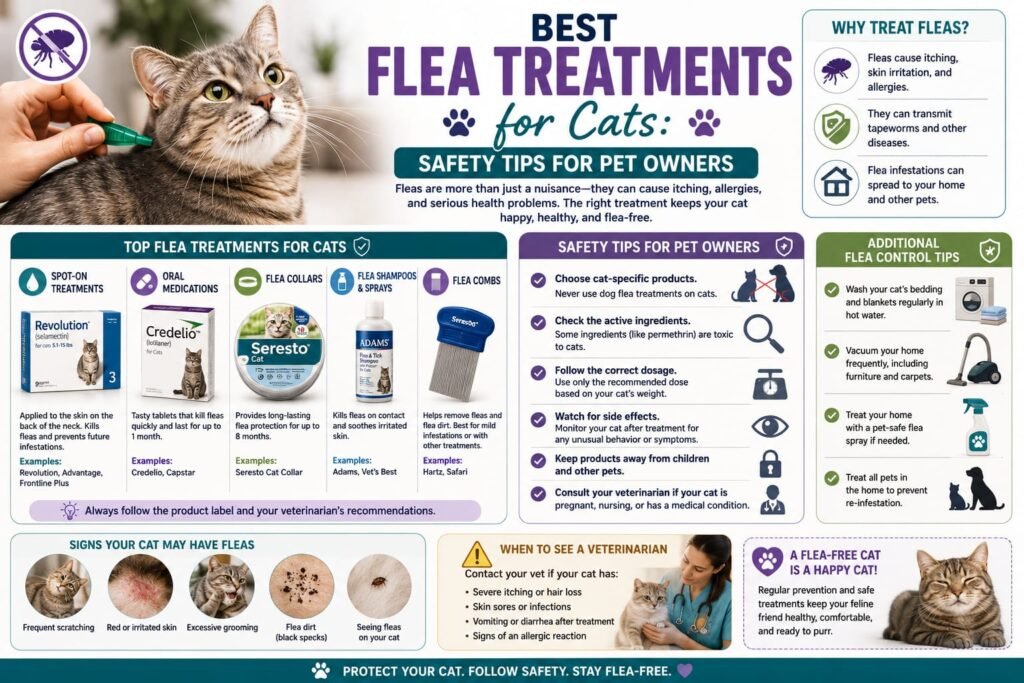
However, each pet should receive a product specifically appropriate for its species, age, size, and health. Never use one animal’s treatment on another animal without checking with a veterinarian.
When Should You Contact a Veterinarian?
Contact a veterinarian if your cat has severe itching, significant hair loss, damaged skin, weakness, pale gums, or a large flea infestation. Young kittens and cats with other health problems may require particular attention.
You should also contact a veterinarian if your cat develops unusual symptoms after receiving a flea treatment. Signs such as excessive drooling, shaking, weakness, vomiting, or unusual behavior can require prompt professional evaluation.
Preventing Future Flea Problems
Regular prevention can be easier than dealing with an established infestation. The most suitable prevention schedule depends on the product, your cat’s lifestyle, and the flea risk in your area.
Keep your cat’s bedding and resting areas clean and monitor the coat regularly. If fleas continue to appear despite treatment, ask your veterinarian whether the treatment plan and environmental control need to be changed.
People Also Ask (PAA)
What is the safest flea treatment for cats?
The safest option depends on the individual cat. Use a product specifically approved for cats and appropriate for the cat’s age and weight, and ask a veterinarian if you are unsure which product to choose.
Can I use dog flea medicine on my cat?
No, you should not use dog flea medicine on a cat unless a veterinarian specifically confirms that it is safe. Some dog flea products contain ingredients that can be dangerous to cats.
How do I know if my cat has fleas?
Frequent scratching , excessive grooming, hair loss, skin irritation, and visible flea dirt can be signs of fleas. A veterinarian can help confirm the cause if you are uncertain.
Do indoor cats need flea treatment?
Indoor cats can still be exposed to fleas. Whether regular prevention is appropriate depends on the individual cat and its risk of exposure.
Can fleas make cats sick?
Yes. Fleas can cause significant skin irritation, and heavy infestations can be particularly concerning for young or vulnerable cats.
How do I get rid of fleas from my home?
Flea control may require treating the cat appropriately while also cleaning the environment. Washing bedding and regularly vacuuming areas where pets spend time can help reduce flea stages in the home.
Can kittens use flea treatments?
Not every flea product is suitable for young kittens. Always check the product’s age requirements and consult a veterinarian when treating a kitten.
Frequently Asked Questions
1. How often should I use flea treatment on my cat?
The schedule depends on the specific product. Follow the product instructions or the treatment plan provided by your veterinarian rather than applying treatments more frequently than recommended.
2. Can fleas live inside my house?
Yes. Flea eggs and immature flea stages can exist in the environment, including areas where pets rest. This is why environmental cleaning can be an important part of flea control.
3. Can flea bites cause hair loss?
Yes. Repeated scratching, licking, and biting caused by flea irritation can lead to hair loss and skin damage.
4. What should I do if my cat reacts badly to flea medicine?
Stop further exposure and contact a veterinarian promptly, especially if your cat shows unusual behavior, shaking, excessive drooling, weakness, vomiting, or other concerning symptoms.
5. Should all pets in my home receive flea prevention?
If fleas are present, all susceptible pets may need an appropriate flea-control plan. Each animal should receive a product specifically suitable for its species and individual circumstances.
Conclusion
Fleas can cause uncomfortable itching and skin problems in cats, and some cats may develop particularly strong reactions to flea bites. Effective flea control usually involves choosing an appropriate cat-specific treatment and paying attention to the environment where the cat lives.
The most important safety rule is to avoid using products intended for another species without veterinary approval. By using appropriate prevention, monitoring your cat for symptoms, and seeking veterinary advice when problems occur, pet owners can help protect their cats from flea-related discomfort and complications.