
Introduction
As cats grow older, their health and daily needs can change. Senior cats may become less active, sleep more, lose muscle, or show changes in appetite and behavior. Some changes can be part of normal aging, while others may indicate a health condition that needs veterinary attention.
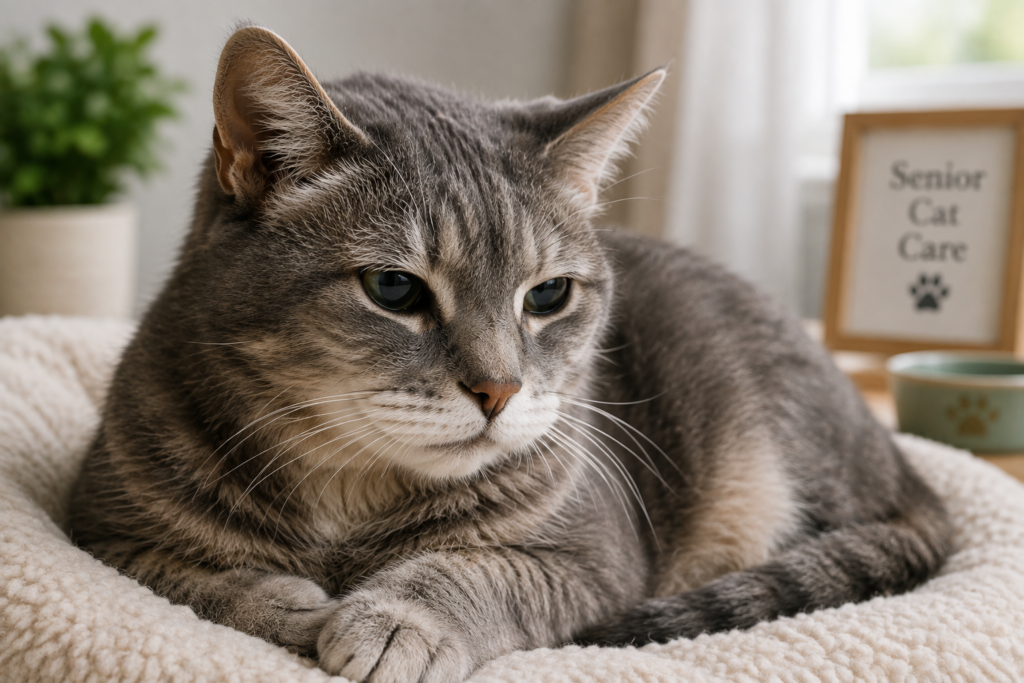
Providing appropriate care can help older cats remain comfortable and maintain a good quality of life. Regular veterinary examinations, a suitable diet, comfortable living spaces, and close observation can all be important parts of senior cat care.
When Is a Cat Considered Senior?
Cats age at different rates, and individual health can vary considerably. As a cat becomes older, regular health monitoring becomes increasingly important.
Age alone does not tell you everything about a cat’s health. An older cat that remains active and comfortable may have different needs from another cat of the same age with chronic health problems.
Common Changes in Senior Cats
Older cats may gradually change their daily routines. They may spend more time sleeping, play less frequently, or take longer to move around after resting.
Lower Activity: Your cat may become less interested in running, jumping, or extended play.
Weight Changes: Unexplained weight gain or loss can be an important health signal.
Behavior Changes: Increased hiding, unusual vocalization, or changes in interaction may deserve attention.
Common Health Conditions in Older Cats
Senior cats can develop several health conditions as they age. Some problems may progress slowly, making regular veterinary examinations especially useful.
Kidney disease, dental problems, arthritis, thyroid disorders, and other conditions can affect older cats. Symptoms may overlap, so a veterinarian can help determine whether a change is related to aging or an underlying illness.
Kidney Health in Senior Cats
Kidney problems are relatively common in older cats. Changes in drinking, urination, appetite, weight, or energy can sometimes be associated with kidney disease.
A veterinarian may recommend regular examinations and diagnostic testing to monitor kidney function. Early detection can help guide appropriate management and ongoing care.
Dental Health for Older Cats
Dental problems can become an important concern as cats get older. Painful teeth or gums may affect eating, grooming, and overall behavior.
Watch Eating Habits: Changes in chewing, food preferences, or appetite may indicate oral discomfort.
Check for Breath Changes: Persistent bad breath can be a sign of dental disease.
Schedule Dental Examinations: Veterinary dental checks can help identify problems that may not be obvious at home.
Arthritis and Mobility Changes
Older cats may develop joint discomfort that affects their ability to jump, climb, or move around comfortably. A cat with mobility problems may stop using favorite sleeping areas if they are difficult to reach.
Providing easy access to food, water, resting areas, and litter boxes can make daily life more comfortable. If you notice stiffness or difficulty moving, discuss the changes with your veterinarian.
Supporting a Senior Cat’s Diet
Nutritional needs can change as cats age, but there is no single diet that is ideal for every senior cat. The appropriate food depends on the cat’s health, weight, activity level, and any diagnosed conditions.
Avoid making major dietary changes without considering your cat’s individual needs. A veterinarian can help determine whether a particular diet or feeding plan is appropriate.
Creating a Comfortable Home
Small changes around the home can make daily activities easier for an older cat. Keep important resources in places that are easy for the cat to reach.
Low-entry litter boxes may be helpful for cats with mobility difficulties. Comfortable bedding, accessible water, and safe resting areas can also help senior cats move around with less effort.
Importance of Regular Veterinary Visits
Older cats can benefit from regular veterinary examinations because some health conditions may develop gradually. A veterinarian can assess weight, teeth, mobility, hydration, and other aspects of your cat’s health.
Depending on the cat’s age and medical history, the veterinarian may recommend blood tests, urine testing, dental evaluation, or other examinations to monitor changes over time.
When Should You Contact a Veterinarian?
Contact your veterinarian if your senior cat experiences unexplained weight loss, significant appetite changes, repeated vomiting, changes in drinking or urination, difficulty breathing, unusual weakness, or major behavior changes.
Sudden or severe symptoms should receive prompt veterinary attention. Do not assume that a concerning change is simply part of getting older.
People Also Ask (PAA)
What are common health problems in senior cats?
Common concerns can include dental disease, kidney problems, arthritis, thyroid disorders, and other age-related conditions.
How can I keep my senior cat healthy?
Regular veterinary care, appropriate nutrition, comfortable living arrangements, dental care, and monitoring for changes can help support an older cat’s health.
Do older cats need special food?
Some senior cats may benefit from specific nutritional adjustments, particularly when they have a diagnosed health condition. Ask your veterinarian about your cat’s individual dietary needs.
Why is my older cat losing weight?
Weight loss can have many causes, including dental problems, digestive issues, kidney disease, thyroid problems, and other medical conditions. Unexplained weight loss should be discussed with a veterinarian.
Do senior cats sleep more?
Older cats may naturally sleep more than younger cats. However, a sudden increase in sleeping combined with weakness, or other symptoms may require veterinary evaluation.
How can I help my senior cat with mobility problems?
Make food, water, litter boxes, and resting areas easy to access. Your veterinarian can also assess whether an underlying joint or health problem is affecting mobility.
How often should a senior cat see a veterinarian?
The appropriate schedule depends on your cat’s age, health, and medical history. Your veterinarian can recommend an examination schedule suitable for your individual cat.
Frequently Asked Questions
1. What age is considered senior for a cat?
Cats are generally considered senior as they enter their later years, but aging varies between individuals. Veterinary monitoring becomes increasingly useful as cats get older.
2. Why is my senior cat drinking more water?
Increased thirst can have several causes and may sometimes be associated with health conditions. Persistent changes in drinking should be discussed with a veterinarian.
3. Why does my older cat hide more?
Hiding can sometimes occur because of stress, discomfort, pain, or illness. A noticeable change in behavior should not automatically be attributed to age.
4. Can senior cats still play?
Yes. Many older cats continue to enjoy play, although they may prefer shorter and gentler activities than they did when younger.
5. How can I make my home safer for an older cat?
Keep essential resources easily accessible, provide comfortable resting areas, and reduce situations that require difficult jumping or climbing, especially if your cat has mobility problems.
Conclusion
Senior cats can continue to enjoy comfortable and active lives when their changing needs are recognized. Dental health, kidney function,behavior, and general wellness are all important areas for owners to monitor.
Regular veterinary examinations can help identify health problems that may not be obvious at home. By providing appropriate nutrition, easy access to essential resources, a comfortable environment, and prompt attention to unusual changes, owners can give their senior cats better support throughout their later years.