
Introduction
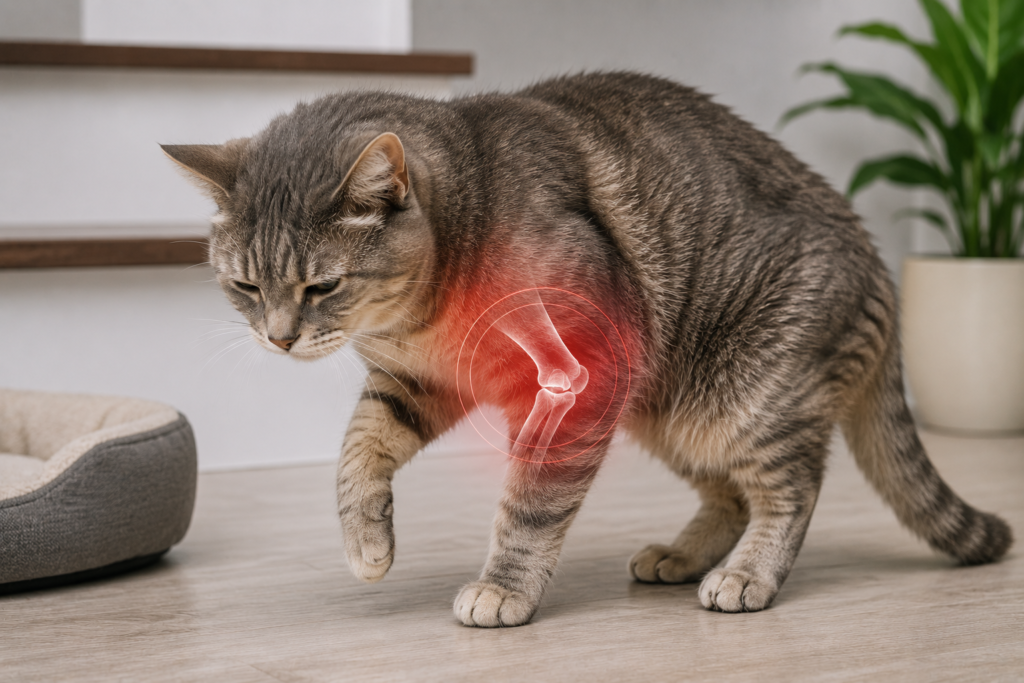
As cats get older, changes in movement can become easier to notice. A cat that once jumped onto furniture without hesitation may begin using lower surfaces, avoiding stairs, or taking longer to get up after resting. These changes can sometimes be related to joint discomfort.
Arthritis is a condition that can affect a cat’s joints and make normal movements less comfortable. Because cats are very good at hiding pain, the signs may be subtle at first. Paying attention to changes in movement, grooming, jumping, and daily behavior can help owners recognize when veterinary advice may be needed.
What Is Arthritis in Cats?
Arthritis involves changes and inflammation in the joints that can affect comfortable movement. It can occur in different joints, including those involved in walking, jumping, and climbing.
Cats may adapt their behavior to avoid movements that cause discomfort. Instead of showing obvious pain, they may simply become less active or stop doing activities they previously enjoyed.
Common Signs of Arthritis
The signs of arthritis can develop gradually, so owners may initially mistake them for normal aging. Watching your cat’s everyday routine can help reveal changes.
Difficulty Jumping: Your cat may stop jumping onto high furniture or may hesitate before jumping.
Stiff Movement: Your cat may appear stiff after sleeping or resting.
Less Activity: Your cat may spend more time resting and show less interest in playing.
Changes in Grooming: Joint discomfort can make it harder for a cat to reach certain areas while grooming.
Changes in Litter Box Habits
Arthritis can sometimes make entering or leaving a litter box more difficult, particularly when the box has high sides. A cat with mobility discomfort may avoid a box that requires difficult movement.
If your cat suddenly starts having accidents outside the litter box, do not assume arthritis is the only cause. Urinary problems, digestive issues, stress, and other medical conditions can also affect litter-box behavior.
How Arthritis Can Affect Daily Life
Joint discomfort can change how a cat moves through the home. A cat may stop climbing, avoid stairs, or choose sleeping locations that are easier to reach.
Some cats may also become less interactive because movement is uncomfortable. These changes can be gradual, which is why comparing your cat’s current behavior with its normal routine can be useful.
How Veterinarians Diagnose Joint Problems
A veterinarian can evaluate your cat’s movement, physical condition, and medical history when arthritis is suspected. The examination may include checking the joints and observing how the cat moves.
Additional diagnostic tests may sometimes be recommended depending on the symptoms. A proper evaluation is important because stiffness or reduced activity can have causes other than arthritis.
Treatment Options for Cat Arthritis
Treatment depends on the individual cat and the severity of the joint problem. A veterinarian may recommend a combination of pain management, weight management, environmental changes, and other supportive strategies.
Veterinary Pain Management: A veterinarian can determine whether medication is appropriate and select a treatment suitable for the cat.
Weight Management: Maintaining an appropriate body weight can help reduce unnecessary stress on joints.
Environmental Support: Making food, water, litter boxes, and resting areas easier to reach can help a cat with mobility difficulties.
Making the Home More Comfortable
Small changes around the home can make daily movement easier for a cat with joint discomfort. Place important resources where the cat does not need to make difficult jumps.
Soft, comfortable resting areas may also be helpful. If your cat enjoys sleeping on furniture but struggles to jump up, providing an easier route to the preferred resting location can reduce unnecessary strain.
Exercise and Activity
Cats with joint problems may still benefit from gentle, appropriate activity. However, activities should match the cat’s abilities and should not force painful movements.
Short play sessions and low-impact activities may be easier than activities requiring repeated high jumps. If your cat appears uncomfortable during movement, discuss an appropriate activity level with your veterinarian.
Medicines and Supplements
Veterinarians may recommend specific treatments to manage pain and inflammation in cats with arthritis. The correct medication depends on the cat’s health, age, weight, and other factors.
Some joint-support products and supplements are marketed for cats, but owners should discuss them with a veterinarian before adding them to a cat’s routine. Never give human pain medicine to a cat unless a veterinarian specifically instructs you to do so.
When Should You Contact a Veterinarian?
Contact a veterinarian if your cat develops persistent stiffness, stops jumping, becomes noticeably less active, changes grooming habits, or appears uncomfortable when moving.
Seek prompt veterinary attention if your cat suddenly cannot walk normally, experiences severe pain, becomes extremely weak, or has another sudden major change in behavior or mobility.
People Also Ask (PAA)
What are the first signs of arthritis in cats?
Early signs may include less jumping, stiffness after resting, reduced activity, changes in grooming, and difficulty using stairs or climbing.
How can I tell if my cat’s joints hurt?
Cats may hide pain. Changes such as avoiding jumps, moving stiffly, resting more , or becoming less active can indicate discomfort.
Can arthritis in cats be treated?
Arthritis may not have a simple cure, but veterinary care can help manage discomfort and support mobility and quality of life.
Should I give my cat pain medicine for arthritis?
Only use medication specifically recommended by a veterinarian. Human pain medicines can be dangerous for cats.
Can overweight cats develop more joint problems?
Extra body weight can place additional stress on joints. A veterinarian can help determine an appropriate weight-management plan.
Can cats with arthritis still play?
Many cats can continue appropriate gentle activity. The type and amount of activity should be adjusted to the individual cat’s comfort and abilities.
How can I make my home easier for a cat with arthritis?
Keep food, water, litter boxes, and resting areas easily accessible. Reducing the need for high jumps can also make movement easier.
Frequently Asked Questions
1. Do cats hide arthritis pain?
Cats often hide signs of discomfort, which means arthritis may appear as subtle behavior or movement changes rather than obvious pain.
2. Can arthritis make a cat stop jumping?
Yes. A cat may avoid jumping because the movement can be uncomfortable or difficult.
3. Is stiffness after sleeping a sign of arthritis?
Stiffness after resting can be associated with joint problems, but other conditions can cause similar signs. A veterinarian can help determine the cause.
4. Can I massage my cat’s painful joints?
Do not massage painful or swollen joints without veterinary guidance. Your veterinarian can advise whether gentle handling or another supportive technique is appropriate.
5. Are supplements helpful for cats with arthritis?
Some supplements are marketed for joint support, but their suitability varies. Discuss any supplement with your veterinarian before giving it to your cat.
Conclusion
Cat arthritis can affect movement, jumping, grooming, playing, and other everyday activities. Because cats often hide discomfort, subtle changes in normal behavior can be important clues for owners.
Providing easy access to essential resources, maintaining a healthy body weight, encouraging appropriate activity, and seeking veterinary advice can help support a cat with joint problems. If your cat develops persistent stiffness, reduced mobility, or other noticeable changes, professional evaluation is the safest way to determine the cause and appropriate treatment.