
Introduction
Cats are naturally good at hiding pain and discomfort. In the wild, showing weakness can make an animal more vulnerable, so many cats continue their normal routines even when they are not feeling well.Pet owners may need to look carefully for small changes in behavior, movement, appetite, or daily habits.
Recognizing pain early can help a cat receive appropriate veterinary care before the problem becomes more serious. A cat may not cry or show obvious signs, so understanding the common warning signs can help owners notice when something is wrong.
Why Cats Hide Pain
Cats often do not express pain in the same obvious way as humans. Instead of making loud sounds or clearly showing discomfort, they may become quieter, or change their normal routines.
This means that even small changes can be important. If your cat suddenly behaves differently from its usual personality, it is worth paying attention and considering whether pain, illness, stress, or another problem could be involved.
Changes in Daily Behavior
One of the first signs of pain may be a change in your cat’s normal behavior. A friendly and active cat may suddenly become quiet, withdrawn, or less interested in interacting with people.
Some cats may hide under furniture or choose isolated places where they normally do not spend much time. Others may become more irritable or react negatively when touched in a painful area.
Changes in Movement
Pain can affect how comfortably a cat walks, jumps, climbs, or changes position. A cat may hesitate before jumping onto furniture or avoid activities it previously enjoyed.
Difficulty Jumping: Your cat may stop jumping onto beds, chairs, or other high places.
Stiff Movement: The cat may move more slowly or appear stiff after resting.
Less Activity: A painful cat may spend more time sleeping and show less interest in play.
Limping: An unusual walking pattern or avoiding weight on a leg should be taken seriously.
Changes in Eating and Drinking
Pain can sometimes affect a cat’s appetite. A cat with dental problems, digestive discomfort, or another painful condition may eat less than usual or show changes in the way it eats.
Watch for sudden changes in food or water intake. A cat that refuses food, struggles to chew, drops food from its mouth, or shows other unusual eating behavior may need veterinary attention.
Changes in Grooming Habits
Cats normally spend a significant amount of time grooming themselves. Pain can make it difficult for them to reach certain parts of their body, especially if movement is uncomfortable.
Some cats may groom less and develop an untidy coat. Others may repeatedly lick or bite one specific area because it feels painful or irritated.
Changes in Litter Box Habits
Pain can affect a cat’s ability or willingness to use the litter box. Joint discomfort may make it difficult to step over high sides, while other health problems may cause changes in urination or bowel movements.
Difficulty Entering the Box: A cat may avoid a high-sided litter box if climbing into it is uncomfortable.
Accidents Outside the Box: Sudden changes in litter-box behavior should not be ignored.
Straining: Difficulty urinating or passing stool can be a serious sign and requires veterinary attention.
Facial Expressions and Body Position
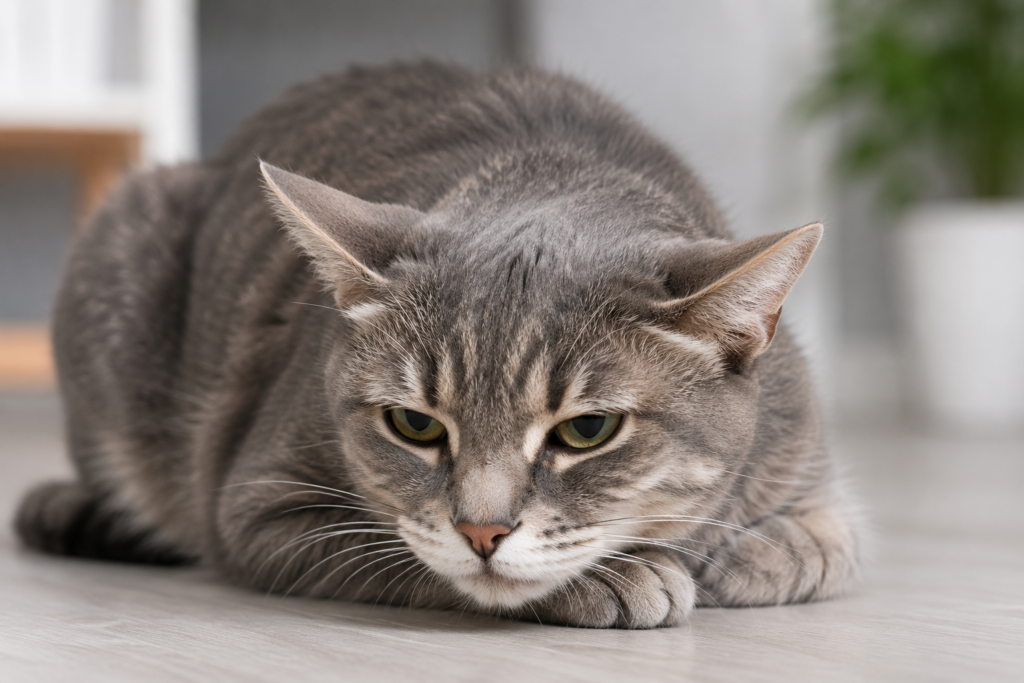
A cat in pain may hold its body differently from normal. It may sit in a tense position, or avoid stretching comfortably.
Changes in facial expression can also occur. A cat may keep its eyes partly closed, appear tense around the face, or position its ears differently. These signs should be considered together with other changes in behavior and health.
Unusual Sounds or Reactions
Some cats become quieter when they are in pain, while others may vocalize more than usual. A normally quiet cat that suddenly cries, growls, or reacts strongly when touched may be experiencing discomfort.
Do not repeatedly press or touch an area that appears painful just to check your cat’s reaction. If you suspect pain, a veterinarian can examine the cat safely and determine the possible cause.
Common Causes of Pain in Cats
Cats can experience pain for many different reasons. Injuries, dental problems, arthritis, infections, digestive problems, and other health conditions can all cause discomfort.
The cause is not always obvious from behavior alone. Similar signs can occur with different conditions, which is why veterinary examination is important when pain is persistent, severe, or unexplained.
When Pain May Be an Emergency
Some signs require prompt veterinary attention. Sudden severe pain, inability to walk normally, difficulty breathing, collapse, or major weakness should be treated seriously.
Contact a veterinarian promptly if your cat appears to be in significant distress. Sudden difficulty urinating is also an emergency because urinary blockage can become life-threatening, particularly in male cats.
How Veterinarians Identify Pain
A veterinarian may examine your cat’s movement, body condition, mouth, joints, and other areas to look for possible sources of pain. You may also be asked about changes in appetite, behavior, activity, and litter-box habits.
Depending on the situation, additional tests such as blood work, imaging, or other diagnostic procedures may be recommended. Finding the underlying cause is important because proper treatment depends on what is causing the pain.
Never Give Human Pain Medicine Without Advice
Many human pain medications can be dangerous or toxic to cats. Never assume that a medicine is safe simply because it is commonly used by people.
Only give medication specifically prescribed or recommended for your cat by a qualified veterinarian. If you accidentally give your cat the wrong medicine or amount, contact a veterinary professional immediately.
People Also Ask (PAA)
How do I know if my cat is in pain?
Signs can include hiding, reduced activity, difficulty jumping, stiffness, appetite changes, changes in grooming, unusual vocalization, and changes in litter-box habits.
Do cats hide pain?
Yes. Cats can hide discomfort very effectively, so owners may notice subtle changes in normal behavior rather than obvious signs.
What does a cat in pain look like?
A painful cat may move differently, sit in a tense position, avoid jumping, hide more often, eat less, or react negatively when touched.
Why is my cat suddenly hiding?
Cats may hide because of pain, illness, stress, or fear. A sudden behavior change should be monitored and discussed with a veterinarian if it continues.
Can a cat be in pain and still eat?
Yes. Some cats continue eating even when they are uncomfortable. Appetite alone cannot always determine whether a cat is experiencing pain.
Should I give my cat human pain medicine?
No. Human pain medicines can be dangerous for cats. Only use medication recommended specifically by a veterinarian.
When should I take my cat to the vet for pain?
Seek veterinary advice if pain appears persistent, severe, unexplained, or is affecting eating, movement, breathing, or normal behavior.
Frequently Asked Questions
1. Can cats cry when they are in pain?
Some cats may vocalize more when uncomfortable, but many cats remain quiet. Lack of crying does not mean a cat is not in pain.
2. Does hiding always mean my cat is in pain?
No. Cats may hide for several reasons, including stress or fear. However, sudden or unusual hiding can be a warning sign when combined with other changes.
3. Can arthritis cause pain in cats?
Yes. Arthritis and other joint problems can cause discomfort and may affect jumping, walking, grooming, and daily activity.
4. Why is my cat suddenly less active?
Reduced activity can be caused by pain, illness, aging, stress, or other factors. Persistent changes should be discussed with a veterinarian.
5. Can dental problems cause pain in cats?
Yes. Dental disease can cause significant discomfort and may affect eating, grooming, and overall behavior.
Conclusion
Recognizing pain in cats can be challenging because many cats hide discomfort. Small changes in movement, behavior, appetite, grooming, litter-box habits, and daily routines can provide important clues that something may be wrong.
The safest approach is to take persistent or unusual changes seriously and seek veterinary advice when needed. Early attention can help identify the cause of pain and allow appropriate treatment to support your cat’s comfort, and quality of life.