
Introduction
Cats can experience stress and anxiety when something changes in their environment or daily routine. Moving to a new home, meeting unfamiliar people or animals, loud noises, changes in routine, or limited access to important resources can all affect some cats. Every cat reacts differently, so a situation that causes stress for one cat may not affect another in the same way.
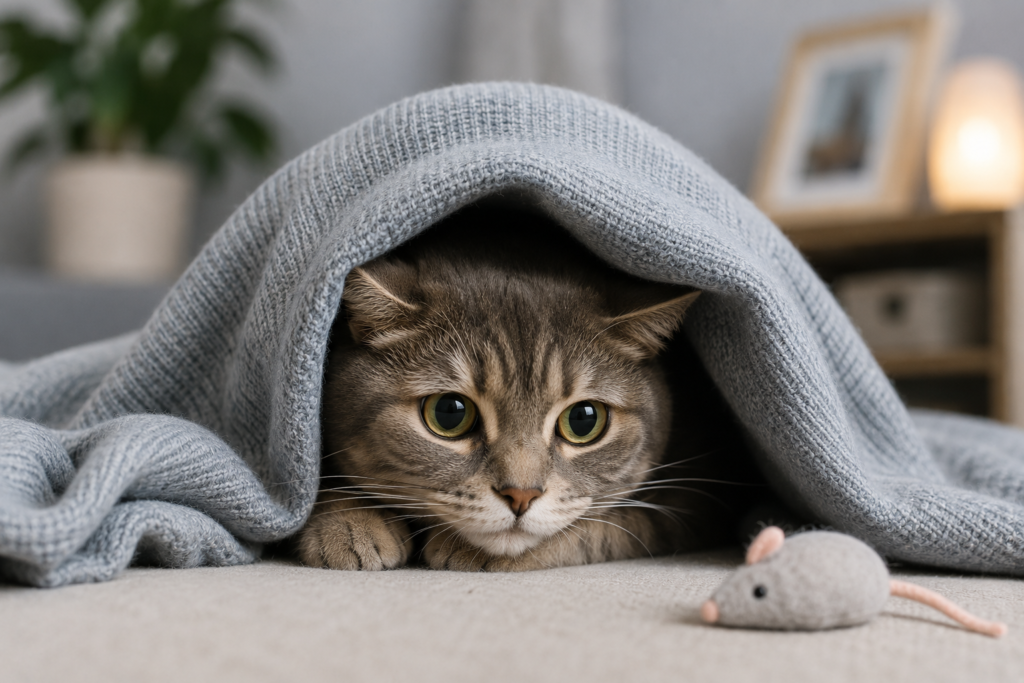
Recognizing signs of stress can help owners make their cat feel safer and more comfortable. However, sudden changes in behavior can also be caused by pain or illness, so it is important not to assume that every behavior problem is caused by anxiety.
What Causes Stress in Cats?
Cats often prefer familiar surroundings and predictable routines. Major changes in the home can sometimes make a cat feel uncertain or unsafe.
Common triggers may include moving, renovations, visitors, new pets, changes in family routines, loud sounds, or changes in the location of food, water, or litter boxes. Identifying possible changes can help owners understand what may be affecting their cat.
Common Signs of Anxiety in Cats
Stress can affect a cat’s behavior in different ways. Some cats become quiet and withdrawn, while others may become more active or vocal.
Hiding More Often: A stressed cat may spend more time under furniture or in isolated areas.
Changes in Appetite: Some cats may eat less or show changes in normal feeding habits.
Excessive Grooming: Repeated licking or chewing can sometimes occur when a cat is stressed.
Unusual Vocalization: Your cat may meow, cry, or make other sounds more often than usual.
Changes in Behavior
A normally friendly cat may become less interested in interaction when feeling stressed. Some cats may avoid people, while others may become unusually clingy.
Irritability can also occur. A stressed cat may react negatively when approached or touched, especially if it feels unable to escape from a situation it finds uncomfortable.
Litter Box Changes
Stress can sometimes affect a cat’s litter-box habits. A cat may begin avoiding the box or have accidents in unusual places.
However, urinary and digestive problems can cause similar changes. Sudden difficulty urinating or repeated unsuccessful attempts to urinate require urgent veterinary attention, particularly because urinary blockage can become a serious emergency.
Excessive Grooming and Fur Changes
Some anxious or stressed cats may repeatedly groom one particular area. Over time, this can lead to thinning fur, hair loss, or irritated skin.
Excessive grooming can also be caused by allergies, parasites, pain, or other medical problems. A veterinarian can help determine whether a health condition needs to be addressed.
Creating a Calm Environment
A quiet and predictable environment can help many cats feel more secure. Provide comfortable resting areas where your cat can relax without being disturbed.
Give your cat access to familiar resources and avoid unnecessary sudden changes when possible. If changes cannot be avoided, introducing them gradually may help some cats adjust more comfortably.
Providing Safe Spaces
Cats often benefit from having a place where they can retreat when they feel uncomfortable. A safe space may be a quiet room, covered bed, elevated resting area, or another location where the cat feels secure.
Keep the Area Calm: Avoid repeatedly disturbing your cat when it chooses to rest there.
Provide Important Resources: Make sure the cat can easily access water, food, and a suitable litter box.
Allow Choice: Let your cat decide when it wants to come out and interact.
The Importance of Routine
A predictable routine may help reduce stress for some cats. Try to keep feeding, play, and other regular activities reasonably consistent.
This does not mean every activity must happen at exactly the same time. The goal is to avoid unnecessary unpredictability and give the cat a more familiar daily environment.
Play and Mental Stimulation
Appropriate play can give cats an outlet for natural behaviors and may help reduce boredom. Interactive toys and safe opportunities for exploration can provide mental stimulation.
Choose activities that match your cat’s age and physical ability. Short, regular play sessions may be more enjoyable than forcing a long activity when the cat is not interested.
Introducing New Pets or People
New animals and unfamiliar people can be stressful for some cats. Introductions should generally be handled gradually rather than forcing immediate close contact.
Allow the cat to adjust at its own pace and maintain access to familiar safe spaces. If conflict, fear, or stress continues, ask a veterinarian or qualified animal behavior professional for guidance.
When Should You Contact a Veterinarian?
Contact a veterinarian if your cat has sudden or significant behavior changes, stops eating, repeatedly hides, develops excessive grooming, or has persistent litter-box changes.
A veterinarian can help rule out pain, illness, and other medical causes. If the behavior is related to anxiety, professional guidance can help you develop an appropriate management plan.
People Also Ask (PAA)
How can I tell if my cat is stressed?
Signs may include hiding, appetite changes, excessive grooming, unusual vocalization, irritability, and changes in litter-box habits.
What causes anxiety in cats?
Changes in routine, moving, new pets, unfamiliar people, loud noises, and environmental changes can cause stress in some cats.
Can stress make a cat stop eating?
Stress may affect appetite, but a cat that refuses food should be taken seriously because illness and other medical problems can also cause appetite loss.
Why is my cat hiding all day?
Cats may hide because of stress, fear, pain, or illness. Sudden or persistent hiding should be monitored and discussed with a veterinarian when appropriate.
Can moving to a new home stress a cat?
Yes. A new environment can be stressful because it removes familiar scents, and surroundings.
Can cats become stressed by other pets?
Yes. Conflict, competition for resources, or unfamiliar animals can cause stress in some cats.
How can I calm my anxious cat?
Provide a quiet environment, safe resting spaces, predictable routines, and gradual introductions to new situations. Seek veterinary advice if anxiety is severe or persistent.
Frequently Asked Questions
1. Can cats get anxiety?
Cats can experience fear and stress in response to different situations. Some cats may show stronger reactions to environmental changes than others.
2. Does stress cause excessive grooming?
Stress can contribute to repeated grooming in some cats, but medical causes such as allergies or parasites should also be considered.
3. Should I force my cat to come out of hiding?
It is generally better not to force a frightened cat out of its safe space. Give the cat time and allow it to approach when it feels comfortable.
4. Can a new litter box location cause stress?
Changes to familiar resources can affect some cats. If you need to move a litter box, consider your cat’s habits and make changes as gradually as practical.
5. Can I give my cat human anxiety medicine?
No. Do not give human medication to your cat unless a veterinarian specifically instructs you to do so.
Conclusion
Cat anxiety and stress can appear through changes in behavior, appetite, vocalization, and litter-box habits. Because these signs can also be caused by pain or illness, owners should pay attention to sudden or persistent changes.
A calm environment, safe spaces, regular routines, and appropriate play can help many cats feel more comfortable. If your cat’s anxiety appears severe, continues for a long time, or significantly affects daily life, veterinary guidance can help identify the cause and determine the best way to provide support.