
Introduction
Cats can develop different types of skin problems throughout their lives. Some issues may cause itching, redness, hair loss, dry skin, or repeated scratching. Skin problems can happen for many reasons, including parasites, allergies, infections, grooming problems, or other health conditions.
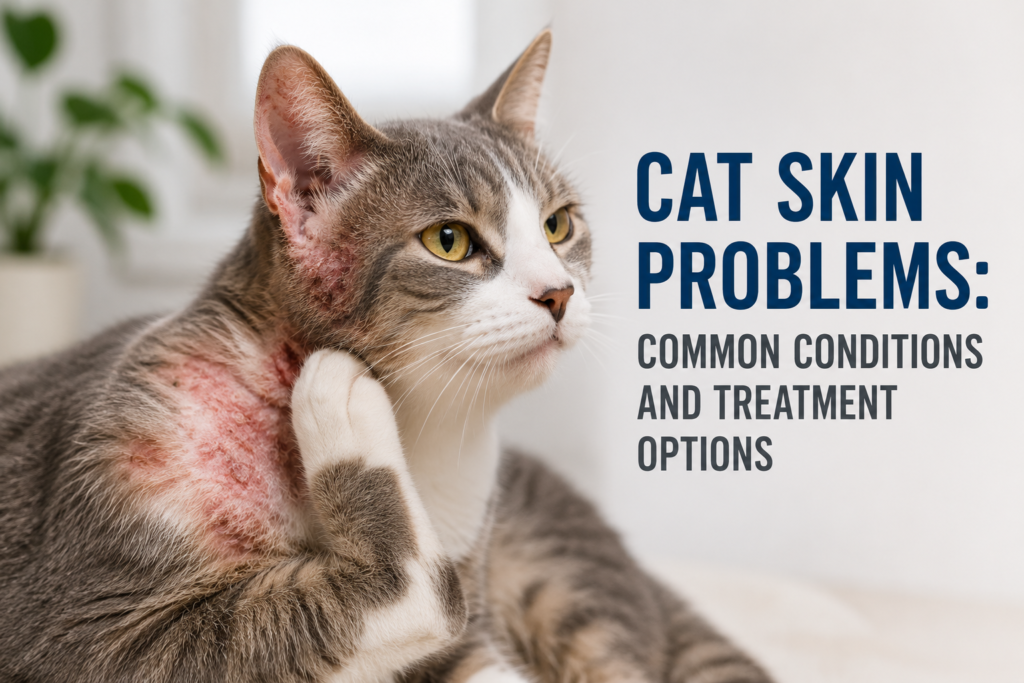
Because different skin conditions can produce similar symptoms, it is not always possible to identify the exact cause by looking at the skin alone. Paying attention to changes in your cat’s coat and behavior can help you recognize a problem early and seek veterinary advice when necessary.
Common Signs of Skin Problems in Cats
Skin problems can appear in different ways depending on the underlying cause. Some cats may scratch frequently, while others may lick or bite one area of their body repeatedly.
Frequent Scratching: Your cat may scratch more often than usual.
Hair Loss: Small or large areas of thinning fur may develop.
Red or Irritated Skin: The skin may appear inflamed or sensitive.
Scabs or Bumps: You may notice small scabs, raised areas, or unusual changes on the skin.
Fleas and Other Parasites
Fleas can cause significant itching and skin irritation in cats. Some cats may scratch, bite, or lick themselves repeatedly when fleas are present.
Other parasites can also affect the skin and coat. If you suspect parasites, a veterinarian can recommend appropriate testing and safe treatment options for your cat.
Allergies and Skin Irritation
Some cats can develop skin problems related to allergies or environmental irritation. Possible triggers can vary and may include flea bites, certain foods, or substances in the environment.
Allergy-related skin problems can cause itching, excessive grooming, and changes in the skin or coat. Finding the trigger may require veterinary guidance because the same symptoms can occur with other conditions.
Excessive Grooming
Cats naturally groom themselves, but excessive licking or chewing can sometimes indicate a problem. Itching, pain, stress, or skin irritation may cause a cat to focus repeatedly on one area.
Repeated grooming can lead to hair loss or damaged skin. If your cat is constantly licking, biting, or pulling at its fur, it is important to consider both medical and behavioral causes.
Skin Infections
Bacterial or fungal infections can affect a cat’s skin. The appearance of the problem can vary, and some infections may cause hair loss, scaling, redness, or other visible changes.
A veterinarian may need to perform tests to identify the cause of a suspected infection. The correct treatment depends on what is affecting the skin, so using random creams or medications can make the problem worse.
Dry Skin and Dandruff
Some cats may develop dry or flaky skin. Dandruff can sometimes be related to environmental conditions, grooming difficulties, diet, or an underlying health problem.
A small amount of flaking may not always indicate a serious condition, but persistent or severe skin changes should be evaluated. Avoid applying human skin products unless a veterinarian confirms that they are safe for your cat.
Hair Loss in Cats
Hair loss can occur because of excessive grooming, parasites, infections, allergies, or other health conditions. The location and pattern of hair loss may provide useful information during a veterinary examination.
Small Patches: Localized hair loss may affect one particular area.
Large Areas: Widespread thinning can suggest a more extensive problem.
Repeated Licking: Constant grooming may cause the fur to break or fall out.
How Veterinarians Diagnose Skin Problems
A veterinarian may examine your cat’s skin and coat and ask questions about its behavior, diet, environment, and parasite prevention. Information about when the problem started can also be helpful.
Depending on the symptoms, the veterinarian may recommend skin tests, parasite checks, laboratory testing, or other procedures. Identifying the underlying cause helps ensure that treatment is appropriate.
Treatment Options for Cat Skin Problems
Treatment depends entirely on the cause of the skin problem. A veterinarian may recommend parasite control, medication, dietary changes, or another approach based on the diagnosis.
Do not use human creams, shampoos, or medications without veterinary guidance. Products that are safe for people may not be safe for cats, especially because cats can lick substances from their fur.
Keeping Your Cat’s Skin Healthy
Regular grooming and observation can help owners notice changes in the coat and skin. Check for unusual scratching, hair loss, scabs, or areas that your cat repeatedly licks.
Appropriate parasite prevention and regular veterinary care can also support skin health. If your cat develops repeated skin problems, keeping notes about possible triggers and changes can help your veterinarian investigate the cause.
When Should You Contact a Veterinarian?
Contact a veterinarian if your cat has severe itching, significant hair loss, open wounds, swelling, persistent scabs, or skin changes that do not improve.
Prompt veterinary advice is also important if your cat appears very uncomfortable or develops sudden widespread skin changes. Early treatment may help prevent further irritation and damage from repeated scratching or grooming.
People Also Ask (PAA)
Why is my cat scratching so much?
Frequent scratching can be caused by fleas, other parasites, allergies, skin infections, or other forms of irritation. A veterinarian can help identify the cause.
What causes hair loss in cats?
Hair loss can result from excessive grooming, parasites, allergies, infections, stress-related behavior, or other health conditions.
Can cats get skin allergies?
Yes. Cats can develop allergic skin problems from different triggers. The exact cause may require veterinary investigation.
Can fleas cause skin problems in cats?
Yes. Flea bites can cause itching and skin irritation, and some cats may have stronger reactions to flea bites than others.
Is dandruff normal in cats?
A small amount of flaking may sometimes occur, but persistent dandruff or other skin changes can indicate that further evaluation is needed.
Can I use human cream on my cat’s skin?
Do not use human creams or other skin products unless a veterinarian specifically confirms they are safe for your cat.
Why is my cat licking one spot constantly?
Repeated licking can be caused by itching, pain, irritation, or other medical or behavioral problems. Persistent licking should be investigated.
Frequently Asked Questions
1. Can stress cause skin problems in cats?
Stress can sometimes contribute to excessive grooming, which may result in hair loss or skin irritation. Medical causes should also be ruled out.
2. Are cat skin infections contagious?
Some skin infections can potentially spread between animals or, in certain situations, to people. The risk depends on the specific cause.
3. How often should I check my cat’s skin?
Regular observation during normal grooming and petting can help you notice changes. You do not need to perform a detailed examination every day.
4. Can food cause skin problems in cats?
Certain cats may have food-related sensitivities or allergies that contribute to skin symptoms. A veterinarian can help determine whether diet is involved.
5. Should I bathe my cat for skin problems?
Bathing is not appropriate for every skin condition. Use medicated or special shampoos only when recommended by a veterinarian.
Conclusion
Cat skin problems can cause itching, hair loss, redness, scabs, and other uncomfortable symptoms. Parasites, allergies, infections,, and other health conditions can all affect the skin and coat.
The most important step is identifying the underlying cause instead of treating the symptoms with random products. Regular observation, appropriate parasite prevention, and veterinary care can help protect your cat’s skin. If symptoms are persistent, severe, or getting worse, professional veterinary advice is the safest option.