
Introduction
Accidents and sudden health problems can happen when pet owners least expect them. A dog or cat may suffer a minor injury, experience bleeding, swallow something dangerous, or suddenly become ill. Knowing basic first-aid principles can help owners respond more calmly while arranging appropriate veterinary care.
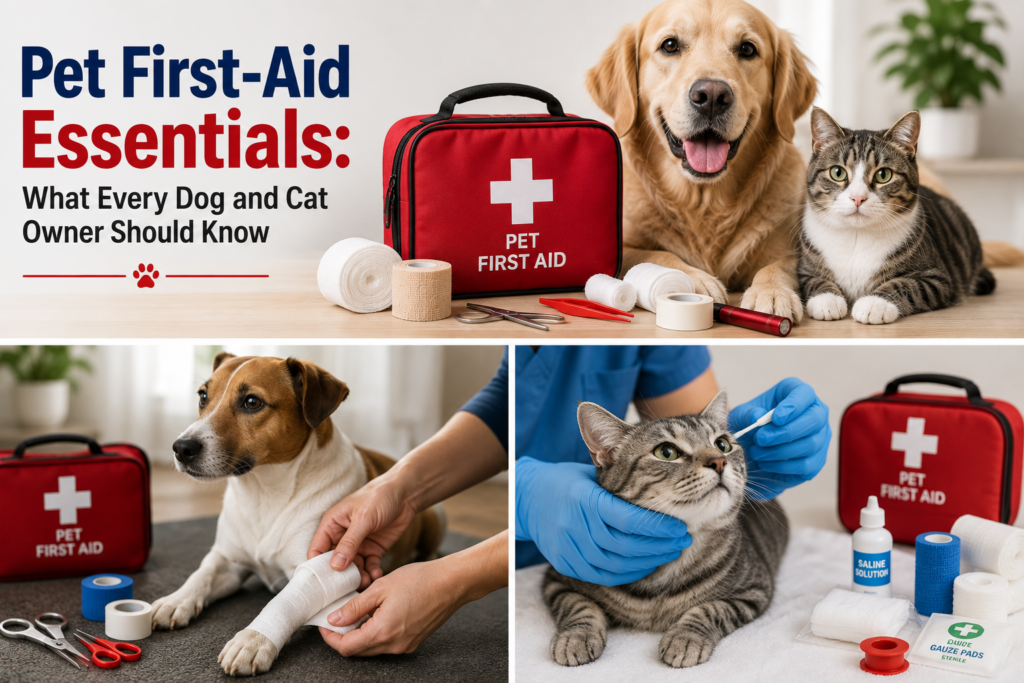
Pet first aid is not a replacement for professional treatment. Its purpose is to provide temporary support, reduce additional risk, and help keep the animal as safe as possible until a veterinarian can examine it. Every pet owner should understand basic emergency warning signs and keep useful supplies available.
What Is Pet First Aid?
Pet first aid refers to the immediate care given to an injured or suddenly ill animal before professional veterinary treatment is available. The correct response depends on the type and severity of the emergency.
In some situations, basic first aid may involve controlling visible bleeding or preventing the pet from causing further injury. In serious emergencies , the priority is often getting the animal to a veterinary clinic as quickly and safely as possible.
Important Items for a Pet First-Aid Kit
A basic pet first-aid kit can help owners prepare for minor injuries and unexpected situations. Store supplies in a clean, easy-to-find container and check them regularly.
Clean Gauze: Can be useful for covering certain wounds or applying gentle pressure to bleeding.
Bandage Materials: Suitable veterinary supplies may help protect an injury temporarily.
Disposable Gloves: Help maintain cleanliness when handling blood or other body fluids.
Emergency Contact Information: Keep your regular veterinarian and emergency veterinary clinic details easily available.
Know Your Pet’s Normal Behavior
Knowing what is normal for your dog or cat can make it easier to recognize when something is wrong. Pay attention to normal eating habits, activity levels, breathing, and behavior.
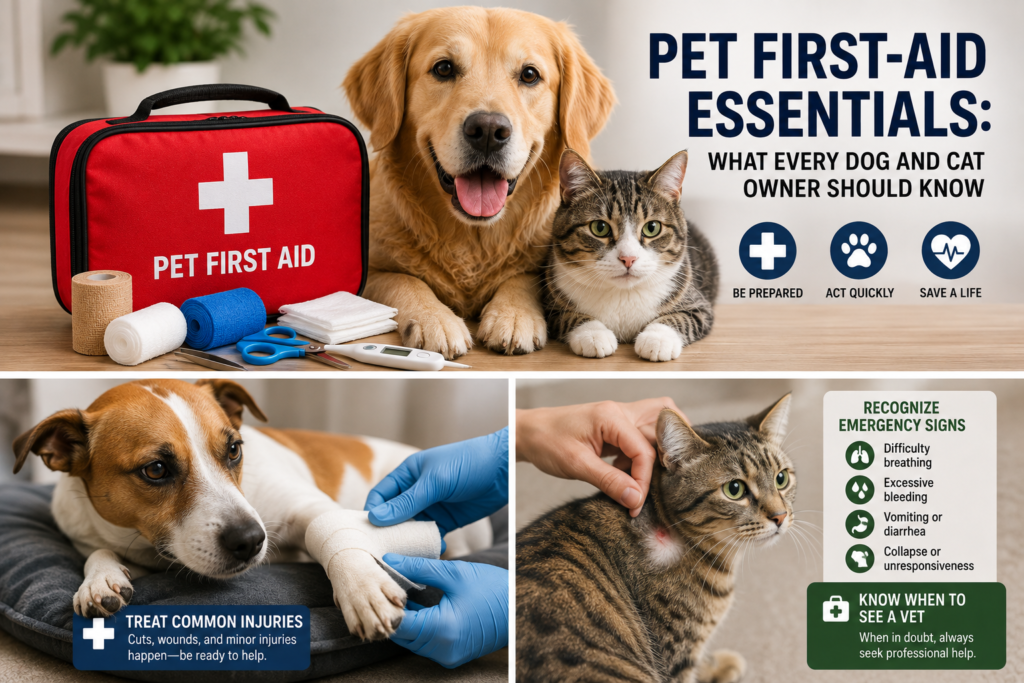
A sudden change from your pet’s usual routine can be important. Unusual weakness, difficulty breathing, repeated vomiting, collapse, or severe pain should be taken seriously.
Handling an Injured Pet Safely
Even a normally friendly pet may bite or scratch when frightened or in pain. Approach an injured animal carefully and avoid sudden movements.
Do not put yourself at risk while trying to help. If a pet is severely distressed, use caution and contact a veterinary professional for guidance on safe transport and handling.
What to Do if Your Pet Is Bleeding
Visible bleeding can be alarming, but remaining calm is important. If it is safe to do so, gentle pressure with clean gauze may help control some external bleeding while you seek veterinary care.
Apply Gentle Pressure: Use clean gauze or another suitable clean material.
Keep the Pet Calm: Limit unnecessary movement when possible.
Seek Help for Serious Bleeding: Heavy, persistent, or severe bleeding requires urgent veterinary attention.
Burns and Heat-Related Injuries
Pets can be injured by hot surfaces, hot liquids, flames, or other sources of heat. Burns can vary greatly in severity and may cause serious damage even when the injury initially appears small.
Avoid applying random creams, oils, or household remedies to a burn. Contact a veterinarian for guidance, especially if the burn is large, deep, blistered, or causing significant pain.
Choking and Breathing Emergencies
Breathing problems can become life-threatening quickly. Signs may include severe difficulty breathing, extreme distress, blue or pale gums, weakness, or collapse.
Do not blindly place your fingers deep inside a pet’s mouth because this may push an object farther back or cause injury. If your pet is having trouble breathing, seek emergency veterinary help immediately.
Poisoning and Dangerous Substances
Dogs and cats can accidentally eat or contact dangerous substances. Some foods, household chemicals, medications, plants, and other products can be toxic to pets.
If you suspect poisoning, contact a veterinarian or appropriate animal poison service immediately. Do not induce vomiting or give home remedies unless a qualified veterinary professional specifically instructs you to do so.
Broken Bones and Serious Injuries
A pet with a suspected broken bone may be in significant pain. Avoid unnecessary movement and do not attempt to straighten or force a bone back into position.
Keep the pet as still and calm as possible during transport. A veterinarian should evaluate serious injuries because improper handling can cause additional pain or damage.
When to Treat an Injury as an Emergency
Some situations require immediate veterinary attention. Do not wait for symptoms to become worse when your pet shows signs of a serious emergency.
Severe Breathing Problems: Difficulty breathing can quickly become life-threatening.
Collapse or Unconsciousness: Immediate emergency care is needed.
Heavy Bleeding: Severe or uncontrolled bleeding requires urgent attention.
Severe Pain or Injury: Sudden inability to stand, major trauma, or extreme distress should be treated as an emergency.
Safe Transportation During an Emergency
Transporting an injured pet carefully can help prevent additional injury. Keep movement to a minimum and use a secure carrier for cats when possible.
For a larger injured dog, additional support may be needed to move the animal safely. Ask the veterinary clinic for instructions if you are unsure how to transport your pet.
Why Human Medicine Should Not Be Used Without Advice
Many medications designed for people can be dangerous for dogs and cats. Even products commonly used for pain, cold symptoms, or stomach problems may cause serious poisoning.
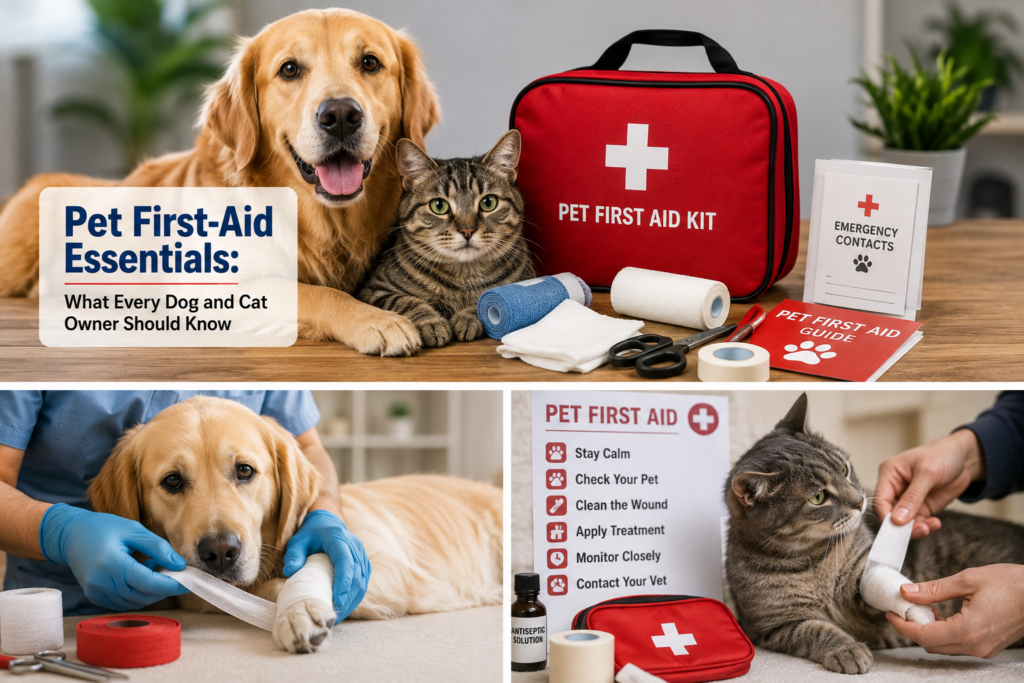
Never guess the correct medication or dose for your pet. Only give medicine that has been specifically prescribed or recommended by a qualified veterinarian.
People Also Ask (PAA)
What should every pet first-aid kit contain?
A basic kit may include clean gauze, suitable bandage materials, disposable gloves, and emergency veterinary contact information.
What should I do if my pet is bleeding?
If safe to do so, apply gentle pressure with clean gauze and seek veterinary care for heavy, persistent, or serious bleeding.
Can I give my pet human pain medicine?
No. Many human pain medicines can be dangerous for pets. Only use medication recommended by a veterinarian.
What should I do if my pet eats something poisonous?
Contact a veterinarian or animal poison service immediately. Do not induce vomiting unless specifically instructed by a qualified professional.
How do I know if my pet needs emergency care?
Severe breathing problems, collapse, uncontrolled bleeding, serious injuries, sudden weakness, and extreme distress are examples of situations requiring urgent care.
Should I keep a first-aid kit for my dog or cat?
Yes. Keeping basic supplies and emergency contact information available can help you prepare for unexpected situations.
Can I treat a broken bone at home?
No. Do not attempt to straighten a suspected broken bone. Limit movement and seek veterinary attention.
Frequently Asked Questions
1. Is pet first aid a replacement for veterinary care?
No. First aid provides temporary support and does not replace professional diagnosis or treatment.
2. Can an injured pet bite its owner?
Yes. Pain and fear can cause even a normally gentle pet to bite or scratch. Always approach an injured animal carefully.
3. What should I do if my pet suddenly collapses?
Treat sudden collapse as an emergency and contact an emergency veterinary clinic immediately.
4. Should I use household products on my pet’s wound?
Avoid applying random household products unless a veterinarian specifically advises their use.
5. How often should I check my pet first-aid kit?
Check it regularly to replace used or expired supplies and make sure emergency contact information is current.
Conclusion
Every dog and cat owner can benefit from understanding basic pet first -aid principles. A prepared first-aid kit, knowledge of emergency warning signs, and quick access to veterinary contact information can help owners respond more effectively during unexpected situations.
The most important rule is to remember that first aid is temporary. Serious injuries, breathing problems, poisoning, collapse, severe bleeding, and other emergencies require professional veterinary care. Staying calm, avoiding unsafe home treatments, and getting help can make a major difference when your pet needs urgent support.