
Introduction
Dogs can experience anxiety for many different reasons. A dog may become nervous when left alone, react strongly to loud sounds, feel uncomfortable around unfamiliar people, or become stressed after changes in its normal routine. Some dogs show obvious signs of fear, while others hide their anxiety through quiet or unusual behavior.
Understanding the reason behind anxious behavior can help owners respond more appropriately. Instead of simply trying to stop the behavior, it is important to look at what may be making the dog uncomfortable and consider suitable support with guidance from a veterinarian or qualified behavior professional.
What Is Anxiety in Dogs?
Anxiety is a state of fear, stress, or worry that can affect a dog’s behavior and daily routine. It can happen occasionally in response to a specific situation or become a repeated problem that affects the dog’s quality of life.
Every dog reacts differently. One dog may bark or try to escape, while another may hide, tremble, or become unusually quiet. Recognizing these differences can help owners understand when their pet may need additional support.
Common Signs of Anxiety in Dogs
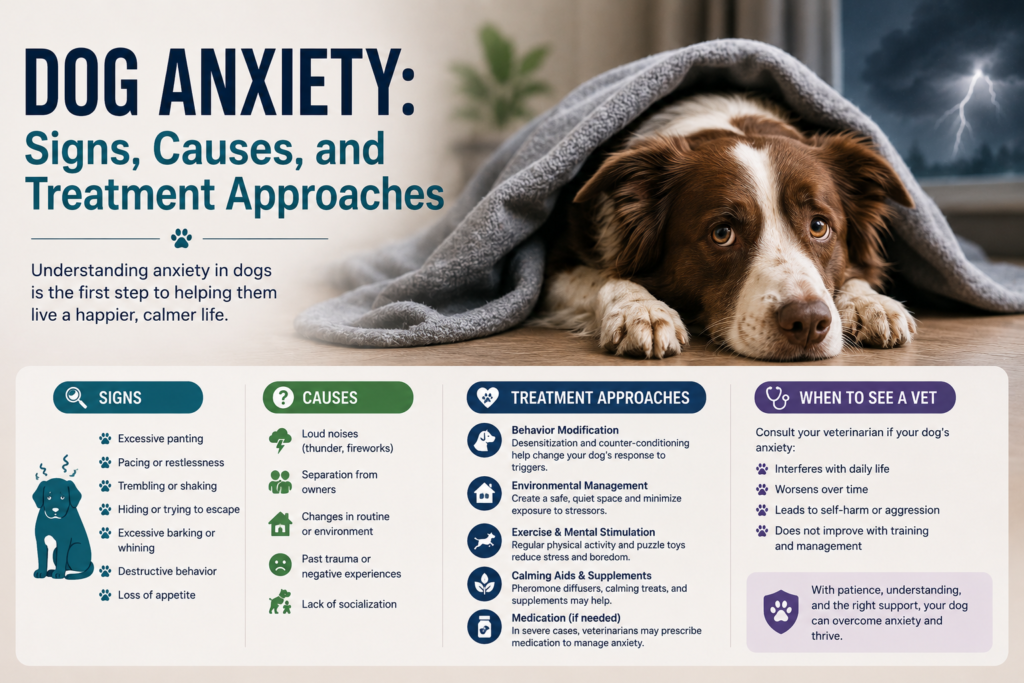
Anxious behavior can appear in several ways. Some signs are easy to notice, while others may be mistaken for disobedience or changes in personality.
Restlessness: A nervous dog may walk around repeatedly, struggle to settle down, or constantly change positions.
Hiding: Some dogs look for quiet places such as under furniture or in another room when they feel stressed.
Excessive Barking: Repeated barking, whining, or vocalization can sometimes occur during stressful situations.
Shaking or Panting: Trembling, rapid breathing, or excessive panting may appear when a dog is frightened or anxious.
Destructive Behavior: Some anxious dogs may chew furniture, scratch doors, or damage objects, particularly when left alone.
Common Causes of Dog Anxiety
Anxiety can develop for many reasons, and the cause is not always obvious. Loud noises, unfamiliar environments, separation from owners, changes in the household, and unpleasant past experiences can all contribute to stress.
Some dogs may also become anxious because of changes associated with aging or health problems. If anxious behavior appears suddenly in a dog that was previously comfortable, a veterinary examination can help determine whether an underlying health issue may be involved.
Separation Anxiety
Separation anxiety occurs when a dog experiences significant distress when left alone or separated from its owner. The dog may bark, whine, pace, scratch at doors, or become destructive after the owner leaves.
It is important not to punish these behaviors because the dog may already be experiencing considerable stress. A structured approach that gradually helps the dog become comfortable with short periods of separation can be useful when guided appropriately.
Noise and Fear-Related Anxiety
Thunderstorms, fireworks, construction sounds, traffic, and other loud noises can frighten some dogs. A dog may respond by hiding, trembling, barking, pacing, or attempting to escape.
Creating a calm and secure area can help during predictable noisy events. Owners should also make sure doors, windows, and fences are secure because frightened dogs may try to run away.
Changes in Routine and Environment
Dogs often become comfortable with familiar schedules and surroundings. Moving to a new home, welcoming a new family member, changing work schedules, or introducing another pet can sometimes cause stress.
When possible, keeping feeding, walking, sleeping, and exercise routines consistent can provide a sense of predictability. Gradual introductions to new situations may also be easier for some dogs than sudden changes.
Ways to Help an Anxious Dog
Supporting an anxious dog often involves creating a predictable environment and avoiding situations that unnecessarily increase fear. Owners can provide a comfortable resting area where the dog can retreat when it needs space.
Maintain a Routine: Regular meal, exercise, and rest times can make daily life more predictable.
Provide Mental Stimulation: Age-appropriate games, training, and enrichment activities can give dogs positive ways to stay occupied.
Reward Calm Behavior: Gentle praise or suitable rewards can encourage relaxed behavior when used appropriately.
Training and Behavior Support
Positive reinforcement training can help dogs develop more comfortable responses to certain situations. Training should focus on rewarding desirable behavior rather than using punishment for fear-related reactions.
dogs with significant anxiety, working with a qualified veterinary behavior professional or experienced positive-reinforcement trainer may provide more individualized guidance. The approach should be based on the dog’s specific triggers and behavior.
When Medication May Be Considered
Some dogs experience anxiety severe enough that behavior support alone may not be sufficient. In these situations, a veterinarian may consider whether medication could be part of a broader treatment plan.
Medication should never be given based on a product recommended for another dog or person. The choice, dose, and timing need to be determined by a veterinarian because dogs can respond differently to medications.
When Should You Contact a Veterinarian?
Contact your veterinarian if your dog’s anxiety is sudden, severe, getting worse, or interfering with normal eating, sleeping, exercise, or daily activities. Sudden behavioral changes can sometimes be associated with pain or other health problems.
Veterinary guidance is also important if your dog attempts to escape, injures itself, becomes aggressive because of fear, or shows severe distress when left alone. Early support may make it easier to manage the problem.
People Also Ask (PAA)
How can I tell if my dog has anxiety?
Signs can include pacing, hiding, trembling, excessive barking, panting, destructive behavior, or unusual changes in appetite and routine. A veterinarian can help determine whether these behaviors are related to anxiety or another problem.
What causes anxiety in dogs?
Common triggers include separation, loud noises, unfamiliar environments, changes in routine, previous frightening experiences, and certain health or age-related changes.
How can I calm my anxious dog?
A predictable routine, safe resting area, appropriate exercise, positive reinforcement, and gradual exposure to stressful situations may help. Severe anxiety should be discussed with a veterinarian.
Can dogs have separation anxiety?
Yes. Some dogs experience significant distress when separated from their owners. They may vocalize, pace, destroy objects, or attempt to escape.
Should I punish my dog for anxious behavior?
Punishment is generally not a good way to address fear or anxiety. It can increase stress and may make the underlying problem more difficult to manage.
Can an older dog suddenly develop anxiety?
Yes. A sudden behavioral change in an older dog can have several possible causes, including changes associated with aging or health. A veterinary examination can help identify the reason.
Can exercise help an anxious dog?
Appropriate physical activity and mental stimulation can support general well-being and may help some dogs manage stress. Exercise should be suitable for the dog’s age, health, and physical ability.
Frequently Asked Questions
1. Is dog anxiety a serious problem?
It can be, particularly when anxiety is severe or persistent. Chronic stress can interfere with a dog’s normal behavior and quality of life.
2. Can dog anxiety be treated?
Many dogs can improve with appropriate behavior support, environmental changes, training, and, when necessary, veterinary treatment.
3. How long does it take for dog anxiety to improve?
There is no fixed timeline. Improvement depends on the cause, severity, individual dog , and consistency of the treatment approach.
4. Can I give my dog human anxiety medicine?
Do not give human medication to your dog unless a veterinarian specifically prescribes or recommends it. Some human medicines can be dangerous for pets.
5. What should I do if my dog becomes anxious when I leave?
Avoid punishment and consider gradually teaching the dog that short periods alone are safe. If the reaction is severe, seek guidance from a veterinarian or qualified behavior professional.
Conclusion
Dog anxiety can appear through many different behaviors, including hiding, barking, trembling, destructive activity, and changes in normal routines. Understanding the possible trigger is an important first step toward helping a stressed dog feel safer.
A consistent routine, positive training, appropriate enrichment, and a comfortable environment can provide useful support for many dogs. When anxiety is severe, sudden, or persistent, veterinary guidance is important because the right treatment depends on the individual dog and the cause of its behavior.