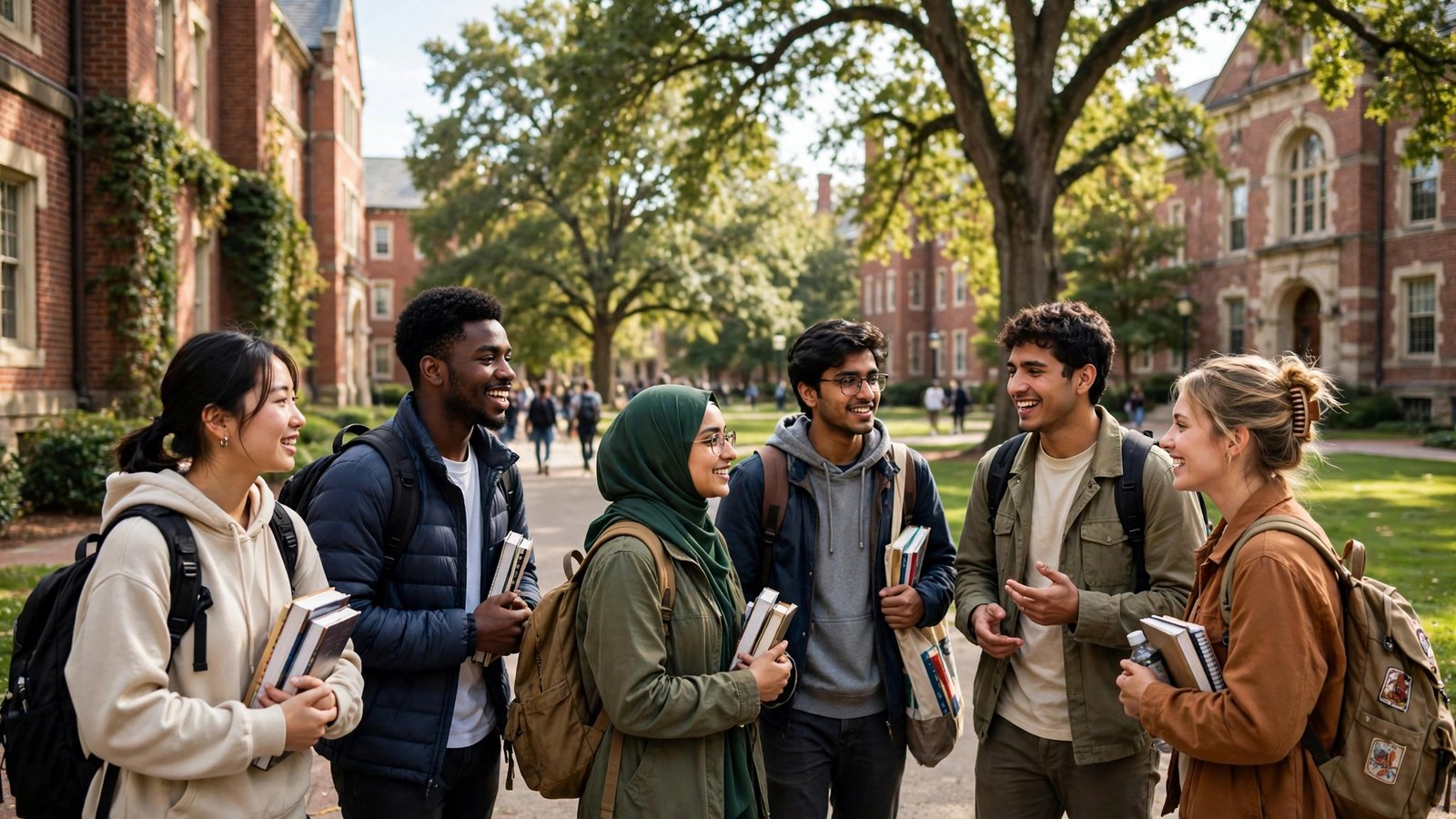
The United States hosts more international students than almost any other country, and for good reason: its universities offer world-renowned programs, flexible degrees, and research opportunities that are hard to match. But getting from “I want to study in America” to sitting in a US classroom involves many steps — choosing schools, passing exams, proving you can pay, and securing a student visa. This complete guide walks through the entire process so you can plan with confidence.
Step 1: Choose the Right University and Program
The USA has thousands of accredited institutions, from large public research universities to small private liberal arts colleges and community colleges. Start by deciding what matters most to you:
- Program strength in your field, not just the university’s overall fame.
- Total cost, including tuition, fees, housing, and living expenses in that city or state.
- Location and climate — costs and lifestyle differ enormously between, say, New York City and a college town in the Midwest.
- Admission requirements, including GPA expectations and standardized tests.
- Support for international students, such as orientation programs and a dedicated international student office.
Official resources such as EducationUSA, run by the US Department of State, offer free advising and reliable information for students in most countries.
Step 2: Understand the Costs
Studying in the USA is a major investment, and prices vary widely. Public universities usually charge international students more than residents, and private universities are typically the most expensive. Total annual costs — tuition plus living expenses — can range from roughly $25,000 at some public institutions to $70,000 or more at top private universities. Treat these as broad ranges for planning only; always use the exact figures on your target university’s website, because your visa application will require proof that you can cover the specific amount the school certifies.
Many students reduce the burden through scholarships, assistantships (especially at graduate level), and on-campus jobs. Merit scholarships for international undergraduates exist but are competitive, so apply early and broadly.
Step 3: Prepare Your Application
Most applications require:
- Academic transcripts (with certified English translations if needed).
- English proficiency scores such as TOEFL or IELTS, unless waived.
- Standardized test scores (SAT/ACT for undergraduates; GRE/GMAT for some graduate programs) — many schools are now test-optional, so check each one.
- Letters of recommendation.
- A statement of purpose or application essays.
- Proof of funding, such as bank statements or sponsor letters.
Application deadlines for fall admission often fall between November and January of the preceding academic year, so most successful students begin preparing 12 to 18 months in advance.
Step 4: Get Your Student Visa
Most international students study on an F-1 visa. The process generally works like this:
- Receive an offer of admission and a Form I-20 from your university.
- Pay the SEVIS I-901 fee.
- Complete the DS-160 visa application form online.
- Schedule and attend an interview at a US embassy or consulate, bringing your passport, I-20, financial documents, and admission letter.
At the interview, be ready to explain your study plans, how you will fund them, and your ties to your home country. Visa rules and procedures can change, so always confirm current requirements on the US Department of State and USCIS websites before applying.
Step 5: Working While You Study
F-1 students are generally allowed to work on campus for limited hours during the academic term. Practical training related to your field is possible through programs such as Curricular Practical Training (CPT) during your studies and Optional Practical Training (OPT) after completing your degree — OPT typically provides up to 12 months of work authorization, with a possible extension for eligible STEM graduates. Rules are strict and unauthorized employment can end your legal status, so always get written approval from your university’s international student office first.
Step 6: Prepare for Arrival
Before you fly, arrange housing, buy health insurance (many universities require it and enroll you in their plan automatically), open a plan for banking and a US phone number, and attend your school’s international orientation. F-1 students can usually enter the USA up to 30 days before their program start date — use that time to settle in.
Adjusting to Life in the USA
Your success depends on more than academics. American classrooms often reward participation, questions, and independent thinking, which can feel unfamiliar at first. Get involved early: join student organizations, attend office hours, and build friendships with both international and American students. Most universities offer counseling, writing centers, and cultural programs specifically to help international students settle in. Homesickness is normal — staying connected with family while actively building a life on campus makes the transition far smoother.
Frequently Asked Questions
When should I start applying to US universities?
Ideally 12 to 18 months before you want to begin. That gives you time for English tests, applications, scholarship deadlines, and the visa process without rushing.
Can I stay and work in the USA after graduating?
Many graduates use OPT to work in their field for up to 12 months (longer for eligible STEM fields). Beyond that, working long-term usually requires an employer-sponsored work visa, which is a separate process with its own rules.
Are community colleges a good option?
They can be. Many international students start at a community college, where costs are typically lower, then transfer to a four-year university to finish their bachelor’s degree. Check that your target university accepts the transfer credits.
Conclusion
Studying in the USA is achievable with early planning and honest budgeting. Choose programs that fit your goals and finances, prepare a strong application, follow the F-1 visa process carefully using official government sources, and make full use of your university’s international student services once you arrive. The effort is significant — but so is the payoff of an American degree.