
Introduction
Dental health is an important part of a cat’s overall well-being. Cats can develop plaque, tartar, gum irritation, and other oral problems that may affect their comfort and eating habits. Because cats often hide signs of pain , dental problems may not always be obvious in the early stages.
A regular dental-care routine can help support healthier teeth and gums. Different cats may need different types of dental care, so owners should work with a veterinarian to choose suitable products and professional dental examinations when necessary.
Why Dental Health Matters for Cats
A cat’s mouth plays an important role in eating and everyday comfort. Problems affecting the teeth or gums can make chewing uncomfortable and may change how a cat eats.
Dental problems can also become more complicated when they are ignored. Regular observation and appropriate veterinary care can help identify oral problems before they become more difficult to manage.
Common Signs of Dental Problems
Cats may not always show obvious signs when their mouths hurt. Owners should pay attention to changes in eating behavior, grooming, and general activity.
Bad Breath: Persistent unpleasant breath can be a sign of an oral problem.
Difficulty Eating: A cat may chew differently, drop food, or show less interest in eating.
Red Gums: Inflamed or irritated gums may indicate dental disease.
Excessive Drooling: Increased drooling can sometimes occur when a cat has oral discomfort.
Plaque and Tartar in Cats
Plaque is a layer of bacteria and material that can build up on the teeth. If it remains on the teeth, it can harden into tartar.
Once significant tartar develops, home brushing may not be enough to remove it. A veterinarian may recommend a professional dental examination and cleaning when appropriate.
Tooth Brushing for Cats
Regular tooth brushing can help reduce plaque buildup when a cat accepts the routine. Introducing brushing gradually may make the experience easier.
Start slowly by allowing your cat to become comfortable with having its mouth and teeth touched. Use a toothbrush and toothpaste specifically designed for cats rather than human toothpaste.
Choosing Cat Dental Products
There are several dental-care products available for cats, including toothbrushes, veterinary dental diets, treats, and other products designed to support oral hygiene.
Cat-Safe Toothpaste: Use toothpaste made specifically for cats.
Suitable Dental Treats: Choose products designed for feline dental care and use them according to their instructions.
Dental Diets: Some veterinary-recommended diets are designed to help reduce plaque or tartar buildup.
Professional Dental Care
Home dental care is useful, but it does not replace veterinary dental examinations. A veterinarian can examine the mouth for problems that may not be visible to an owner.
Professional dental care may be recommended when tartar, gum disease, damaged teeth, or other oral problems are identified. The veterinarian can explain which procedures are appropriate for the individual cat.
Dental Care for Older Cats
Older cats may need closer attention to their oral health because dental problems can become more noticeable with age. Changes in chewing, appetite, or grooming should not simply be considered a normal part of getting older.
Regular veterinary examinations can help identify dental problems and other health conditions that may affect an older cat’s quality of life.
How to Start a Dental Routine
Cats may need time to become comfortable with dental care. Begin with short, calm sessions rather than trying to complete a long routine immediately.
Reward calm behavior when appropriate and keep the experience positive. If your cat becomes highly stressed or resists strongly, ask a veterinarian or veterinary professional for guidance on safer techniques.
Mistakes to Avoid
Owners should avoid using human toothpaste because some ingredients can be unsuitable or unsafe for cats. Human dental products are not designed around feline needs.
Do not force a toothbrush deep into a cat’s mouth or attempt to remove heavy tartar at home with sharp objects. Professional dental problems should be handled by a veterinarian.
When Should You Contact a Veterinarian?
Contact your veterinarian if your cat has persistent bad breath, bleeding gums, difficulty eating, excessive drooling, loose teeth, facial swelling, or noticeable mouth pain.
A cat that suddenly stops eating or appears severely uncomfortable should receive prompt veterinary attention. Dental pain can significantly affect a cat’s ability to eat and behave normally.
Supporting Long-Term Dental Health
A consistent dental routine can make oral care easier over time. Regular brushing, suitable dental products, and veterinary examinations can all contribute to better dental health.
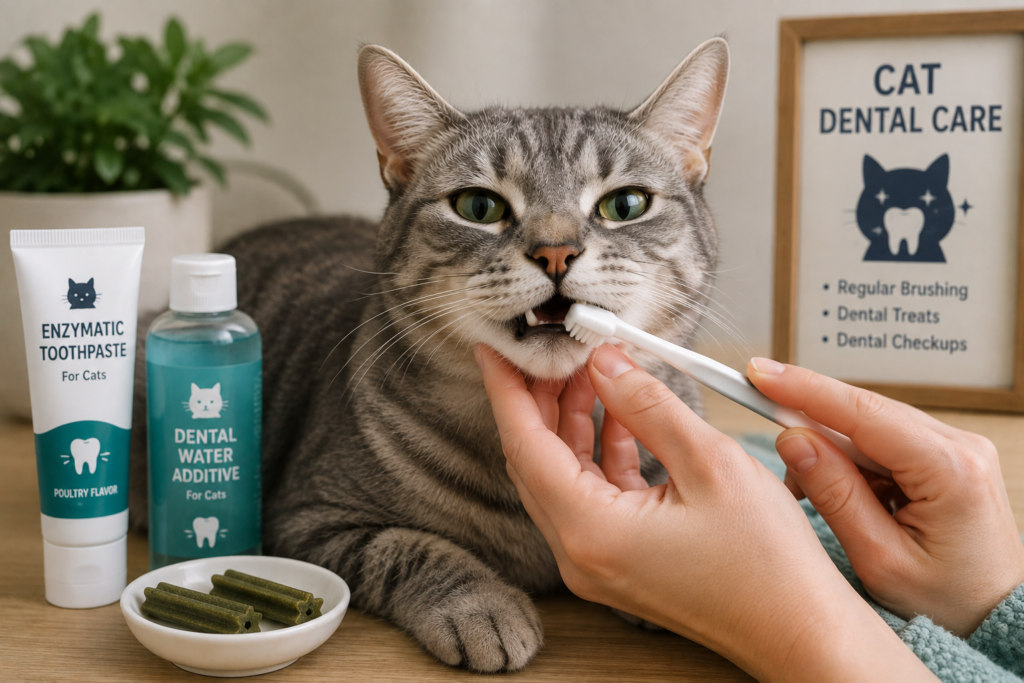
Observe your cat’s mouth and eating habits regularly. Early changes can provide an opportunity to seek professional advice before a dental problem becomes more advanced.
People Also Ask (PAA)
How can I keep my cat’s teeth healthy?
Regular brushing with cat-specific dental products, suitable dental-care products, and routine veterinary examinations can help support healthy teeth and gums.
Can I use human toothpaste on my cat?
No. Use toothpaste specifically designed for cats and follow veterinary recommendations.
Do cats really need their teeth brushed?
Brushing can help reduce plaque buildup and support oral hygiene. However, not every cat accepts brushing easily, so owners should introduce the routine gradually.
What are signs of dental disease in cats?
Bad breath, red gums, drooling, difficulty eating, changes in chewing, and reduced appetite can be signs of an oral problem.
Are dental treats good for cats?
Some products are designed to support feline dental health, but they should be selected carefully and used as part of a broader dental-care routine.
Can cats get cavities?
Cats are less commonly affected by traditional cavities than people, but they can develop other painful dental conditions that require veterinary care.
How often should my cat have a dental checkup?
The appropriate schedule depends on the individual cat. Ask your veterinarian how frequently your cat’s mouth and teeth should be professionally examined.
Frequently Asked Questions
1. At what age should I start dental care for my cat?
It is helpful to introduce appropriate dental-care habits early, while also having your cat’s teeth examined during routine veterinary visits.
2. Why does my cat have bad breath?
Persistent bad breath can be associated with plaque, tartar, gum disease, or other oral and health problems. A veterinarian can help identify the cause.
3. Can dental problems make a cat stop eating?
Yes. Painful dental conditions can make chewing uncomfortable and may cause a cat to eat less or avoid food.
4. Can I remove tartar from my cat’s teeth myself?
Do not scrape heavy tartar from your cat’s teeth with household tools. Professional dental care may be needed to safely address significant buildup.
5. Are dental water additives safe for cats?
Some products are specifically designed for cats, but owners should choose appropriate veterinary dental products and follow their instructions. Ask your veterinarian if you are unsure which product is suitable.
Conclusion
Good dental care can play an important role in keeping cats comfortable and supporting their overall health. Regular observation, appropriate home care, cat-specific dental products, and professional veterinary examinations can help owners manage their cat’s oral health.
Starting a dental routine gradually can make the process easier for both the cat and owner. If you notice persistent bad breath, gum changes, difficulty eating, drooling, or signs of mouth pain, veterinary evaluation is important to identify the problem and determine the appropriate care.