
Introduction
Digestive problems can affect cats at different stages of life. A cat may occasionally experience vomiting, loose stool, constipation, changes in appetite, or unusual stomach sounds. Some digestive changes may be temporary, while repeated problems can sometimes indicate an underlying health condition.
Because cats can hide signs of discomfort, small changes in eating habits, litter-box behavior, or energy levels can be important. Understanding common digestive problems can help pet owners recognize unusual changes and know when professional veterinary care may be needed.
What Are Digestive Issues in Cats?
Digestive issues involve problems affecting the stomach, intestines, or other parts of the digestive system. These problems can interfere with how a cat processes food, absorbs nutrients, or eliminates waste.
Digestive symptoms can appear in many forms. A cat may vomit, develop diarrhea, become constipated, lose interest in food, or show changes in its normal bathroom routine. The cause can range from dietary changes to parasites or other medical conditions.
Common Signs of Digestive Problems
Cats may show several different signs when their digestive system is not working normally. Some symptoms can be mild, while others may become more noticeable over time.
Vomiting: Occasional vomiting can happen, but repeated vomiting should be discussed with a veterinarian.
Diarrhea: Loose or unusually frequent stools may indicate digestive irritation or another underlying problem.
Constipation: Difficulty passing stool or spending longer periods in the litter box can be a warning sign.
Reduced Appetite: A cat that suddenly eats much less than usual may be experiencing discomfort or illness.
Common Causes of Cat Digestive Problems
Digestive problems can develop for many reasons. Eating something unusual, changing food suddenly, or consuming food too quickly may upset some cats.
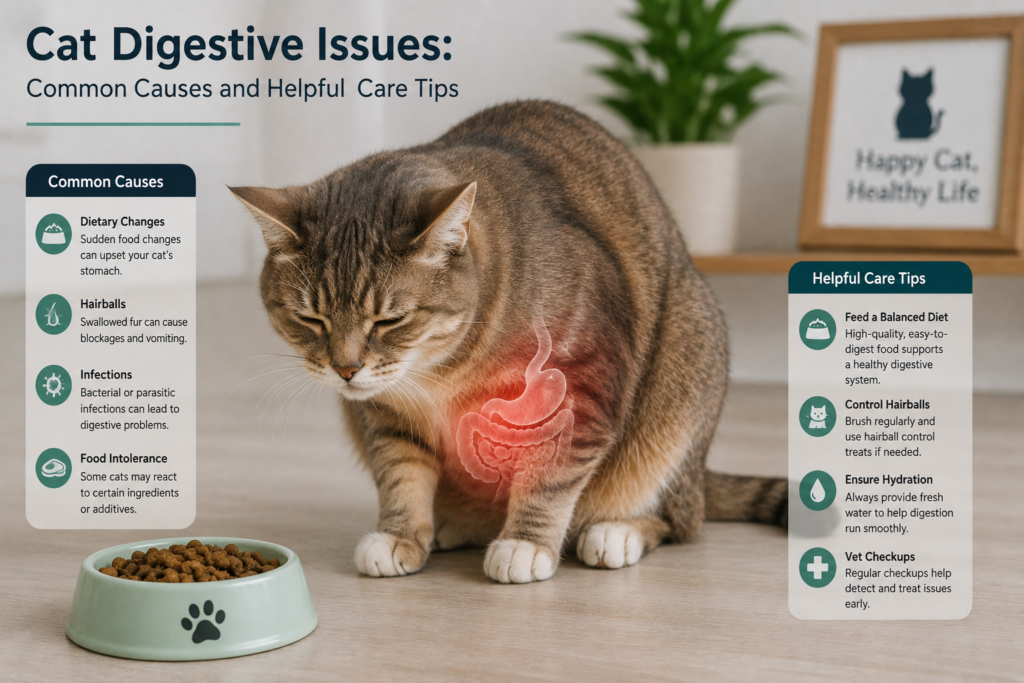
Other possible causes include intestinal parasites, infections, food sensitivities, hairballs, foreign objects, and certain medical conditions. Since similar symptoms can occur with different problems, identifying the actual cause is important before choosing treatment.
Food Changes and Digestive Upset
A sudden change in diet can cause digestive upset in some cats. Cats may be sensitive to changes in ingredients, texture, or feeding routines.
When changing a cat’s food, a gradual transition may be easier for the digestive system. If vomiting, diarrhea, or appetite changes continue despite returning to a familiar diet, veterinary advice can help determine whether another problem is involved.
Hairballs and Digestion
Cats naturally swallow hair while grooming themselves. Most swallowed hair passes through the digestive system, but some cats may occasionally develop hairballs.
Frequent vomiting or repeated attempts to bring up a hairball should not automatically be considered normal. If your cat repeatedly vomits, stops eating, loses weight, or seems uncomfortable, a veterinarian should evaluate the situation.
Constipation in Cats
Constipation occurs when a cat has difficulty passing stool or produces hard, dry stools. Some cats may spend extra time in the litter box or visit it repeatedly without producing much stool.
Hydration: Adequate water intake supports normal body functions and can be important for digestive health.
Movement: Regular activity can support normal bowel function.
Veterinary Advice: Persistent constipation should be evaluated rather than treated with human laxatives or other household remedies.
Diarrhea and Loose Stool
Diarrhea can occur after dietary changes, eating something unusual, stress, parasites, infections, or other health problems. A short episode may resolve, but persistent diarrhea can lead to fluid loss.
Pay attention to how frequently your cat passes loose stool and whether other symptoms are present. Blood, weakness, repeated vomiting, or significant appetite changes are reasons to contact a veterinarian.
How to Support Healthy Digestion
Simple daily habits can help support your cat’s digestive health. Provide a consistent, appropriate diet and make clean drinking water available.
Avoid giving cats unfamiliar human foods or sudden dietary changes. Regular veterinary checkups can also help identify health problems before they become more serious.
When Should You Contact a Veterinarian?
Contact a veterinarian if your cat has repeated vomiting, persistent diarrhea, ongoing constipation, significant appetite loss, unexplained weight loss, or noticeable changes in behavior.
More urgent attention may be needed if your cat has severe weakness, repeated vomiting, blood in vomit or stool, a painful or swollen abdomen, difficulty breathing, collapse, or possible ingestion of a foreign object or toxic substance.
Diagnosing Digestive Problems in Cats
A veterinarian may ask about your cat’s diet, feeding routine, bowel movements, medications, parasite prevention, and recent changes in behavior. A physical examination can provide additional information.
Depending on the symptoms, the veterinarian may recommend tests such as blood work, stool testing, or imaging. These examinations can help identify the underlying cause and determine the most appropriate treatment.
Helpful Care Tips for Cat Owners
Owners can make digestive problems easier to monitor by keeping track of changes in appetite, vomiting, stool, water intake, and behavior. This information can be useful when speaking with a veterinarian.
Do not give human digestive medicines, laxatives, or other treatments to your cat unless a veterinarian specifically recommends them. Cats can respond differently to medications, and an inappropriate product may create additional health problems.
People Also Ask (PAA)
What are the most common digestive problems in cats?
Common digestive problems include vomiting, diarrhea, constipation, appetite changes, hairball-related issues, and digestive upset following dietary changes.
Why does my cat have diarrhea?
Diarrhea can have many possible causes, including dietary changes, parasites, infections, food sensitivities, stress, and other health conditions.
How can I help my constipated cat?
The appropriate treatment depends on the cause. If constipation continues or your cat appears uncomfortable, contact a veterinarian instead of giving human laxatives.
Can changing cat food cause digestive problems?
Yes. A sudden food change can cause digestive upset in some cats. Gradual dietary transitions may be easier for many cats.
When is vomiting serious in cats?
Repeated vomiting, vomiting with weakness or appetite loss, blood in vomit, severe discomfort, or suspected poisoning or foreign-object ingestion should receive veterinary attention.
Can stress affect a cat’s digestion?
Stress can affect some cats’ eating and bathroom habits and may contribute to digestive changes. Persistent symptoms should still be evaluated to rule out medical causes.
Should I give my cat medicine for diarrhea?
Do not give human diarrhea medicine unless a veterinarian specifically recommends a particular product and dose. The correct treatment depends on the underlying cause.
Frequently Asked Questions
1. How often should a healthy cat poop?
Bathroom habits can vary between individual cats. A noticeable change from your cat’s normal routine is more important than comparing it with another cat.
2. Can worms cause digestive problems in cats?
Yes. Certain intestinal parasites can cause digestive symptoms. A veterinarian can recommend appropriate testing and treatment when parasites are suspected.
3. Can cats get stomach problems from eating too fast?
Some cats may experience digestive upset when they eat too quickly. Feeding strategies that encourage slower eating may help some cats.
4. Is occasional vomiting normal for cats?
Occasional vomiting can happen, but frequent or repeated vomiting should not be ignored. A veterinarian can determine whether an underlying problem needs treatment.
5. Can drinking enough water help a cat’s digestion?
Adequate hydration supports normal body functions, including digestion and bowel movements. Fresh water should be available to cats regularly.
Conclusion
Cat digestive issues can appear as vomiting, diarrhea, constipation, appetite changes, or unusual bathroom habits. These symptoms can result from simple dietary changes, but they may also be connected to parasites, foreign objects, or other health conditions.
The best approach is to monitor your cat’s normal eating, drinking, and bathroom habits and pay attention to changes. Providing a consistent diet,appropriate care, and regular veterinary attention can support digestive health. If symptoms persist or become severe, professional veterinary evaluation is the safest way to determine the cause and appropriate treatment.