
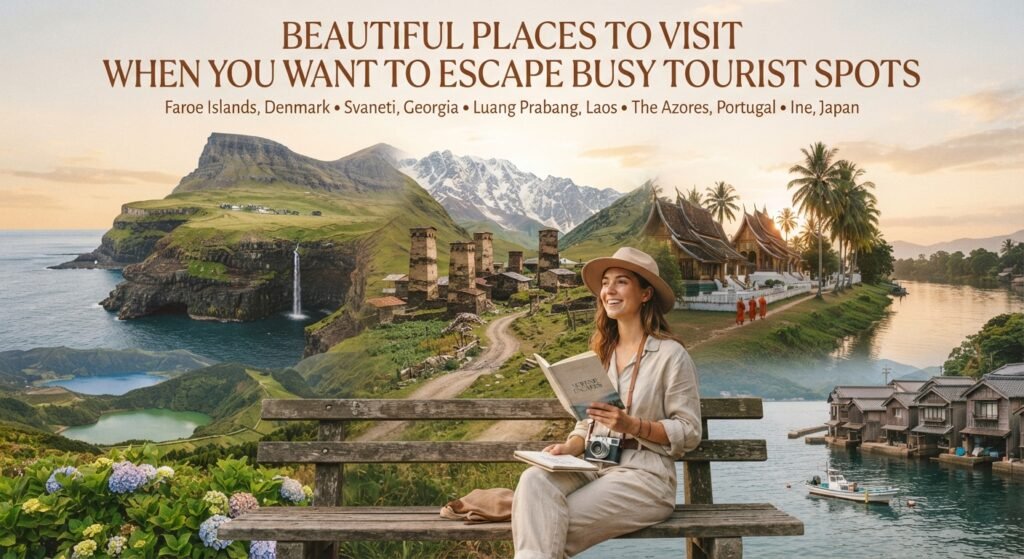

Popular travel destinations can be unforgettable, but they can also become exhausting when crowded streets, long lines, packed viewpoints, and busy attractions take over the experience. For travelers who prefer peaceful landscapes, quieter communities, and a slower rhythm, there are countless places around the world where the scenery remains impressive without requiring you to follow the busiest tourist routes.
Escaping crowded destinations does not necessarily mean traveling somewhere completely remote or difficult to reach. Often, the better approach is to choose smaller towns, lesser-known islands, rural regions, and alternative bases near famous attractions. These places can offer beautiful scenery, local food, historic character, and outdoor experiences while giving travelers more space to enjoy their surroundings.
Why Choose Less Crowded Destinations?
Traveling somewhere quieter can change the entire atmosphere of a vacation. Instead of spending most of the day waiting to enter attractions or searching for a place to sit, you can take your time walking through local streets, enjoying a meal, photographing the scenery, or simply observing everyday life.
Less crowded destinations can also encourage travelers to interact more naturally with the local environment. Small cafés, local markets, neighborhood restaurants, hiking trails, and independent shops often become more noticeable when you are not surrounded by large groups of visitors. The experience can feel more personal because you have more time and space to explore at your own pace.
Hallstatt Alternatives in Austria
Hallstatt is famous for its lakeside scenery and mountain backdrop, but travelers searching for a quieter Austrian experience can look toward other communities in the country’s lake and mountain regions. Smaller villages can offer similar alpine landscapes without the same level of attention that surrounds Austria’s most photographed destinations.
Areas around the Salzkammergut region provide opportunities for walking, scenic drives, lake activities, and mountain excursions. Staying in a smaller community also gives travelers the chance to experience quiet mornings and peaceful evenings after day visitors have left more popular locations. Instead of trying to recreate a famous photograph, you can focus on enjoying the broader landscape.
Alentejo, Portugal
Alentejo offers a slower side of Portugal with open countryside, historic villages, vineyards, traditional food, and a quieter coastal landscape. Travelers who enjoy wide spaces and relaxed days can use the region as an alternative to Portugal’s busiest city and beach destinations.
The region is particularly appealing for road trips because small towns and rural landscapes create reasons to stop along the way. A day might include exploring a historic village, enjoying a long lunch, visiting a local market, and continuing toward the coast. The absence of a packed sightseeing schedule makes it easier to appreciate the character of the region.
The Faroe Islands
The Faroe Islands offer dramatic cliffs, green mountains, waterfalls, coastal villages, and wide ocean views. Their landscapes feel remarkably different from the typical European city break, making them appealing to travelers who want nature and fewer urban crowds.
Weather can change quickly, so flexibility is essential. A clear morning might be ideal for a hiking route, while another day may be better suited to exploring a village or scenic road. The islands are not about rushing between attractions. Their greatest appeal comes from spending time surrounded by dramatic scenery and allowing the landscape to shape your itinerary.
Slovenia’s Soča Valley
The Soča Valley provides a beautiful combination of turquoise water, mountains, forests, villages, and outdoor activities. It offers a quieter alternative to some of Europe’s more heavily visited alpine destinations while still providing plenty for adventurous travelers to explore.
Visitors can use the valley as a base for hiking, kayaking, scenic drives, and peaceful walks near the river. The surrounding mountains create dramatic views without requiring travelers to spend every day at a major tourist attraction. Staying for several nights allows enough time to experience the valley without constantly moving from one location to another.
São Miguel, Azores
São Miguel in the Azores combines volcanic landscapes, crater lakes, green hills, hot springs, coastal scenery, and small communities. The island is particularly attractive to travelers who want natural beauty without the atmosphere of a heavily urbanized tourist destination.
Instead of filling each day with scheduled activities, visitors can choose a few areas and explore them slowly. A morning near a volcanic lake can be followed by a local meal, a coastal drive, or time in a thermal area. The island’s changing weather also encourages flexibility, making a loose itinerary more practical than a rigid schedule.
Menorca, Spain
Menorca is often overshadowed by the more famous Balearic destinations, but that can be part of its appeal. The island offers clear water, beaches, coastal paths, small towns, and countryside landscapes that suit travelers looking for a more relaxed Mediterranean experience.
The island’s coastal walking routes can be especially rewarding because they allow visitors to discover beaches and viewpoints at a slower pace. Rather than spending the entire vacation at one crowded beach, travelers can explore different sections of the coastline and choose quieter areas according to the season and local conditions.
Puglia, Italy
Puglia offers a combination of whitewashed towns, olive groves, coastal scenery, historic architecture, and regional food. While some locations have become increasingly popular, the wider region still provides opportunities to move beyond the busiest tourist routes.
Travelers can stay in a smaller town and explore nearby villages rather than changing hotels every night. Slow mornings, local bakeries, long lunches, and evening walks can become the main rhythm of the trip. The region is particularly well suited to travelers who want culture and food without building the entire vacation around famous landmarks.
The Albanian Riviera
The Albanian Riviera provides a Mediterranean coastline with beaches, mountain scenery, small communities, and scenic roads. It can appeal to travelers looking for a coastal destination that feels different from Europe’s more established resort areas.
A road trip allows visitors to explore different sections of the coast and stop whenever a viewpoint or village catches their attention. Travelers should still research seasonal conditions and transportation carefully, because the experience can vary significantly between the quieter periods and the busiest summer months.
Tasmania, Australia
Tasmania offers a combination of rugged coastline, forests, mountains, wildlife, small towns, and national parks. Its landscapes provide plenty of opportunities for travelers who would rather spend time outdoors than moving through crowded city attractions.
A longer stay works particularly well because distances between different regions can require substantial driving time. Instead of attempting to see everything quickly, travelers can choose a few areas and spend several days exploring each one. Hiking, scenic drives, local food, and coastal walks can all become part of a relaxed itinerary.
The Scottish Highlands Beyond the Main Routes
The Scottish Highlands are famous, but travelers can still find quieter experiences by moving beyond the most heavily visited viewpoints and choosing smaller communities as bases. Wide valleys, lochs, mountains, castles, and remote roads create an environment where the landscape itself becomes the main attraction.
A flexible road trip can provide opportunities to stop at lesser-known viewpoints, walk short trails, and explore small villages. Travelers should allow extra driving time because mountain roads can be slower than expected. The reward is the ability to experience the scenery without trying to follow a rigid sightseeing checklist.
Japan’s Rural Towns
Japan has several major destinations that attract enormous numbers of visitors, but the country’s smaller towns can offer a very different experience. Rural areas can reveal traditional architecture, local food, gardens, mountains, and everyday community life.
Travelers who are willing to spend a night or two outside the most famous cities may discover a slower rhythm. Instead of moving from one major attraction to another, you can walk through quiet streets, visit a small restaurant, explore local scenery, and enjoy the atmosphere without feeling pressured to see everything.
The Peloponnese, Greece
The Peloponnese combines beaches, mountains, archaeological sites, villages, olive groves, and historic towns. While some famous Greek islands can become extremely busy during peak periods, this larger mainland region offers plenty of alternatives.
A road trip through the Peloponnese allows travelers to combine coastal stops with inland villages and historic locations. You can spend one day beside the sea and another exploring mountain landscapes without needing to travel between countries or distant regions. The variety makes it possible to create a trip that feels full without being overcrowded.
How to Find Quieter Travel Destinations
Finding a less crowded place does not always require searching for a destination that nobody knows about. Often, the easiest strategy is to look one step beyond the famous location. If a major city is crowded, investigate nearby towns. If a famous beach is busy, research alternative beaches along the same coastline.
Travel dates also make a significant difference. Visiting outside the busiest holiday periods can transform the atmosphere of a destination. Early mornings and late afternoons can also provide a quieter experience at attractions that become crowded during the middle of the day.
Travel During the Shoulder Season
The shoulder season can offer a useful balance between pleasant conditions and smaller crowds. Exact timing varies by destination, so travelers should research local weather and seasonal business hours before booking.
During these periods, accommodation may also feel more relaxed, restaurants can be easier to access, and popular walking routes may have fewer visitors. However, some seasonal attractions or transportation services may operate on reduced schedules, so a little preparation is important.
Choose a Smaller Base
Where you stay can have a major effect on how crowded your vacation feels. A smaller town located near major attractions can provide a quieter evening environment while still allowing access to famous sights during the day.
This strategy also gives travelers a chance to experience more local life. Instead of staying in the busiest tourist district, you may wake up near a local bakery, walk through residential streets, and discover restaurants that serve the surrounding community.
Visit Popular Attractions at Unusual Times
You do not necessarily have to avoid famous attractions completely. Sometimes changing the time of your visit is enough to make the experience more comfortable.
Early mornings can be especially useful because many visitors prefer to begin sightseeing later in the day. Late afternoon can also provide a different atmosphere as some groups begin leaving. Check opening hours and local transportation before choosing your timing, particularly when visiting outdoor locations.
Build a Flexible Itinerary
A rigid itinerary can make a quiet destination feel surprisingly stressful. If every hour is reserved for a specific activity, there is little opportunity to stop when you discover something interesting.
Instead, choose a few priorities and leave open spaces between them. If the weather is beautiful, you might spend longer outdoors. If you discover a charming village, you can stay for lunch instead of immediately moving to the next planned stop. Flexibility is one of the easiest ways to make travel feel slower and more personal.
Explore on Foot
Walking is one of the simplest ways to escape the busiest tourist patterns. Cars and organized tours often follow the same major routes, while walking allows you to explore side streets, residential areas, small parks, and local businesses.
A slow walk can also reveal details that are easy to miss from a vehicle. Architecture, gardens, local shops, street art, and small cafés can become part of the experience. You do not need a famous landmark at the end of every walk for it to be worthwhile.
Look Beyond the Famous Viewpoint
Many destinations become crowded because everyone wants the same photograph. Before joining a long line for a popular viewpoint, research whether nearby trails or alternative overlooks offer different perspectives.
Sometimes the most memorable view is not the one printed on every postcard. A quieter trail, a village road, or a viewpoint a short distance away can provide a more relaxed experience. Travelers should always follow local access rules and avoid entering restricted areas simply to find an isolated photograph.
Stay Longer Instead of Visiting More Places
Longer stays can help travelers escape the pressure to see everything. When you have several days in one location, you can afford to spend an afternoon doing very little.
This also reduces the amount of time spent packing, checking out, traveling, and checking into another hotel. Staying longer gives you the opportunity to discover ordinary parts of a destination and return to places you particularly enjoy.
Respect the Places You Discover
Quieter destinations can become popular quickly when visitors share them online. Travelers should therefore think about how they interact with places that have smaller communities and limited infrastructure.
Follow local rules, avoid damaging natural areas, dispose of waste properly, and respect residential neighborhoods. Supporting locally owned businesses can also help ensure that tourism benefits the communities that make these destinations special.
What to Avoid When Searching for Peaceful Travel
Overcrowded seasons: A quiet destination can become extremely busy during holidays or peak summer periods.
Famous social-media locations: Places that look secluded online may attract large numbers of visitors in reality.
Overpacked schedules: Constant movement can make even a peaceful destination feel exhausting.
Remote locations without preparation: Beautiful landscapes can require careful planning, appropriate clothing, transportation, and local knowledge.
Ignoring local communities: A quieter destination is still someone’s home, so visitors should behave respectfully.
The goal is not simply to find a place with fewer people. It is to find a destination where you can slow down, appreciate the environment, and travel in a way that feels comfortable.
Frequently Asked Questions
1. What are the best types of destinations for avoiding tourist crowds?
Smaller towns, rural regions, lesser-known islands, mountain communities, and countryside areas can provide quieter experiences. Alternative bases near famous attractions can also work well.
2. Is traveling during the shoulder season better for avoiding crowds?
It can help reduce visitor numbers in many destinations, although conditions vary. Travelers should check local weather, opening hours, transportation, and seasonal events before booking.
3. How can I avoid crowded attractions without skipping them?
Consider visiting early in the morning or later in the afternoon, choosing less popular days, or staying nearby so you can visit when visitor numbers are lower.
4. Are less touristy destinations more difficult to reach?
Some are, but not all. Many quieter places are accessible by train, bus, ferry, or rental car. Research transportation before booking so you understand the journey and local options.
5. How can I enjoy quiet destinations responsibly?
Respect local communities, follow environmental rules, avoid damaging natural areas, keep public spaces clean, and support locally owned businesses when possible.
Conclusion
Escaping busy tourist spots does not mean giving up beautiful scenery, cultural experiences, or memorable attractions. Places such as Alentejo, the Faroe Islands, the Soča Valley, São Miguel, Menorca, Puglia, Tasmania, the Peloponnese, and smaller communities across Japan can provide travelers with landscapes and experiences that feel more spacious and relaxed. Even within popular countries, choosing a different region or smaller base can completely change the character of a trip.
The most rewarding quiet getaway often comes from changing how you travel rather than simply changing where you go. Travel during less crowded periods, stay longer, explore on foot, leave room in your itinerary, and look beyond the most photographed locations. When you stop trying to see everything, you create more opportunities to notice the small details, meet local people, enjoy peaceful surroundings, and experience a destination at a much more comfortable pace.