
Traveling abroad can be much more meaningful when you experience a destination beyond its famous landmarks and popular tourist attractions. A city may be known for a historic building, a beautiful beach, or a famous museum, but everyday life often reveals a completely different side of the place. Local markets, neighborhood restaurants, traditional workshops, community events, family-run businesses, and conversations with residents can turn an ordinary trip into a much more personal experience.
Finding these experiences does not mean avoiding every place visited by tourists. Instead, it means creating opportunities to see how people actually live, eat, work, celebrate, and spend their free time. With a little curiosity and thoughtful planning, travelers can discover activities that feel connected to the destination rather than simply designed to fill a sightseeing schedule.
Look Beyond the Most Popular Attractions
The easiest way to begin finding local experiences is to look beyond the attractions that dominate every travel guide. Famous landmarks can certainly be worth visiting, but they should not necessarily represent the entire trip. Once you have seen the major sights, give yourself time to explore the neighborhoods surrounding them.
Walk through streets that are slightly farther from the busiest tourist areas and pay attention to ordinary businesses, local cafés, small markets, parks, and community spaces. You may discover that a neighborhood bakery or small restaurant provides a stronger sense of place than another major attraction. These simple discoveries can become some of the most memorable parts of the journey.
Stay in a Local Neighborhood
Where you stay can strongly influence the type of experience you have. Large hotels in major tourist districts can be convenient, but accommodation in a residential neighborhood may place you closer to everyday local life.
A neighborhood with grocery stores, cafés, bakeries, parks, and small restaurants can give you reasons to leave your accommodation and explore naturally. Even something as simple as buying breakfast from a nearby bakery can introduce you to local habits and routines that are easy to miss when staying entirely inside a tourist zone.
Visit Local Markets
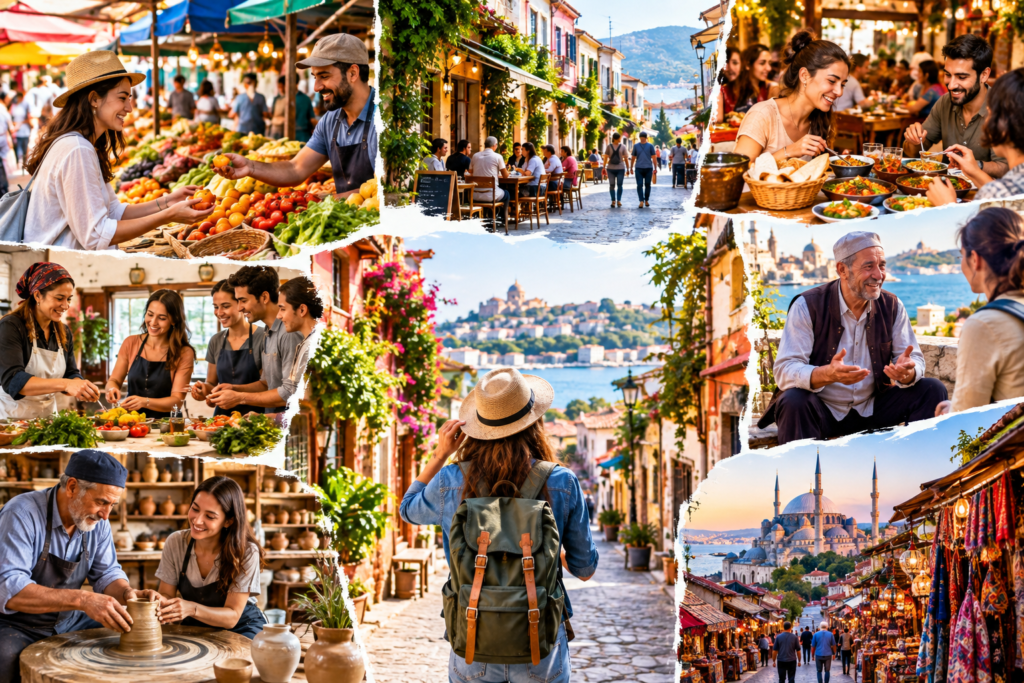
Markets are among the best places to observe everyday life in a new destination. They can reveal what people eat, what ingredients are common, how food is prepared, and which products are important to the local community.
Instead of treating a market as simply a shopping stop, take your time to walk through different sections and observe what is happening around you. Try a regional snack, purchase seasonal produce, or ask a vendor about an unfamiliar ingredient when appropriate. The experience can provide cultural information that a standard sightseeing tour may not offer.
Eat Where Residents Eat
Restaurants located directly beside major attractions often cater heavily to visitors. While some can still be excellent, travelers looking for local experiences can also search for places slightly away from the main tourist streets.
Look for busy neighborhood restaurants, small family-run establishments, cafés filled with local customers, and places that specialize in regional dishes. A restaurant does not have to look traditional from the outside to serve authentic food. Sometimes contemporary local restaurants provide an excellent reflection of how a destination’s cuisine is evolving.
Ask Locals for Recommendations
One of the simplest ways to find interesting experiences is to ask people who actually live in the destination. Hotel staff, café owners, shopkeepers, local guides, and residents may know places that do not appear prominently in international travel guides.
Instead of asking, “What are the tourist attractions here?” try asking what they personally enjoy doing on a free afternoon. This can produce very different suggestions, such as a neighborhood restaurant, a weekend market, a scenic walking route, or a small cultural event.
Take a Local Cooking Class
Food is closely connected to culture, making cooking classes a useful way to learn about a destination. A good class can explain not only how a dish is prepared but also why particular ingredients and techniques matter.
Look for classes led by local cooks or small businesses rather than choosing solely based on impressive advertising. A smaller class can sometimes create more opportunities to ask questions and understand the relationship between food, family traditions, and regional history.
Explore Traditional Crafts
Craft workshops can provide another perspective on local culture. Depending on the destination, you may find opportunities involving pottery, weaving, woodwork, textiles, ceramics, painting, jewelry, or traditional food production.
Participating in a workshop is often more meaningful than simply purchasing a finished souvenir. You get to understand how something is made and why the craft matters to the community. It can also provide a direct way to support independent artisans.
Use Local Guides
A local guide can introduce you to places and stories that are difficult to discover independently. However, the quality of the experience depends heavily on the guide and the type of tour.
Look for guides who have genuine knowledge of the area and can explain local history, customs, food, and everyday life rather than simply repeating a standard sightseeing script. Small-group or private tours may also provide more opportunities for conversation and questions.
Attend Community Events
Local festivals, markets, concerts, sporting events, cultural performances, and neighborhood gatherings can provide a direct glimpse into community life. These events may be more memorable than visiting another attraction because they allow you to see residents participating rather than simply presenting their culture to visitors.
Before attending, research basic etiquette and determine whether the event is open to visitors. Some celebrations have religious or cultural significance, so respectful behavior and appropriate clothing may be important.
Use Public Transportation
Public transportation can provide an unexpected window into local life. Trains, buses, trams, ferries, and metro systems are used by residents every day, making them useful for observing how a city functions beyond tourist areas.
Using local transportation can also take you into neighborhoods that you might never see from a sightseeing bus. You do not need to travel randomly; choose a destination outside the main tourist zone and explore once you arrive. This can create a simple adventure without requiring an expensive tour.
Spend Time in Small Towns
Major cities are often easier to research, but smaller towns can provide a different perspective on a country. Local traditions may be more visible, streets can be quieter, and interactions with residents may feel less rushed.
A short excursion to a nearby town can add variety to an international trip. Look for places that have their own food traditions, crafts, markets, historic districts, or natural surroundings. Staying overnight can make the experience even more interesting because you can observe the town during both daytime and evening.
Visit Independent Businesses
Independent bookstores, cafés, galleries, bakeries, restaurants, record shops, and design stores can reveal a great deal about a city’s contemporary culture. These businesses often reflect local tastes and personalities.
Rather than visiting only international chains, choose a few independent businesses during your trip. Talk with staff when appropriate, try something unfamiliar, and pay attention to the atmosphere. You may discover local products or traditions that never appear in standard tourist itineraries.
Learn a Few Local Phrases
You do not need to become fluent in another language to make local interactions easier. Learning a few basic phrases can show respect and make simple conversations more comfortable.
Greetings, thank-you phrases, polite requests, and basic food-related words are useful almost everywhere. Even when locals speak English, attempting a few words in their language can sometimes create a friendlier interaction and encourage conversation.
Spend Less Time Taking Photos
Photography is an important part of modern travel, but constantly searching for the perfect photograph can prevent you from experiencing your surroundings naturally.
Take photographs when something genuinely interests you, then put the camera away for a while. Sit in a café, walk through a neighborhood, watch a market, or simply observe the street. Some of the strongest travel memories come from moments that were never photographed.
Choose Experiences Over Souvenirs
A traditional souvenir can be meaningful, but experiences often create stronger memories. Instead of spending an afternoon shopping for generic products, consider using that time for a workshop, local meal, walking tour, or cultural activity.
If you do want to purchase something, look for products made locally. Ask where an item was produced and whether the money directly supports the person or business that created it. This can make a souvenir more connected to the destination.
Research Before You Arrive
Authentic experiences do not always appear by accident. A little research before your trip can help you identify local markets, cultural events, neighborhood restaurants, workshops, and community activities.
Do not research every minute of the trip. Instead, create a short list of possibilities and leave space to follow recommendations after you arrive. This combination of preparation and flexibility can produce a much more natural itinerary.
Avoid Assuming “Authentic” Means “Untouched”
An important part of responsible travel is understanding that local culture does not have to remain frozen in the past to be genuine. A modern restaurant serving traditional ingredients can be just as connected to local culture as an old family business.
People and communities naturally change over time. Contemporary music, modern art, new restaurants, updated traditions, and changing neighborhoods are all part of today’s local culture. Authentic travel should focus on understanding real life rather than searching for a version of a destination that exists only for visitors.
Be Careful With Cultural Experiences
Not every experience marketed as “local” is necessarily beneficial to the community. Some activities may simplify traditions, create uncomfortable situations, or turn cultural practices into performances designed entirely around tourists.
Research the people or organization operating an experience. Look for transparency about where the money goes and whether participants are treated respectfully. Responsible travel means being curious while also recognizing that local communities should have control over how their culture is shared.
Support Small Local Businesses
Spending money locally can be one of the simplest ways to make your travel more connected to the destination. Choose independent restaurants, local guides, small hotels, family-run shops, and locally operated activities when they meet your needs.
This does not mean avoiding larger businesses entirely. Instead, consider balancing convenience with opportunities to support local entrepreneurs. A meal at a neighborhood restaurant or a workshop with a local artisan can provide both a memorable experience and direct economic support.
Stay Long Enough to Slow Down
Short trips can still be rewarding, but longer stays often make authentic experiences easier to find. When you are not rushing toward the next attraction, you have time to notice patterns and build familiarity with a neighborhood.
Returning to the same café, visiting a market twice, or walking through the same street at different times of day can reveal details you would miss during a quick visit. Staying longer also increases the chance of receiving recommendations through casual conversations.
Let Your Itinerary Have Empty Space
A completely packed schedule leaves little opportunity for spontaneous experiences. If every morning, afternoon, and evening has already been booked, you may have to ignore an interesting recommendation simply because there is no room for it.
Leave at least some unplanned time in your itinerary. Use it to follow a local suggestion, explore a neighborhood, visit a market, or simply see where a particular street leads. Flexibility is one of the most useful tools for discovering experiences that cannot be found through a standard itinerary.
Travel Respectfully
Authentic travel should never mean treating local communities as entertainment. Ask before photographing people, respect private spaces, follow local rules, and avoid entering areas where visitors are not welcome.
Pay attention to cultural differences involving clothing, behavior, food, religious sites, and personal space. A respectful traveler is more likely to have positive interactions because local people can see that curiosity is accompanied by consideration.
Frequently Asked Questions
1. What is an authentic local experience?
An authentic local experience is generally an activity or interaction that provides a genuine connection to the destination’s people, culture, food, traditions, or everyday life. It does not necessarily have to be completely unknown to tourists.
2. How can I find local experiences without a tour?
Explore residential neighborhoods, visit local markets, eat at independent restaurants, attend public events, use public transportation, and ask residents for recommendations. These simple activities can reveal a lot about everyday life.
3. Are local tours worth booking?
They can be, especially when the guide has strong local knowledge and the experience is operated responsibly. Look for smaller groups, transparent businesses, and tours that provide meaningful cultural context rather than simply moving visitors between photo stops.
4. How do I know whether a cultural experience is respectful?
Research who operates it, how participants are treated, whether local communities benefit, and whether the activity respects cultural practices. Be cautious with experiences that turn sensitive traditions or communities into entertainment without context or consent.
5. Do I need to speak the local language?
Fluency is not necessary. Learning a few basic phrases can make everyday interactions easier and demonstrate respect, while translation apps can help when more detailed communication is needed.
Conclusion
Finding authentic local experiences while traveling abroad is less about discovering a secret list of places and more about changing the way you explore. Stay in neighborhoods where people actually live, eat at independent restaurants, visit markets, learn local phrases, speak with residents, attend community events, and make room for experiences that are not already scheduled.
The most rewarding moments often happen when travelers slow down enough to notice ordinary life. A conversation with a shopkeeper, a meal at a small neighborhood restaurant, a local workshop, or an unexpected recommendation can become more memorable than another famous attraction. By approaching every destination with curiosity, flexibility, and respect, you can experience a place as a living community rather than simply as a collection of tourist sights.