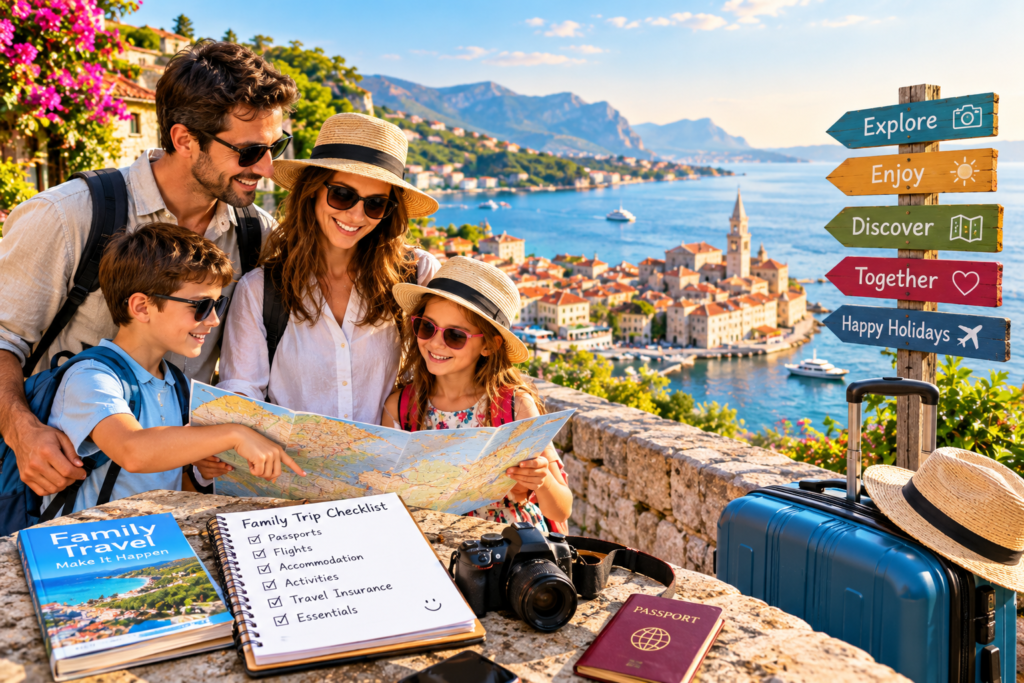

Planning a family vacation overseas can feel exciting at first, but the number of decisions involved can quickly become overwhelming. Flights, accommodation, activities, passports, packing, budgets, and different age groups all have to be considered before the trip even begins. A little preparation can make the entire process easier and help the family spend more time enjoying the destination instead of dealing with avoidable problems.
A successful family vacation does not require every minute to be planned. In fact, trying to create a perfect schedule can sometimes make a trip more stressful. The goal should be to create a comfortable structure with enough flexibility for rest, unexpected changes, and spontaneous moments. When the destination, accommodation, transportation, and daily activities are chosen with the whole family in mind, an overseas vacation can become a memorable experience for everyone.
Start by Choosing the Right Destination
The first decision should be the destination itself. Families have different needs depending on the ages of their children, preferred activities, budget, flight duration, climate, and comfort level with international travel. A destination that works perfectly for a couple may not be equally convenient for a family traveling with young children.
Consider how easy it will be to move around, whether family-friendly accommodation is available, and how many activities can be reached without long daily journeys. A destination with slightly fewer famous attractions may actually create a more enjoyable vacation if it offers shorter travel times and easier logistics.
Consider the Length of the Journey
Long flights can be one of the biggest challenges of an overseas family vacation. Younger children may struggle with extended periods of sitting, while older travelers may have difficulty adjusting to a new time zone.
When comparing destinations, look at the complete journey rather than just the flight time. A destination requiring multiple connections may take considerably longer than one with a direct flight. If possible, choose travel arrangements that reduce unnecessary transfers and leave enough time between connections.
Set a Realistic Family Budget
Creating a budget before making reservations helps prevent unpleasant surprises later. International vacations can involve expenses that are easy to overlook, including airport transportation, baggage fees, attraction tickets, meals, local transportation, travel insurance, and unexpected purchases.
Divide the budget into major categories such as flights, accommodation, food, transportation, activities, and emergency funds. This makes it easier to see where your money is going and decide which experiences are worth prioritizing.
Choose Family-Friendly Accommodation
Accommodation can have a major effect on how comfortable a family vacation feels. A beautiful hotel is not necessarily the best choice if the room is too small, transportation is inconvenient, or there are limited food options nearby.
Look for features that actually match your family’s needs. Depending on the trip, these might include connecting rooms, family suites, kitchen facilities, laundry access, elevators, breakfast options, pools, or nearby restaurants. Location is equally important because staying close to useful services can reduce unnecessary daily travel.
Check the Neighborhood Before Booking
A hotel can look perfect online while being inconvenient once you arrive. Before booking, examine what surrounds the property.
Check the distance to public transportation, grocery stores, pharmacies, restaurants, major attractions, and family-friendly activities. A slightly more expensive hotel in a convenient location can sometimes reduce transportation costs and save valuable time every day.
Build a Flexible Itinerary
A family itinerary should provide direction without becoming a strict timetable. Trying to visit several attractions every day can leave children and adults exhausted.
Choose one or two major activities for each day and leave open periods around them. This creates room for meals, rest, transportation delays, weather changes, and unexpected discoveries. A flexible itinerary also makes it easier to adjust when someone needs a quieter afternoon.
Avoid Changing Hotels Too Often
Moving from one hotel to another may seem like an efficient way to see more places, but frequent changes can become tiring when traveling with children.
Packing, checking out, transferring luggage, finding transportation, and checking into another property can consume several hours. Unless moving between destinations is an important part of the trip, staying in one location for several nights can provide a much more relaxed experience.
Plan Around the Family’s Energy Levels
Every family has different routines, but young children often become tired after several hours of walking and sightseeing. Adults may also need breaks even if they are excited about exploring.
Instead of scheduling the most demanding activity every day, alternate busy days with lighter ones. A morning museum visit could be followed by a relaxed afternoon at a park, beach, café, or hotel. This approach keeps the trip enjoyable without turning every day into a race.
Book Important Things Early
Certain parts of an international vacation are worth arranging ahead of time. Flights, accommodation, airport transportation, popular attractions, and special experiences may have limited availability during busy travel periods.
Booking essential arrangements early can reduce last-minute pressure. At the same time, avoid reserving every single activity before arriving. Leave some flexibility for weather, local recommendations, and changes in the family’s energy level.
Keep Travel Documents Organized
International travel requires careful attention to documents. Make sure passports are valid for the destination and check entry requirements well before departure.
Keep digital copies of important documents in a secure location and carry necessary physical documents separately from your main luggage. Depending on the destination, you may also need visas, travel authorization, vaccination documentation, or other paperwork. Requirements can change, so check official government information before traveling.
Think About Travel Insurance
Travel insurance can provide financial protection against certain unexpected problems during an overseas trip. Depending on the policy, coverage may include medical emergencies, trip interruptions, cancellations, baggage problems, or other specified situations.
Families should read the policy details carefully rather than assuming every problem will automatically be covered. Pay attention to exclusions, claim requirements, coverage limits, and whether activities planned during the vacation are included.
Prepare Children for the Trip
Children often enjoy international travel more when they understand what to expect. Explain the destination in simple terms and show them photographs of the hotel, airport, attractions, or transportation they may experience.
Older children can participate in planning by choosing a restaurant, attraction, or activity they want to experience. Giving children some responsibility can make them feel involved rather than simply being taken from one place to another.
Pack According to the Destination
Overpacking can make family travel considerably harder. Instead of bringing everything that might possibly be useful, check the destination’s weather and plan clothing around realistic daily needs.
Choose versatile clothing that can be combined in different ways. Comfortable walking shoes are particularly important for destinations where sightseeing involves long periods on foot. If traveling with young children, make sure essential items are easily accessible rather than buried at the bottom of a suitcase.
Create a Smart Carry-On Bag
The carry-on should contain the things your family may need during the journey rather than simply serving as a second suitcase.
Keep essential documents, medications, chargers, snacks, a change of clothes, entertainment, and basic hygiene items accessible. If checked luggage is delayed, having a few essential items in the carry-on can make the first several hours much easier.
Bring Familiar Snacks
International travel introduces families to new foods, which can be exciting but may also be difficult for children who are selective eaters.
Pack a few familiar snacks for the journey and the first part of the trip. This does not mean avoiding local food. Instead, it provides a reliable option when children are hungry, tired, or not ready to try something unfamiliar.
Plan Meals in Advance Without Overplanning
Food can become surprisingly stressful when everyone is hungry and nobody knows where to eat. Before leaving each morning, identify a few possible meal options near the day’s activities.
You do not need to reserve every meal. Simply knowing where family-friendly restaurants, cafés, markets, or grocery stores are located can reduce pressure. It is also useful to keep meal times reasonably consistent when traveling with younger children.
Make Transportation Simple
Transportation should be considered before the trip rather than figured out completely after landing. Research how the airport connects with your accommodation and understand the basic public transportation system.
For families with small children, consider whether strollers, luggage, stairs, crowded stations, and long walks will make certain routes difficult. The cheapest option is not always the easiest option, especially after a long international flight.
Schedule Recovery Time After Arrival
Jet lag and travel fatigue can make the first day difficult. Avoid scheduling a major attraction immediately after a long overnight journey unless there is a specific reason to do so.
A better approach may be to check into the accommodation, eat a simple meal, walk around the neighborhood, and rest. The family can then begin sightseeing properly once everyone has recovered from the journey.
Keep the First Day Simple
The first day should generally be about getting comfortable with the new environment. Find the nearest grocery store, learn where transportation is located, and become familiar with the surrounding streets.
A short walk can be enough. There is no need to prove that you have started the vacation by visiting several attractions within a few hours of arrival.
Balance Adult and Child Interests
Family vacations work better when everyone gets something they enjoy. Adults may want museums, architecture, restaurants, or historic sites, while children may prefer parks, animals, beaches, interactive attractions, or outdoor activities.
Try alternating priorities throughout the trip. If one morning focuses on an adult interest, the afternoon can include something children are excited about. This creates a sense that the vacation belongs to the whole family.
Choose Activities With Different Energy Levels
Not every activity needs to be physically demanding. Mix walking tours and sightseeing with relaxing experiences.
A busy museum day can be followed by a beach afternoon. A long city walk can be followed by a scenic boat ride. This variety helps prevent exhaustion and gives everyone opportunities to recover.
Keep Emergency Information Accessible
Families should know how to respond if something unexpected happens. Save important phone numbers and addresses, including your accommodation, local emergency services, travel insurance provider, and relevant embassy or consular information.
Parents should also make sure older children know what to do if they become separated from the group. Establishing a simple meeting point can provide additional reassurance in crowded destinations.
Protect Important Medication and Essentials
If a family member needs regular medication or specific personal items, keep them in easily accessible luggage rather than relying entirely on checked bags.
Carry necessary prescriptions and relevant medical information when appropriate. It is also useful to research whether required medications are available or restricted in the destination country before departure.
Leave Room for Spontaneous Experiences
Some of the best family memories happen when something unexpected enters the itinerary. A local festival, small restaurant, scenic viewpoint, playground, market, or interesting street may become a favorite part of the trip.
If every minute has already been scheduled, there is no room for these discoveries. Keep some open time so the family can follow an interesting opportunity without worrying about missing the next reservation.
Use Technology Wisely
Travel apps can make international vacations easier by providing maps, translation, transportation information, digital tickets, and reservation details.
However, avoid depending on a single device or application. Save important addresses and reservation information offline when possible, carry charging equipment, and keep essential information accessible if mobile service becomes unreliable.
Take Photos Without Making Them the Whole Trip
Family vacations naturally create a lot of photographs, but constantly stopping for pictures can become tiring for everyone.
Choose a few moments each day for photographs and then continue enjoying the experience. Encourage children to take some pictures themselves if they are old enough. This can turn photography into part of the adventure rather than another task for the adults.
Accept That Everything Will Not Go Perfectly
Flights can be delayed, weather can change, restaurants can disappoint, and children can become tired at exactly the wrong moment. Trying to eliminate every possible problem is impossible.
The better strategy is to prepare for common disruptions and remain flexible when they happen. A delayed activity does not have to ruin the entire day if there is enough space in the schedule to adjust.
Focus on Memories Rather Than Perfection
A family vacation is not successful because every planned attraction was visited. The strongest memories may come from a funny transportation mistake, a shared meal, an unexpected discovery, or a simple evening walk.
Allow the trip to develop naturally. Children may not remember the exact name of every museum, but they may remember eating something new, watching a beautiful sunset, or exploring an unfamiliar street with their family.
Frequently Asked Questions
1. How far in advance should I plan an overseas family vacation?
For international travel, starting several months in advance gives families more time to compare flights, accommodation, entry requirements, insurance, and activities. The ideal timing depends on the destination and travel season.
2. How many activities should we plan each day?
One or two major activities are often enough for a family day. Leave additional time for meals, transportation, rest, and unexpected changes rather than creating an itinerary that is packed from morning until night.
3. Should families stay in hotels or vacation rentals?
Both can work well. Hotels may offer services such as breakfast, housekeeping, pools, and reception support, while vacation rentals may provide more space and kitchen facilities. Choose according to your family’s needs and the destination.
4. What is the best way to handle children during long flights?
Bring familiar snacks, entertainment, comfortable clothing, and essential items in the carry-on. Encourage children to move when appropriate and plan activities around the length of the journey.
5. How can I make an international family trip less stressful?
Choose a practical destination, stay in a convenient location, avoid overpacking, build flexibility into the itinerary, prepare documents early, and leave enough time for rest. A realistic schedule is usually easier to manage than a perfect but exhausting one.
Conclusion
Planning a stress-free family vacation overseas is mainly about making thoughtful decisions before the journey begins. Choose a destination that fits your family’s interests, select convenient accommodation, create a realistic budget, organize important documents, and build an itinerary that balances sightseeing with rest. These preparations can remove many of the small problems that otherwise become stressful during an international trip.
At the same time, remember that family travel does not need to be perfectly controlled. Leave space for unexpected discoveries, changing weather, tired children, spontaneous meals, and simple moments together. The most successful vacation is not necessarily the one where every attraction is checked off the list, but the one where everyone returns home with positive memories of experiencing something new together.