
Some cities are memorable because of their ancient buildings, while others stand out for their modern architecture, restaurants, technology, and fast-moving lifestyle. The most fascinating destinations often bring both worlds together. In these cities, centuries-old streets can exist only a short walk from contemporary cafés, creative neighborhoods, shopping districts, galleries, and modern business centers.
This combination gives travelers a chance to experience more than one version of a destination during the same trip. You can walk through a historic neighborhood in the morning, discover a traditional market at lunchtime, and spend the evening in a modern district filled with restaurants, rooftop views, and contemporary entertainment. These contrasts make city travel feel more dynamic and give visitors a better understanding of how places have changed while keeping parts of their identity.
Tokyo, Japan
Tokyo is one of the clearest examples of old and new existing side by side. Modern skyscrapers, electronic districts, high-speed transportation, fashion centers, and enormous shopping areas are part of everyday life, yet quieter neighborhoods still contain traditional streets, small shrines, historic temples, and long-established restaurants.
A traveler can move from the futuristic atmosphere of Shibuya or Shinjuku into a much calmer neighborhood within a relatively short journey. Areas such as Asakusa provide a different atmosphere through traditional architecture, temple grounds, local shops, and narrow streets. The contrast is one of Tokyo’s defining travel experiences because the city does not simply preserve its past—it continues developing around it.
Istanbul, Türkiye
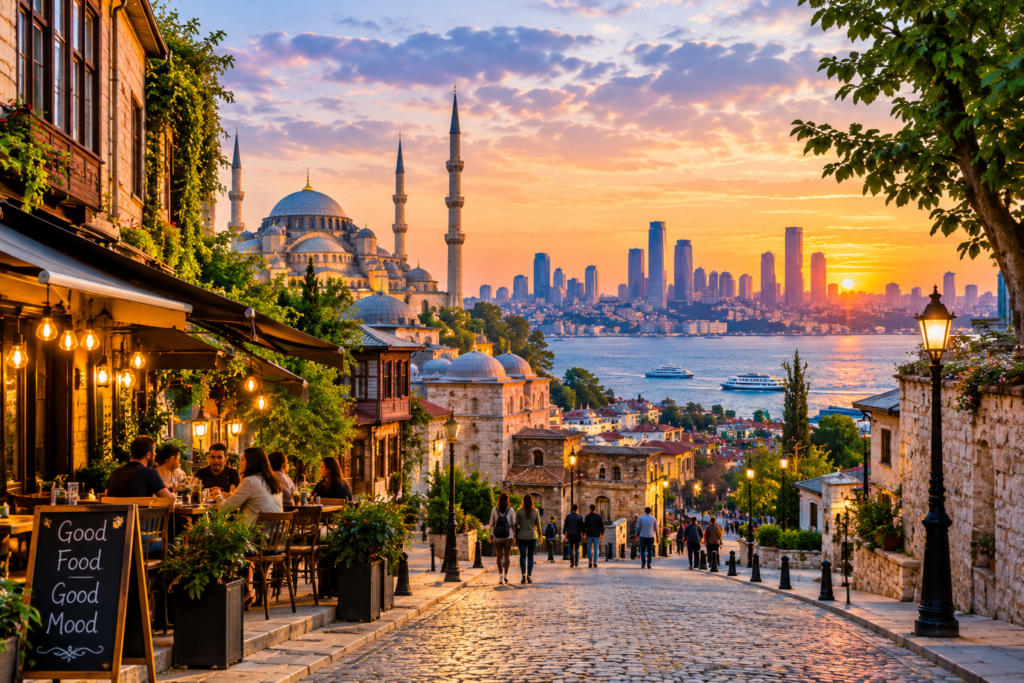
Istanbul provides a particularly striking meeting point between history and contemporary life. The city has been shaped by centuries of different civilizations, and historic mosques, bazaars, palaces, and neighborhoods remain part of the modern urban landscape.
At the same time, Istanbul has a lively contemporary culture filled with cafés, restaurants, galleries, design shops, nightlife, and modern shopping districts. Travelers can explore historic streets during the day and experience a completely different atmosphere in areas such as Karaköy and Kadıköy later in the evening. The result is a city where history is not separated from daily life but remains woven into it.
Lisbon, Portugal
Lisbon combines traditional architecture, tiled buildings, steep streets, historic trams, and neighborhood cafés with a growing contemporary food, design, and creative scene. The city’s older districts can feel remarkably intimate, with narrow streets and buildings that reflect centuries of Portuguese history.
Beyond those historic neighborhoods, Lisbon has modern restaurants, boutique hotels, cultural spaces, renovated waterfront areas, and creative businesses. Travelers can begin the day walking through an old neighborhood and later explore contemporary districts without leaving the same city. This mixture gives Lisbon a relaxed but constantly changing character.
Rome, Italy
Rome is a city where ancient history appears almost everywhere. Roman ruins, historic squares, churches, fountains, and centuries-old streets exist alongside busy roads, modern businesses, contemporary restaurants, and everyday urban life.
One of the most interesting aspects of Rome is that historic sites are not isolated attractions. They often sit directly within neighborhoods where people live, work, shop, and socialize. After exploring ancient monuments, travelers can walk into a modern café, enjoy contemporary Italian cuisine, or discover a neighborhood market. The transition between eras can happen within a few streets.
Seoul, South Korea
Seoul offers a particularly strong contrast between traditional Korean architecture and one of Asia’s most modern urban environments. Contemporary shopping districts, technology, entertainment, cafés, and skyscrapers dominate much of the city, while historic palaces and traditional neighborhoods remain important parts of the urban landscape.
Places such as Bukchon Hanok Village demonstrate how traditional architecture can exist within a rapidly developing city. Travelers can explore historic structures and then move toward areas filled with modern fashion, restaurants, cafés, and nightlife. This combination makes Seoul especially interesting for visitors who want cultural history without giving up the energy of a modern metropolis.
Prague, Czech Republic
Prague’s historic center is known for medieval streets, old buildings, bridges, churches, and distinctive architecture. Walking through the central neighborhoods can feel like stepping into another era, particularly early in the morning when the streets are quieter.
Yet Prague is also a contemporary European capital with modern restaurants, independent cafés, creative spaces, shopping areas, and a growing design scene. Travelers can use the historic center as a starting point and then explore neighborhoods where contemporary local life is more visible. The contrast becomes particularly noticeable when traditional buildings are filled with modern businesses.
Mexico City, Mexico
Mexico City demonstrates how history can become part of a huge modern metropolis. Historic plazas, colonial buildings, museums, traditional markets, and archaeological remains coexist with contemporary restaurants, galleries, design studios, shopping areas, and lively neighborhoods.
The city’s different districts can provide dramatically different experiences. Travelers might explore historic architecture in the morning and then spend the afternoon in a neighborhood known for contemporary food and creative culture. This variety makes Mexico City particularly rewarding for travelers who enjoy cities that continually reveal different layers.
Marrakech, Morocco
Marrakech is famous for its medina, markets, historic buildings, courtyards, and traditional architecture. Walking through the older streets provides a strong sense of place, with local shops, artisans, food stalls, and historic landmarks creating a distinctive atmosphere.
Outside and around the historic core, travelers can find modern hotels, contemporary restaurants, stylish cafés, galleries, and design-focused spaces. The contrast is particularly interesting because modern businesses often incorporate traditional Moroccan materials, patterns, and architectural ideas rather than completely abandoning the city’s visual identity.
Athens, Greece
Athens combines ancient landmarks with a modern European city that continues to evolve. Historic monuments and archaeological sites sit near neighborhoods filled with cafés, restaurants, street art, independent shops, and contemporary cultural spaces.
The city becomes particularly interesting when travelers explore beyond the most famous archaeological attractions. Neighborhoods surrounding the historic center reveal a more modern side of Athens, while traditional food and long-established local businesses remain part of everyday life. This creates a city where ancient history and current culture can be experienced during the same walk.
Barcelona, Spain
Barcelona brings together medieval streets, historic neighborhoods, modernist architecture, beaches, creative districts, and a busy contemporary lifestyle. The older parts of the city provide narrow streets and historic buildings, while other areas have broad avenues, modern businesses, and innovative architecture.
The city’s food scene also reflects this mixture. Traditional Catalan dishes remain important, but modern restaurants and creative culinary concepts have become part of the urban landscape. Travelers can spend the morning exploring historic architecture and the afternoon experiencing contemporary art, shopping, or coastal life.
Edinburgh, Scotland
Edinburgh’s Old Town and New Town create a particularly visible contrast within the same city. Historic streets, stone buildings, closes, and medieval architecture give the Old Town a distinctive atmosphere, while the New Town reflects a later period of urban development with elegant streets and Georgian architecture.
Modern Edinburgh adds restaurants, cafés, cultural venues, festivals, independent businesses, and a lively student population. Travelers can explore historic streets during the day and experience a contemporary cultural scene in the evening. The city’s relatively compact center makes this transition easy to experience on foot.
Hanoi, Vietnam
Hanoi combines historic architecture, traditional markets, temples, narrow streets, and long-established food culture with modern cafés, hotels, businesses, and contemporary neighborhoods. The city’s Old Quarter is particularly well known for its dense streets and distinctive atmosphere.
At the same time, Hanoi continues to change rapidly. New restaurants, creative spaces, coffee shops, and modern developments exist alongside traditional businesses. This creates a city where the past remains highly visible without preventing new forms of urban life from developing.
Singapore
Singapore presents the meeting of historic communities and an exceptionally modern urban environment. Skyscrapers, efficient transportation, contemporary shopping centers, and futuristic architecture dominate much of the city, but older neighborhoods and historic buildings remain important.
Areas such as Chinatown, Little India, and Kampong Glam provide examples of how cultural traditions and historic architecture can remain part of a modern global city. Travelers can explore temples, mosques, traditional shops, and heritage buildings before moving into contemporary commercial districts only minutes away.
Cape Town, South Africa
Cape Town combines historic neighborhoods, colonial-era architecture, cultural landmarks, and traditional markets with contemporary restaurants, creative businesses, modern hotels, and a vibrant waterfront.
The city’s natural surroundings add another layer to the experience. Travelers can explore historic streets and neighborhoods before moving toward beaches, mountains, or modern waterfront areas. This mixture of history, culture, nature, and contemporary urban life gives Cape Town a particularly varied character.
Why These Cities Are Interesting to Explore
Cities where historic and modern environments overlap offer travelers more variety without requiring constant changes of destination. One neighborhood can provide architecture and history while another offers food, design, shopping, or entertainment.
This also makes it easier to understand how a city has developed. Instead of seeing history only inside museums, travelers can observe how older buildings are being used today. A centuries-old structure might contain a restaurant, hotel, shop, cultural venue, or private residence, showing how the past can remain relevant within modern life.
Walk Through Historic Neighborhoods
Walking is one of the best ways to experience the relationship between old and new. Public transportation can move you quickly from one attraction to another, but walking allows you to notice smaller details.
Look for old doorways, balconies, street signs, markets, independent businesses, and architectural details. You may also notice modern cafés, design stores, murals, and contemporary businesses operating inside historic buildings. These small transitions often tell a more interesting story than a single famous landmark.
Explore Beyond the Main Tourist Area
The most famous historic district is not always where contemporary local life is easiest to see. Once you have visited the major landmarks, spend some time in neighborhoods where residents live and work.
Local cafés, markets, bookstores, restaurants, parks, and independent shops can provide a better understanding of how the city functions today. These areas can also offer a different atmosphere from heavily visited attractions and may reveal parts of the city that are less obvious to first-time visitors.
Try Traditional and Modern Food
Food is another excellent way to experience a city’s different generations. Traditional dishes can reveal the history and regional identity of a place, while modern restaurants may show how local cuisine is evolving.
Try both when possible. A historic market or family-run restaurant can provide one type of experience, while a contemporary restaurant can demonstrate how chefs are interpreting familiar ingredients in new ways. Together, they create a broader picture of the destination.
Visit Historic Sites at Different Times
Historic areas can feel completely different depending on the time of day. Early mornings may offer quieter streets and softer light, while evenings can reveal restaurants, cafés, local gatherings, and illuminated architecture.
If your schedule allows, consider returning to a historic district more than once. Seeing the same neighborhood during different parts of the day can reveal details that are easy to miss during a single visit.
Look for Modern Life Inside Old Buildings
One of the most interesting details in these cities is seeing how historic buildings have been adapted for contemporary use. Old warehouses may become restaurants, traditional houses may become boutique hotels, and historic commercial streets may contain modern design stores.
These changes show that preservation and modern life do not always have to exist separately. A historic building can retain its character while serving a completely different purpose for today’s residents and visitors.
Plan Enough Time for Both Sides
A common mistake is spending the entire trip visiting historic attractions and then realizing there was no time left to experience the city’s contemporary culture. Try to divide your itinerary between both.
For example, you might dedicate a morning to historic architecture, an afternoon to modern neighborhoods and food, and an evening to contemporary entertainment. This structure keeps the trip varied while allowing you to experience different sides of the same destination.
Frequently Asked Questions
1. Which cities combine history and modern life?
Tokyo, Istanbul, Lisbon, Rome, Seoul, Prague, Mexico City, Marrakech, Athens, Barcelona, Edinburgh, Hanoi, Singapore, and Cape Town all offer different combinations of historic environments and contemporary urban life.
2. Is it better to stay in a historic neighborhood?
It can be a great option if you want atmosphere and easy access to traditional sights. However, modern neighborhoods may offer better transportation, restaurants, or nightlife. The right choice depends on what you want from the trip.
3. How can I experience local life in a historic city?
Explore residential neighborhoods, visit local markets, eat at independent restaurants, use public transportation, and spend time in cafés or parks where residents gather. These activities can complement visits to major landmarks.
4. Should I focus more on history or modern attractions?
You do not have to choose one. Combining both can provide a more complete understanding of the destination and prevent the itinerary from becoming repetitive.
5. How many days are enough for these cities?
Three to five days can provide a useful introduction to many of these destinations, although larger cities such as Tokyo, Mexico City, and Seoul can easily support longer stays.
Conclusion
Cities where historic streets meet modern life offer travelers a chance to experience different periods of a destination without leaving the same urban environment. Tokyo’s traditional neighborhoods, Istanbul’s historic districts, Lisbon’s old streets, Seoul’s palaces, Mexico City’s historic center, and Singapore’s heritage communities all demonstrate how cities can preserve their identity while continuing to change.
The best way to experience these destinations is to move beyond a simple checklist of landmarks. Walk through older neighborhoods, explore modern districts, try both traditional and contemporary food, and notice how historic buildings are being used today. When travelers pay attention to these contrasts, a city becomes more than a collection of attractions—it becomes a living connection between its past and present.