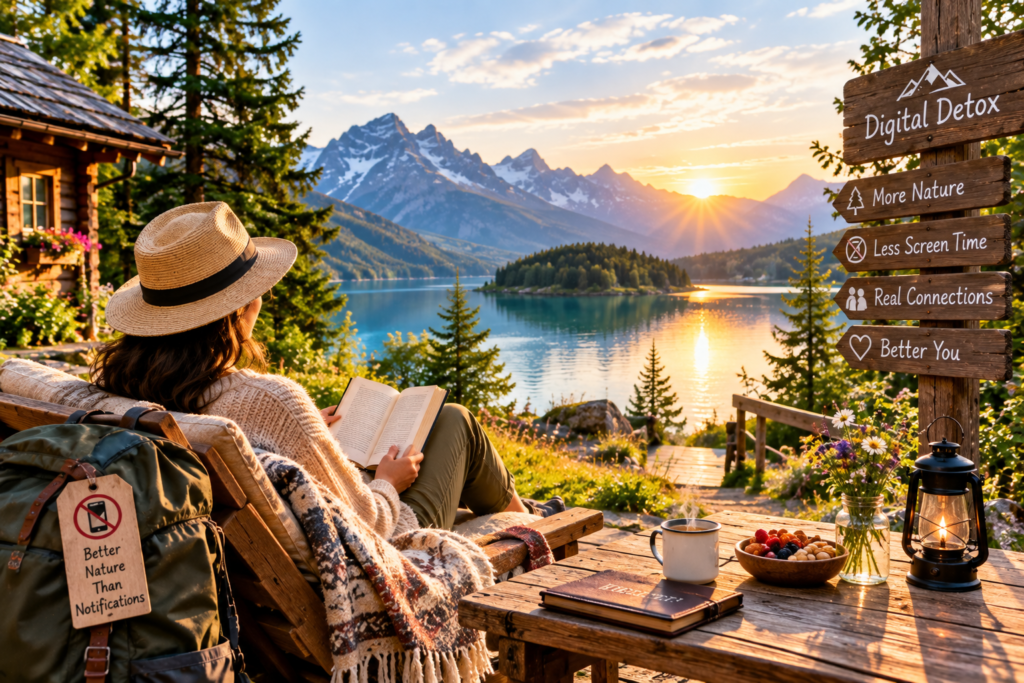

A digital detox vacation is a chance to step away from constant notifications, endless scrolling, work messages, and the habit of checking a screen every few minutes. Instead of planning a trip around Wi-Fi availability and online entertainment, travelers can choose destinations where nature, quiet surroundings, and slower routines naturally encourage them to disconnect.
The idea does not necessarily mean giving up technology completely. A successful digital detox can simply mean using your phone less and giving more attention to the place around you. Remote islands, mountain villages, forest cabins, desert landscapes, and peaceful coastal communities can make it easier to replace screen time with walking, reading, swimming, conversation, photography, or simply enjoying a quiet morning.
The Faroe Islands
The Faroe Islands offer dramatic cliffs, green mountains, remote villages, waterfalls, and wide ocean views that naturally encourage travelers to spend more time outdoors. The landscape is often the main attraction, so there is plenty to experience without relying on digital entertainment.
Travelers can spend their days hiking between villages, exploring coastal viewpoints, watching seabirds, or simply sitting beside the ocean. Weather can change quickly, which makes the islands feel even more dynamic. The remote environment can help shift attention away from notifications and toward the landscape.
The Azores, Portugal
The Azores provide a peaceful combination of volcanic scenery, lakes, forests, hot springs, and coastal landscapes. The islands are particularly appealing for travelers who want nature without giving up comfortable accommodation and local food.
A typical day can involve hiking around a volcanic lake, swimming in natural thermal pools, visiting a small village, or exploring the coastline. Instead of moving constantly between digital attractions, travelers can build a slower routine around outdoor activities and long periods away from their phones.
The Scottish Highlands
The Scottish Highlands offer enormous open landscapes, mountains, lochs, valleys, and quiet roads. Many areas feel far removed from the atmosphere of a busy city, making them suitable for travelers who want a slower pace.
A digital detox itinerary here could include hiking during the day, reading beside a loch, exploring small villages, and spending evenings away from screens. The dramatic weather and changing light can also make simply watching the landscape feel like an activity of its own.
Patagonia, Argentina and Chile
Patagonia is an excellent choice for travelers who want their vacation to revolve around wilderness. The region contains glaciers, mountains, lakes, forests, and enormous open spaces where outdoor exploration naturally becomes the focus.
Long hiking routes can occupy an entire day, leaving little reason to constantly check a phone. Travelers can return to a lodge or campsite tired from walking and spend the evening talking, reading, preparing a meal, or watching the landscape change as daylight disappears.
The Dolomites, Italy
The Dolomites combine dramatic mountain scenery with hiking trails, alpine villages, meadows, and peaceful valleys. Although the region has modern tourist infrastructure, the mountains provide plenty of opportunities to spend long periods outdoors.
A digital detox trip can be built around early morning walks, mountain huts, scenic viewpoints, and slow meals in small communities. Instead of trying to document every moment, travelers can focus on noticing the changing colors of the mountains and the atmosphere of the surrounding valleys.
Bhutan
Bhutan offers travelers an opportunity to experience mountain landscapes, monasteries, forests, traditional architecture, and a distinctive cultural environment. The country’s emphasis on preserving cultural and environmental traditions can make it feel very different from highly commercialized destinations.
Travelers can spend time visiting monasteries, walking through mountain landscapes, exploring local communities, and learning about Bhutanese traditions. The experience encourages a slower approach to travel, where cultural understanding becomes more important than constantly checking a screen.
The Canadian Rockies
The Canadian Rockies offer an enormous range of outdoor activities, including hiking, canoeing, wildlife viewing, scenic drives, and camping. National parks such as Banff and Jasper contain landscapes where nature can easily become the central focus of a vacation.
Travelers can wake early, spend the day on a trail, and finish the evening beside a lake or at a mountain accommodation. Even when visitors keep their phones available for navigation and safety, the environment naturally creates opportunities to spend hours without looking at a screen.
The Scottish Islands
The Scottish islands offer a particularly peaceful alternative to busy city travel. Islands such as Skye and the Outer Hebrides contain beaches, cliffs, hills, small communities, and wide-open landscapes.
The slower pace makes it easier to create days without a packed schedule. Travelers can explore coastal trails, visit local cafés, watch wildlife, or simply spend time near the water. The absence of constant urban stimulation can make reducing screen time feel much easier.
The Namib Desert, Namibia
The Namib Desert offers an environment that feels almost completely disconnected from modern city life. Vast dunes, open landscapes, dramatic skies, and remote desert lodges create an atmosphere where nature becomes the main source of entertainment.
Sunrise and sunset are particularly powerful experiences here. Instead of filling the evening with online content, travelers can watch the changing colors of the dunes or look at the night sky. A desert environment can make even simple activities feel surprisingly meaningful.
The Greek Islands Beyond the Busiest Resorts
Some Greek islands and smaller coastal communities provide a slower alternative to the country’s busiest tourist destinations. Travelers can find quiet beaches, local tavernas, walking paths, fishing villages, and peaceful evenings.
Choosing a less crowded island can make a major difference. Without a long list of attractions to visit, travelers can create a simple routine of swimming, walking, eating local food, reading, and enjoying the sea. This kind of unhurried schedule is ideal for reducing screen dependence.
The Japanese Countryside
Japan is famous for its advanced technology and enormous cities, but rural areas provide an entirely different experience. Mountain villages, forests, traditional inns, temples, rice fields, and hot springs can offer travelers a slower way to experience the country.
Staying at a traditional inn can encourage travelers to slow down. A day might include walking through a village, visiting a temple, soaking in a hot spring, and enjoying a carefully prepared meal. The experience provides plenty to do without requiring constant digital stimulation.
New Zealand’s South Island
New Zealand’s South Island is filled with mountains, lakes, forests, beaches, and remote roads. It is particularly well suited to travelers who want an active digital detox rather than simply sitting in a hotel without a phone.
Road trips, hiking, kayaking, cycling, and scenic walks can occupy most of the day. Travelers can also choose remote cabins or nature-focused accommodation where the environment itself becomes the reason to put the phone away.
Why Nature Makes a Digital Detox Easier
One reason remote destinations work so well for digital detox vacations is that nature provides an alternative source of attention. Mountains, oceans, forests, wildlife, and changing weather give travelers something to observe without needing a screen.
A city vacation can make digital disconnection harder because phones are often useful for navigation, reservations, transportation, communication, and entertainment. In a natural environment, travelers are more likely to spend several hours doing activities where a phone is unnecessary.
Choose Accommodation That Supports Disconnection
Your accommodation can strongly influence how successful a digital detox becomes. A hotel with a large television, constant entertainment, and strong emphasis on connectivity may make it harder to change your habits.
Instead, consider cabins, mountain lodges, small guesthouses, rural inns, eco-lodges, or other properties that encourage outdoor activities and quiet evenings. A comfortable chair beside a window, a balcony overlooking nature, or a nearby walking trail can provide better alternatives to screen time.
Turn Off Nonessential Notifications
You do not necessarily need to switch your phone off completely. Start by disabling notifications that are not important.
Social media alerts, promotional messages, news updates, and unnecessary app notifications can repeatedly pull your attention back toward the screen. Keeping only essential communication available can make a noticeable difference without making you completely unreachable.
Download What You Need Before Leaving
A digital detox does not mean being unprepared. Download maps, reservations, transportation information, important documents, and other necessary information before leaving your accommodation.
Offline access means you can keep your phone available for practical needs without having to spend your entire trip connected to the internet. This is especially useful in remote destinations where connectivity may already be limited.
Replace Screen Time With Simple Activities
Removing your phone without replacing the habit can leave you wondering what to do. Prepare a few alternatives before your trip.
Bring a physical book, travel journal, sketchbook, cards, or a small camera. You can also create simple routines such as morning walks, afternoon swimming, evening reading, or writing down observations about the destination.
Make Meals Screen-Free
Meals are a natural opportunity to disconnect. Instead of watching videos or scrolling while eating, use the time to talk with travel companions or observe the restaurant and surroundings.
Trying local food becomes more interesting when you pay attention to the flavors, presentation, atmosphere, and people around you. A simple meal can become an important part of the travel experience rather than just a break between activities.
Spend Time Outdoors Every Day
A digital detox becomes easier when the itinerary naturally keeps you outside. Plan activities such as hiking, kayaking, swimming, cycling, walking, wildlife watching, or visiting scenic viewpoints.
Outdoor activities create periods when using a phone is inconvenient or unnecessary. They also provide the mental transition needed to stop thinking about online activity and start paying attention to the physical environment.
Do Not Turn the Detox Into Another Challenge
A digital detox should not become a stressful competition to see how many hours you can survive without your phone. If you need your device for navigation, safety, translation, or communication, use it.
The purpose is to change your relationship with technology temporarily, not to make yourself uncomfortable. Even reducing screen time by several hours a day can create a meaningful difference.
Create a Phone-Free Morning
Starting the day without immediately checking messages or social media can change the entire rhythm of a vacation. Instead, have breakfast, walk outside, read, or watch the sunrise.
Morning is often one of the quietest parts of the day. Protecting that time from digital distractions can make the rest of the day feel slower and more intentional.
Create a Screen-Free Evening
Evenings can be particularly useful for disconnecting because there is often no urgent reason to remain online. After dinner, put the phone away and choose another activity.
Read a book, play a board game, talk with travel companions, watch the sunset, write in a journal, or simply sit outside. These small habits can become some of the most memorable parts of the trip.
Keep Photography Under Control
Photography is an important part of modern travel, but taking hundreds of photographs can sometimes prevent travelers from experiencing the moment itself.
Choose a few moments when you want to take pictures and then return your attention to the destination. You can even designate certain parts of the day as camera-free. The goal is to return home remembering how the place felt, not just how it looked on your phone.
Frequently Asked Questions
1. What is a digital detox vacation?
A digital detox vacation is a trip designed to reduce unnecessary screen use and online activity. Travelers may limit social media, notifications, entertainment, and work communication while focusing more on nature, relaxation, culture, and face-to-face experiences.
2. Do I have to completely switch off my phone?
No. Keeping your phone available for navigation, emergencies, reservations, translation, and important communication can be practical. The main goal is to reduce unnecessary use rather than eliminate technology completely.
3. Which destinations are best for a digital detox?
Remote mountain regions, islands, forests, deserts, rural communities, and nature-focused destinations can work particularly well. Examples include Patagonia, the Faroe Islands, the Scottish Highlands, the Canadian Rockies, Bhutan, the Namib Desert, and New Zealand’s South Island.
4. What should I do instead of using my phone?
Reading, hiking, swimming, journaling, photography with limits, cooking, talking with locals, playing games, watching wildlife, and exploring on foot are all useful alternatives. The best activities are those that naturally keep your attention away from the screen.
5. Can a digital detox vacation still be comfortable?
Absolutely. A digital detox does not require giving up comfort. You can stay in a comfortable lodge, hotel, cabin, or guesthouse while simply choosing to spend less time online and more time enjoying your surroundings.
Conclusion
The best digital detox vacations are not necessarily the destinations with absolutely no technology. They are places that make it easy to forget about technology because the surrounding environment gives you better reasons to pay attention. Mountains, beaches, forests, deserts, villages, and remote islands can create the perfect setting for slowing down and reconnecting with the physical world.
Whether you choose the Faroe Islands, Patagonia, the Japanese countryside, the Canadian Rockies, Bhutan, or a quiet Greek island, the most important part is how you approach the trip. Reduce unnecessary notifications, create screen-free periods, spend more time outdoors, and leave space for simple experiences. You may return home realizing that the most valuable part of the vacation was not what you saw on a screen, but what you experienced when you finally looked away from it.