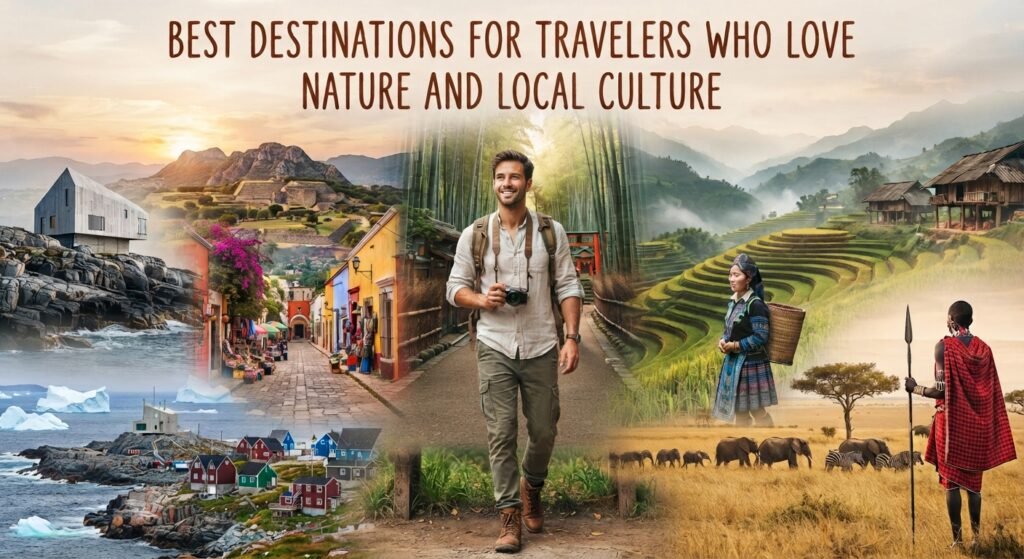

For travelers who want more than famous landmarks and busy city centers, destinations that combine nature with local culture can create some of the most rewarding experiences. These places allow you to spend part of the day surrounded by mountains, forests, beaches, lakes, or wildlife and the rest exploring local neighborhoods, markets, traditional food, historic communities, and regional customs.
This style of travel also creates a stronger connection with the destination. Instead of simply photographing beautiful scenery and moving on, you can learn how people live alongside their environment. From mountain villages and island communities to historic towns surrounded by dramatic landscapes, there are many destinations where nature and culture naturally become part of the same journey.
Kyoto and the Japanese Countryside
Kyoto is famous for its temples, gardens, traditional neighborhoods, and historic architecture, but the surrounding landscape adds another dimension to the experience. Mountains and wooded areas surround the city, creating opportunities to combine cultural exploration with peaceful outdoor experiences.
Travelers can move beyond the busiest central areas and explore quieter districts, forest paths, gardens, and nearby mountain communities. Local food also adds another layer to the trip, with seasonal ingredients and traditional preparation reflecting the relationship between Japanese culture and the natural environment.
New Zealand’s South Island
New Zealand’s South Island is an impressive destination for travelers who want dramatic scenery combined with distinctive local culture. Mountains, lakes, glaciers, forests, and coastlines provide an enormous variety of landscapes, while small communities offer opportunities to experience regional food and everyday life.
A road trip can connect several different environments without making the journey feel repetitive. Travelers can spend one day hiking beside a lake and another exploring a small town, visiting a local market, or enjoying regional cuisine. The combination allows nature to remain central without making the trip purely about outdoor activities.
Oaxaca, Mexico
Oaxaca offers a strong connection between landscape, food, crafts, and local traditions. The surrounding mountains and valleys provide opportunities for outdoor exploration, while the city and nearby communities offer colorful markets, traditional cooking, artisan workshops, and historic streets.
Travelers can combine cultural experiences with visits to natural areas rather than treating the two as separate parts of the trip. A morning exploring a market can lead to an afternoon in the countryside, followed by a meal featuring regional ingredients. This creates a balanced itinerary that feels connected to the place.
Slovenia’s Julian Alps
Slovenia is particularly appealing to travelers who want European mountain scenery without building the entire trip around major cities. The Julian Alps provide lakes, forests, valleys, rivers, and hiking routes, while nearby communities offer traditional food and regional character.
Lake Bohinj and the surrounding mountain areas can serve as a base for exploring the landscape at a slower pace. Travelers can combine hiking and scenic walks with visits to villages and local restaurants. The result is a trip where outdoor experiences and cultural discovery naturally fit together.
Costa Rica
Costa Rica is known for its biodiversity, but the country also offers opportunities to experience local communities, food, agriculture, and regional traditions. Rainforests, volcanoes, beaches, rivers, and wildlife create a remarkable natural backdrop.
Travelers can choose locally operated experiences such as farm visits, cooking activities, or community-based tours alongside hiking and wildlife excursions. This approach helps make the trip about more than simply seeing animals or photographing landscapes. It provides a chance to understand how communities interact with the environment around them.
Scotland’s Highlands and Islands
Scotland’s Highlands and islands offer dramatic mountains, lochs, coastlines, beaches, and open landscapes alongside distinctive local traditions. Small communities, historic sites, regional food, and traditional music can add cultural depth to a nature-focused trip.
A road trip is particularly useful because it allows travelers to move between remote landscapes and small towns. Instead of rushing between famous viewpoints, visitors can spend time walking coastal paths, stopping in villages, visiting historic locations, and enjoying local meals.
Norway’s Fjord Region
Norway’s fjords combine spectacular natural scenery with small communities that have developed around the water and mountains. Travelers can explore waterfalls, valleys, hiking trails, and viewpoints while also experiencing local food and village life.
A slower itinerary works especially well here. Rather than trying to see several fjords in a short period, choose one or two areas and explore them properly. Ferry journeys, scenic roads, local cafés, and walking routes can become part of the cultural and natural experience.
Peru’s Sacred Valley
Peru’s Sacred Valley offers a powerful combination of mountain scenery, agricultural landscapes, archaeological sites, markets, and living cultural traditions. The surrounding mountains provide opportunities for hiking and scenic exploration, while towns and villages offer insight into regional life.
Travelers can visit local markets, explore historic sites, and spend time in the countryside instead of focusing only on major archaeological attractions. Local food and traditional crafts can add another dimension to the journey, helping visitors understand the region beyond its famous landmarks.
The Azores, Portugal
The Azores are ideal for travelers who want dramatic nature without giving up local culture. Volcanic landscapes, crater lakes, green hills, waterfalls, thermal areas, and rugged coastlines provide abundant outdoor experiences.
At the same time, small communities, seafood, local dairy products, traditional architecture, and island customs create a strong cultural component. A road trip around one island can combine scenic viewpoints with local restaurants, village stops, and short hikes without requiring an overly complicated itinerary.
Tasmania, Australia
Tasmania offers forests, mountains, rugged coastlines, wildlife, and small communities with a strong regional identity. Travelers can spend their days exploring national parks and coastal landscapes before returning to towns for local food and cultural experiences.
Hobart can provide a useful starting point because it combines waterfront areas, markets, galleries, and restaurants with access to Tasmania’s natural attractions. From there, travelers can venture into quieter regions and experience a much broader side of the island.
Morocco’s Atlas Mountains
The Atlas Mountains provide an opportunity to experience dramatic landscapes while learning about communities whose traditions are closely connected to the surrounding environment. Mountain valleys, villages, agricultural terraces, and hiking routes create a completely different experience from Morocco’s major cities.
Travelers can explore local villages, enjoy regional meals, and learn about traditional crafts while spending time outdoors. A guided experience can be particularly useful when visiting rural areas because local knowledge can provide context that would otherwise be easy to miss.
Japan’s Rural Regions
Japan’s rural areas reveal a different side of the country from Tokyo and Osaka. Mountain villages, rice fields, forests, rivers, traditional houses, and regional festivals create opportunities to experience local life at a slower pace.
Travelers can combine countryside walks with visits to local markets, traditional restaurants, hot-spring communities, and historic neighborhoods. Staying overnight in a smaller town rather than returning immediately to a major city can make the experience much more immersive.
The Peloponnese, Greece
The Peloponnese combines beaches, mountains, olive groves, villages, archaeological sites, and coastal communities. Its varied geography makes it possible to experience different landscapes without constantly changing countries or taking flights.
A road trip can connect historic towns with rural areas and coastal villages. Travelers can spend a morning exploring an archaeological site, an afternoon beside the sea, and an evening enjoying a traditional meal in a small community. This mixture creates a well-rounded experience for travelers who want both nature and culture.
Vietnam’s Northern Mountains
Northern Vietnam offers dramatic mountain landscapes, valleys, rice terraces, rivers, and rural communities. The region is especially interesting for travelers who want to experience landscapes alongside local traditions rather than focusing only on major cities.
Traveling through smaller communities can provide opportunities to experience regional food, markets, crafts, and traditional ways of life. Trekking routes can then connect these cultural experiences with the surrounding mountains and agricultural landscapes.
How to Combine Nature and Culture in One Trip
The easiest way to create this type of vacation is to avoid separating nature and culture into completely different sections of the itinerary. Look for destinations where communities, farms, villages, and historic sites are located near natural areas.
For example, instead of spending three days in a city followed by three days at a remote beach, choose a region where a small town is surrounded by mountains or coastline. This allows you to move between cultural and outdoor experiences without spending large amounts of time traveling.
Choose Local Experiences
Local experiences can make a nature-focused trip feel much more connected to the destination. Cooking classes, village walks, craft workshops, farm visits, and locally guided excursions can introduce travelers to traditions that are difficult to understand through sightseeing alone.
Whenever possible, look for experiences operated by local residents or community organizations. These activities can provide useful cultural context while also giving travelers an opportunity to support businesses within the communities they visit.
Eat the Regional Food
Food is one of the easiest ways to connect nature and culture. Regional dishes often reflect the ingredients available in the surrounding environment, including seafood, grains, fruit, vegetables, herbs, dairy products, and locally raised meats.
Try local markets and smaller restaurants rather than relying entirely on international chains. Asking locals what they recommend can also lead to dishes and restaurants that may not appear in standard travel guides.
Spend Time in Smaller Communities
Major cities can provide museums and famous landmarks, but smaller communities often reveal more about everyday life. A village near a national park, mountain valley, or coastline can provide a natural setting while also offering local traditions and food.
Staying overnight is particularly valuable. A short daytime visit can show you the tourist side of a community, while an overnight stay allows you to experience mornings, evenings, local restaurants, and quieter streets.
Travel Slowly
Slow travel works especially well when nature and culture are both priorities. Instead of moving to a new hotel every night, choose a few bases and explore the surrounding areas.
This creates time for unexpected discoveries. You might find a small market, meet a local guide, discover a hiking trail, or spend an extra afternoon in a village. A slower schedule also reduces the environmental and physical pressure created by constant transportation.
Respect Local Traditions
Cultural travel requires more than observing traditions from a distance. Travelers should learn basic local etiquette and follow rules concerning clothing, photography, religious sites, private property, and community spaces.
Respectful behavior helps ensure that cultural experiences remain meaningful for both visitors and residents. Before visiting rural or traditional communities, researching local customs can prevent accidental disrespect and make interactions more comfortable.
Plan Around the Landscape
Natural conditions can determine how much of a destination you can realistically experience. Mountain weather, seasonal rainfall, heat, snow, and daylight hours can all affect hiking routes and outdoor activities.
Research the best time to visit based on what you want to do rather than simply choosing a season because it is popular. A quieter period with suitable conditions may provide a more rewarding experience than the busiest travel season.
Frequently Asked Questions
1. What makes a destination good for nature and culture?
The strongest destinations offer natural landscapes close to communities where travelers can experience local food, traditions, history, and everyday life without spending most of the trip traveling between them.
2. Should I choose a city or a rural destination?
You do not necessarily have to choose one. A smaller city or town near mountains, forests, beaches, or countryside can provide a useful balance between cultural attractions and outdoor experiences.
3. Is a guided tour necessary?
Not always. Independent travel can work well in many destinations, while local guides can be particularly valuable in rural or culturally distinctive areas where local knowledge adds context and helps with logistics.
4. How long should a nature-and-culture trip be?
A long weekend can work for a compact destination, but one to two weeks provides more opportunities to combine different landscapes and communities without rushing.
5. How can travelers support local communities?
Choose locally owned accommodation, restaurants, guides, markets, and craft businesses when possible. Follow local rules and treat cultural and natural sites with care.
Conclusion
Travelers who love both nature and local culture have countless destinations to explore beyond conventional sightseeing routes. Slovenia’s mountains, Costa Rica’s biodiversity, Oaxaca’s traditions, Japan’s countryside, the Azores’ volcanic landscapes, Norway’s fjords, Peru’s Sacred Valley, and Morocco’s Atlas Mountains all demonstrate how outdoor experiences and cultural discovery can become part of the same journey.
The most meaningful trips often happen when travelers slow down and allow the destination to shape the itinerary. Spend time in smaller communities, try regional food, explore natural areas with local knowledge, and leave enough space for experiences that cannot be planned in advance. When nature and culture are experienced together, a trip can become more than a collection of beautiful views—it can provide a deeper understanding of the place and the people who call it home.