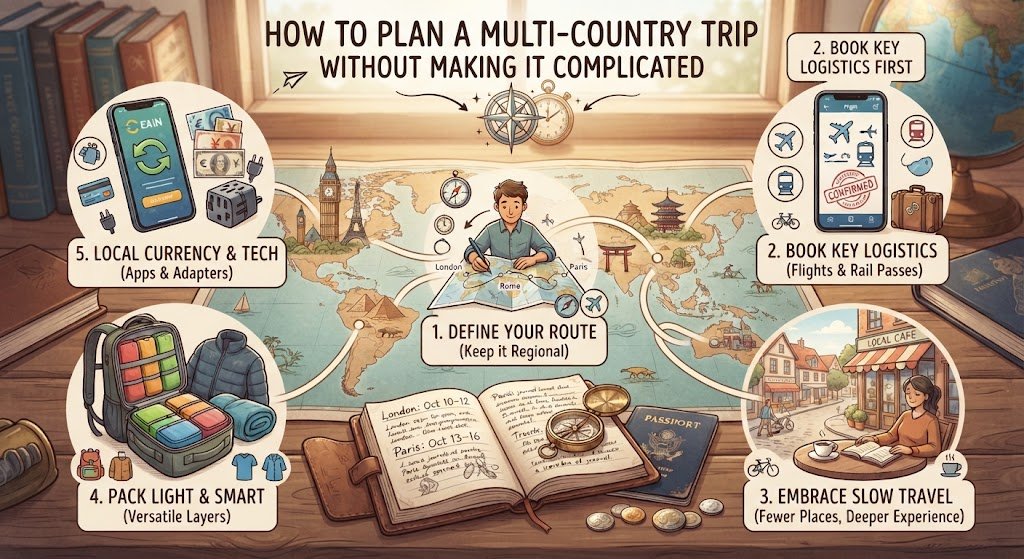

Planning a trip across several countries can sound overwhelming, especially when flights, trains, hotels, borders, activities, and different currencies all have to fit together. However, a multi-country adventure does not need to become a complicated puzzle. With a simple structure and a realistic route, it is possible to visit several destinations while keeping the trip comfortable, flexible, and enjoyable.
The biggest mistake travelers make is trying to include too many places in one journey. A successful multi-country trip is not about collecting as many passport stamps as possible. It is about choosing destinations that connect naturally, allowing enough time in each place, and avoiding unnecessary backtracking. When the route makes sense from the beginning, planning becomes much easier.
Start With One Main Travel Idea
Before searching for flights or hotels, decide what kind of experience you want from the trip. You might want to explore historic European cities, combine Mediterranean beaches with mountain towns, discover local food, or experience several different cultures during one journey.
Having a central idea makes it easier to remove destinations that do not fit. If a particular country requires a long detour simply because it looks interesting on a map, consider saving it for another trip. A focused route usually creates a better experience than an itinerary that tries to include every destination you have heard about.
Choose Countries That Connect Naturally
The easiest multi-country trips are built around destinations that have convenient transportation connections. Neighboring countries are often practical because trains, buses, ferries, and short flights can connect them without consuming an entire day.
Look at your route on a map before making reservations. If the itinerary creates a large triangle or repeatedly sends you backward, simplify it. A route that moves generally in one direction can reduce travel time and make hotel and transportation planning much easier.
Limit the Number of Countries
There is no rule saying that a multi-country vacation needs to include five or six countries. Visiting two or three countries can provide plenty of variety without making the journey exhausting.
Consider how many full days you actually have. A two-week vacation could technically include many destinations, but frequent hotel changes and transportation connections can consume a surprising amount of that time. Fewer countries with longer stays often provide more opportunities to experience each place properly.
Build the Route Before Booking Hotels
Create the overall route first and only then start choosing specific hotels. This prevents a common problem where travelers book attractive accommodation and later discover that moving between those locations is inconvenient.
Write the countries and major cities in order, then calculate how you will move between them. Once the transportation pattern makes sense, choose accommodation near useful stations, airports, or central neighborhoods. This simple order of planning can eliminate many unnecessary complications.
Give Each Destination Enough Time
One of the most important parts of multi-country planning is deciding how long to stay in each location. A destination should receive enough time to justify the effort required to reach it.
Large cities may need several days, while smaller towns can sometimes be explored comfortably in one or two nights. Avoid treating every stop as equal. Consider the size of the destination, the number of activities available, and how much travel time is required to reach the next location.
Use a Simple Transportation Strategy
Trying to use every possible form of transportation can make a trip unnecessarily complicated. If trains connect most of your destinations efficiently, use trains for the majority of the journey. If a long distance is better covered by air, use a flight for that section.
Consistency makes the trip easier to manage. You become familiar with one type of booking process, luggage expectations, station layouts, and travel routines instead of constantly learning a new system.
Consider Open-Jaw Flights
An open-jaw itinerary can be useful when visiting several countries. Instead of flying into one city and returning home from exactly the same airport, you can sometimes arrive in one city and depart from another.
For example, you could begin in one European capital and gradually travel through neighboring countries before flying home from your final destination. This can eliminate the need to return to the starting point simply to catch your flight home, saving both time and transportation costs.
Avoid Unnecessary Airport Changes
Airports can consume much more time than the actual flight. Getting to the airport, checking luggage, passing security, waiting for boarding, and reaching your hotel afterward can turn a short flight into a half-day process.
When two destinations can be connected comfortably by train or other ground transportation, compare the total journey rather than looking only at the flight duration. A city-center train may sometimes be more convenient than an inexpensive flight between distant airports.
Keep Travel Days Simple
A travel day should not be packed with major sightseeing. If you are moving from one country to another, allow enough time for transportation, check-in, meals, and unexpected delays.
Trying to arrive in a new city at noon and immediately visit several attractions can create unnecessary pressure. Instead, treat the arrival day as a transition. Explore the neighborhood, have a relaxed meal, and save major sightseeing for the following day.
Research Border Requirements
Traveling between countries may involve different entry requirements depending on your nationality, passport, and destination. Requirements can also change, so travelers should check official government or immigration information before departure.
Do not assume that crossing a border within the same region always means identical rules. Some destinations may have specific passport-validity requirements, visa rules, insurance requirements, or other conditions. Confirm the details for every country included in your itinerary.
Keep Important Documents Together
When visiting multiple countries, organization becomes especially useful. Keep your passport, transportation confirmations, hotel details, insurance information, and important contact information accessible in one secure place.
Digital copies can also provide a useful backup, but they should not replace the original documents when originals are required. Organizing everything before the trip reduces the amount of time spent searching for confirmation emails or reservation numbers while traveling.
Use One Main Planning Document
A simple itinerary document can make a complicated trip much easier to understand. You do not need a huge spreadsheet filled with dozens of details. A basic structure showing dates, locations, transportation, accommodation, and major plans is often enough.
Keep the information in chronological order so you can understand the entire trip at a glance. Include booking references and important departure times where necessary, but avoid filling the document with information you are unlikely to use.
Don’t Plan Every Hour
A multi-country trip already involves a lot of movement, so filling every day with activities can make the experience exhausting. Leave open periods in each destination.
Unplanned time gives you the opportunity to discover local restaurants, walk through neighborhoods, revisit a place you enjoyed, or simply rest. It also provides a buffer if transportation delays or weather changes affect your schedule.
Choose Central Accommodation
Accommodation location becomes particularly important when moving between countries. A centrally located hotel or apartment can make it easier to reach attractions, restaurants, and transportation connections.
However, central does not always mean directly beside the busiest tourist attraction. A neighborhood with good public transportation and practical restaurants may be more convenient than a hotel in the middle of a crowded sightseeing district.
Avoid Changing Hotels Every Night
Frequent hotel changes are one of the fastest ways to make a multi-country vacation feel complicated. Packing, checking out, traveling, checking in, and unpacking repeatedly takes time and energy.
Whenever possible, stay at least two nights in a destination. For larger cities or regions with several activities, three or four nights can provide a much more comfortable experience. The goal is to explore places rather than spend the entire vacation managing luggage.
Pack for the Entire Route
Packing becomes more important when your itinerary includes several countries with different climates. Try to build a versatile wardrobe rather than packing separate outfits for every destination.
Layers can be particularly useful because they allow you to adjust to changing temperatures without carrying excessive luggage. Comfortable walking shoes are also important because multi-country trips often involve considerable walking through stations, airports, historic districts, and hotel areas.
Keep Your Luggage Manageable
A smaller suitcase or travel backpack can make international transportation much easier. You may need to carry your luggage across train platforms, through underground stations, onto buses, or along old city streets.
Avoid packing items that you can easily purchase at your destination. A lighter bag also makes it easier to move between countries without worrying about baggage restrictions on every segment of the journey.
Plan Your Budget by Country
Costs can vary significantly from one country to another. Instead of creating one average daily budget for the entire trip, estimate expenses separately for each destination.
Consider accommodation, food, transportation, attractions, and miscellaneous expenses. A more expensive city can be balanced with a less expensive destination, but only if you understand the difference before booking everything.
Keep a Transportation Buffer
Connections do not always go perfectly. Trains can be delayed, flights can experience disruptions, and local transportation can take longer than expected.
Avoid booking extremely tight connections between separate tickets. If missing one train or flight could cause you to lose a hotel reservation or another expensive booking, give yourself additional time. A little extra space in the itinerary can protect the rest of the trip from one unexpected problem.
Use One or Two Flexible Days
Adding a flexible day can make a major difference. This does not mean doing nothing; it means keeping the day free enough to respond to weather, delays, or personal preferences.
If you fall in love with a destination, you may decide to explore it more deeply. If bad weather affects an outdoor activity, you can move it to the flexible day. This approach makes the itinerary feel less fragile.
Research Local Transportation Before Arrival
Public transportation can be confusing when you first arrive in an unfamiliar country. Before traveling, learn the basic system, including how tickets are purchased and whether contactless payment, travel cards, or mobile apps are commonly used.
You do not need to memorize the entire transportation network. Knowing how to get from the airport or station to your accommodation is usually enough for the first day. Once you understand the basics, exploring the rest of the city becomes much easier.
Keep Your Travel Style Consistent
If you prefer relaxed travel, do not suddenly create a highly demanding itinerary simply because you are visiting multiple countries. Your travel style should remain comfortable throughout the journey.
Some travelers enjoy early mornings and packed sightseeing days, while others prefer late breakfasts and slower exploration. Build the route around your own pace rather than copying an itinerary designed for someone else.
Know When to Remove a Destination
Sometimes the best planning decision is removing a country from the itinerary. If adding one destination requires several complicated transfers, expensive flights, or very short stays, ask whether it genuinely improves the trip.
A smaller itinerary can still feel international and varied. Removing one complicated stop may give you more time in the remaining destinations and make the entire journey significantly easier.
Create a Backup Plan
You do not need a complete alternative itinerary for every possible problem. A simple backup plan is enough for most situations.
Know what you would do if a transportation connection is canceled, the weather affects an activity, or a hotel problem occurs. Keep important customer-service contacts and reservation details accessible. Preparation does not eliminate unexpected problems, but it can make them much easier to handle.
Frequently Asked Questions
1. How many countries should I visit on a multi-country trip?
There is no fixed number, but two or three countries can provide plenty of variety without creating excessive travel. The ideal number depends on the total length of your vacation and the distance between destinations.
2. Is it better to travel between countries by train or plane?
It depends on the route. Trains can be convenient for nearby cities because stations are often located in city centers, while flights can make more sense for longer distances. Compare the complete journey rather than only the travel time.
3. How many nights should I spend in each country?
Instead of assigning the same number of nights to every country, consider what you want to experience. Major destinations may need several days, while smaller locations can sometimes work with a shorter stay.
4. Should I book everything before leaving home?
Important transportation and accommodation can be booked in advance, particularly during busy travel periods. However, leaving some activities and time slots flexible can make the trip more comfortable and adaptable.
5. What is the biggest mistake when planning a multi-country trip?
Trying to visit too many places is one of the most common problems. Constantly changing hotels and spending large amounts of time in transit can reduce the actual time available for exploring each destination.
Conclusion
A multi-country trip becomes much easier when the route is designed around simplicity rather than the number of destinations. Choose countries that connect naturally, limit unnecessary transfers, give each destination enough time, and build the itinerary around a clear travel idea. A straightforward route with fewer stops can provide a much richer experience than a complicated schedule packed with locations.
The best multi-country adventures also leave room for real life. Keep travel days simple, pack lightly, use flexible time, research transportation before arrival, and maintain a small buffer for unexpected changes. With a realistic route and enough breathing room, visiting several countries can feel less like managing a complicated schedule and more like enjoying one continuous international adventure.