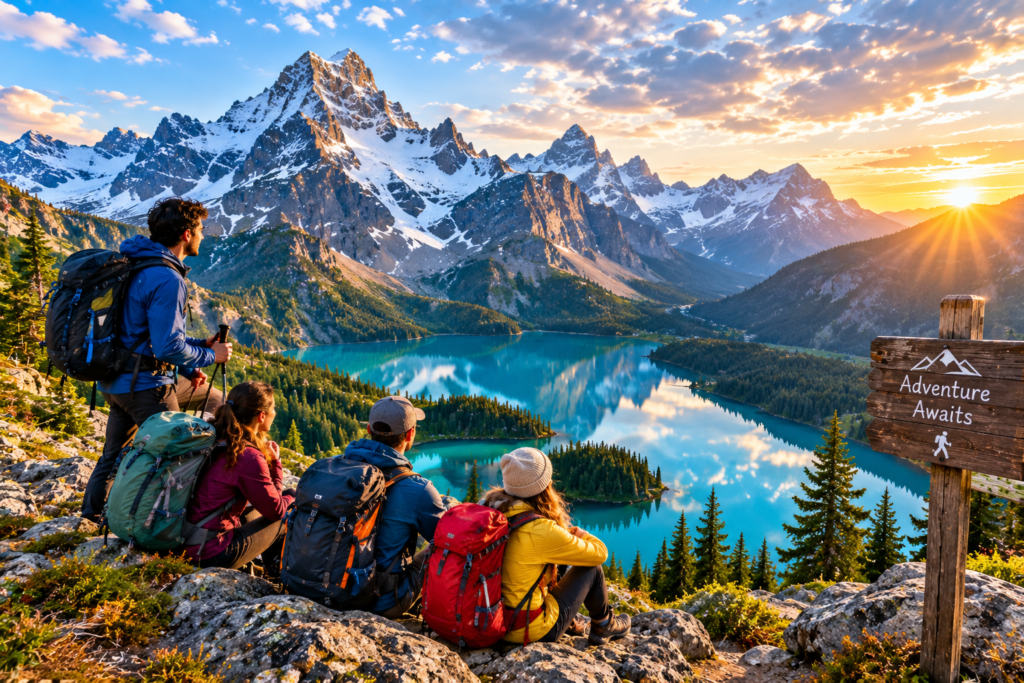

Mountain destinations offer a different kind of travel experience for people who want more than sightseeing. High peaks, alpine lakes, dramatic trails, forests, glaciers, and remote villages create opportunities to explore landscapes that feel far removed from everyday life. For adventure-minded travelers, the journey can be just as memorable as reaching the final viewpoint.
From the Himalayas and European Alps to the mountains of South America and the rugged landscapes of New Zealand, there are destinations suited to different levels of adventure. Some are ideal for long-distance trekking and challenging climbs, while others offer hiking, scenic drives, rafting, skiing, and mountain villages without requiring extreme technical skills.
The Swiss Alps, Switzerland
The Swiss Alps combine dramatic mountain scenery with an infrastructure that makes exploring the region remarkably accessible. Travelers can find high-altitude trails, alpine lakes, cable cars, mountain trains, glaciers, and traditional villages surrounded by enormous peaks.
Adventure does not necessarily mean climbing a difficult summit here. Visitors can choose challenging hiking routes, multi-day treks, paragliding, mountain biking, skiing, or simply take a mountain railway to an elevated viewpoint before exploring the surrounding trails. The variety makes the Swiss Alps suitable for travelers who want to adjust the intensity of their trip from one day to another.
The Canadian Rockies, Canada
The Canadian Rockies offer some of North America’s most impressive mountain landscapes, with turquoise lakes, enormous peaks, glaciers, forests, and extensive hiking opportunities. Banff and Jasper are particularly well known for combining accessible viewpoints with opportunities for more demanding outdoor adventures.
Hikers can choose short trails around famous lakes or spend several hours tackling more challenging mountain routes. During warmer months, travelers can also explore by canoe, bike, or scenic road trip, while winter brings opportunities for skiing and snowboarding. The combination of wilderness and developed visitor facilities makes the region especially versatile.
Patagonia, Argentina and Chile
Patagonia is ideal for travelers who want dramatic scenery and a stronger sense of wilderness. The region stretches across southern Argentina and Chile and contains mountains, glaciers, lakes, forests, and enormous open landscapes.
Trekking is one of the biggest attractions, particularly around areas such as Torres del Paine and Los Glaciares. Routes range from shorter day hikes to multi-day adventures that require more preparation. Weather can change rapidly, so travelers should take local conditions seriously and prepare appropriately for the route they choose.
The Himalayas, Nepal
The Himalayas provide some of the world’s most famous mountain adventures. Nepal offers trekking routes through high-altitude landscapes where travelers can experience mountain villages, suspension bridges, monasteries, valleys, and enormous Himalayan peaks.
The Everest region is famous, but it is not the only option. Routes in the Annapurna region and other parts of Nepal offer different landscapes and levels of difficulty. High-altitude trekking requires careful preparation, appropriate acclimatization, and attention to weather and physical conditions.
The Dolomites, Italy
The Dolomites combine dramatic limestone peaks with alpine meadows, mountain villages, scenic roads, and an extensive network of trails. Their unusual rock formations make the landscape instantly recognizable.
Adventure travelers can explore through hiking, via ferrata routes, climbing, cycling, and skiing depending on the season. One advantage of the region is that visitors can combine outdoor activities with Italian food and comfortable mountain accommodations, creating a trip that balances adventure with relaxation.
New Zealand’s Southern Alps
New Zealand’s Southern Alps provide a remarkable mixture of mountains, glaciers, lakes, valleys, and rugged wilderness. The landscape is especially attractive for travelers who want to combine several outdoor activities within one trip.
Hiking is one of the most accessible ways to explore the region, while more experienced travelers can consider mountaineering, climbing, kayaking, or guided glacier experiences. Places around Aoraki/Mount Cook offer particularly dramatic scenery and access to trails suitable for different levels of experience.
The Atlas Mountains, Morocco
The Atlas Mountains offer an adventurous alternative to Europe’s more developed alpine destinations. Travelers can explore valleys, mountain villages, rocky landscapes, and traditional communities while experiencing a very different cultural environment.
The region around Mount Toubkal is particularly popular with trekkers. A mountain adventure here can also include time in nearby villages and markets, making the journey as much about cultural discovery as physical exploration.
The Andes, Peru
The Andes provide an extraordinary setting for travelers interested in hiking, ancient history, and dramatic mountain landscapes. Peru offers routes through high valleys, rugged peaks, traditional communities, and archaeological areas.
The region around Machu Picchu is famous, but travelers can explore several different trekking options depending on their interests and experience. High altitude is an important consideration, so travelers should allow time to acclimatize before undertaking demanding hikes.
The Caucasus Mountains, Georgia
Georgia offers mountain scenery that remains less familiar to many international travelers than the Alps or Himalayas. The Caucasus region features high peaks, valleys, traditional villages, and trails through landscapes that can feel remarkably remote.
Areas such as Svaneti are particularly appealing for adventurous travelers. Hiking routes can connect mountain villages and provide views of dramatic peaks while also offering opportunities to experience Georgian hospitality and regional cuisine.
The Rocky Mountains, United States
The Rocky Mountains stretch across a huge portion of North America, creating countless opportunities for outdoor adventures. Colorado, Montana, Wyoming, and other mountain regions offer hiking, climbing, skiing, mountain biking, rafting, and scenic road trips.
National parks provide some of the most recognizable landscapes, but travelers do not have to limit themselves to famous viewpoints. Longer trails, less crowded areas, and mountain towns can provide a more immersive experience for those willing to spend additional time outdoors.
The Scottish Highlands, Scotland
The Scottish Highlands offer a different type of mountain adventure. Instead of extremely high peaks, travelers encounter rugged hills, dramatic valleys, lochs, moors, and historic landscapes.
Hiking is one of the easiest ways to experience the region, with routes ranging from moderate walks to challenging multi-day journeys. The weather can change quickly, making preparation especially important. Travelers who enjoy combining nature with history can also explore castles, old settlements, and scenic roads between hikes.
The Japanese Alps, Japan
Japan’s mountain regions provide an interesting combination of outdoor adventure and traditional culture. The Japanese Alps contain hiking routes, mountain villages, forests, hot springs, and peaks that attract travelers during different seasons.
A mountain trip here does not have to focus entirely on strenuous activities. Visitors can hike during the day and relax in a traditional hot spring accommodation afterward. This balance between physical exploration and cultural experiences makes the Japanese mountains particularly distinctive.
The Pyrenees, Spain and France
The Pyrenees create a natural mountain boundary between Spain and France, offering extensive opportunities for hiking, climbing, cycling, skiing, and wildlife observation.
The region includes peaceful valleys and small mountain communities alongside challenging peaks. Travelers can choose their side of the border based on their interests and create itineraries that combine outdoor activities with regional food, architecture, and cultural traditions.
The Carpathian Mountains, Romania
The Carpathians provide a quieter alternative for travelers interested in European mountain landscapes. Forested hills, open meadows, wildlife, traditional villages, and rugged peaks create a setting that feels different from the highly developed Alpine regions.
Hiking is the main attraction, but the surrounding culture adds another dimension to the trip. Travelers can combine mountain walks with visits to rural communities, historic towns, and castles, creating an itinerary that mixes adventure and cultural exploration.
Why Mountain Adventures Are So Appealing
Mountain travel provides a sense of progression that ordinary sightseeing sometimes lacks. A trail begins in one environment and gradually changes as elevation increases. Forests can give way to meadows, rocky terrain, glaciers, or panoramic viewpoints.
The physical effort also changes the way travelers remember a destination. Reaching a viewpoint after several hours of hiking can create a stronger emotional connection with the landscape because the traveler has actively worked toward that moment.
Choose an Adventure That Matches Your Experience
Not every mountain activity requires advanced skills. Travelers should select routes and activities based on their experience, fitness, weather conditions, and available equipment.
A beginner may enjoy a marked day hike, while an experienced mountaineer may want a technical ascent. Trying to follow a difficult route simply because it looks impressive online can create unnecessary risks. The best adventure is one that matches your actual preparation.
Prepare for Changing Weather
Mountain weather can change much faster than conditions in nearby cities or valleys. Sunshine at the beginning of a hike does not guarantee that conditions will remain comfortable at higher elevations.
Check reliable local forecasts before heading out and understand the expected conditions along the entire route. Carry appropriate layers, rain protection, sufficient water, navigation tools, and any equipment recommended for the trail.
Give Yourself Enough Time
Rushing through a mountain destination can take away much of its appeal. Longer stays allow travelers to explore several trails and adjust plans according to weather.
Extra time also provides a buffer if transportation is delayed or a trail takes longer than expected. Instead of trying to see an entire mountain region in two days, consider choosing one area and exploring it properly.
Explore Beyond the Famous Viewpoints
Popular viewpoints can be spectacular, but they are only one part of a mountain destination. Look for local trails, smaller valleys, mountain villages, lakes, and scenic roads.
Less famous areas can sometimes provide a more peaceful experience and allow travelers to spend more time observing the landscape rather than simply taking a photograph and moving on.
Try Different Outdoor Activities
Hiking is only one way to experience the mountains. Depending on the destination and season, travelers can try mountain biking, kayaking, climbing, skiing, snowshoeing, rafting, canyoning, or paragliding.
Combining different activities can make a longer vacation more varied. A traveler might spend one day hiking, another exploring a lake, and another visiting a mountain village or taking a scenic railway.
Respect Mountain Communities
Many mountain landscapes are home to communities with long-standing traditions and unique ways of life. Travelers should respect local customs, private property, religious sites, and environmental rules.
When possible, staying at locally operated accommodation, eating at local businesses, and hiring qualified local guides can also help travelers engage more responsibly with the communities they visit.
Protect the Natural Environment
Mountain ecosystems can be fragile. Travelers should stay on designated trails where required, avoid leaving waste behind, and follow local restrictions regarding fires, camping, wildlife, and protected areas.
Simple choices can make a significant difference when large numbers of visitors travel through sensitive landscapes. Leave natural objects where they are and avoid disturbing animals simply to obtain photographs.
Frequently Asked Questions
1. What are some of the best mountain destinations for adventure travelers?
The Swiss Alps, Canadian Rockies, Patagonia, Himalayas, Dolomites, Southern Alps of New Zealand, Atlas Mountains, Andes, Caucasus Mountains, and Japanese Alps all offer different types of outdoor adventures.
2. Do I need to be an experienced hiker to visit mountain destinations?
No. Many mountain regions have short, marked trails suitable for beginners as well as challenging routes for experienced hikers. The important thing is choosing activities that match your ability and preparation.
3. What should I pack for a mountain adventure?
Useful items can include layered clothing, sturdy footwear, rain protection, water, snacks, navigation equipment, sun protection, and any specialized equipment required for your chosen activity.
4. Is mountain travel better in summer or winter?
It depends on the destination and the activities you want to do. Summer generally provides more opportunities for hiking and trekking, while winter opens possibilities for skiing, snowboarding, and other cold-weather activities.
5. How can I stay safe while hiking abroad?
Research the route, check local weather conditions, understand the difficulty level, tell someone about your plans when appropriate, carry essential supplies, and follow local safety guidance. For challenging routes, consider using a qualified local guide.
Conclusion
Beautiful mountain destinations give adventure travelers an opportunity to experience nature through movement, exploration, and discovery. Whether you choose the high trails of Nepal, the dramatic landscapes of Patagonia, the alpine scenery of Switzerland, the rugged mountains of New Zealand, or the quieter valleys of Georgia and Romania, every region offers its own combination of landscapes and experiences.
The most rewarding mountain trip is not necessarily the one with the hardest climb. Choose an adventure that matches your abilities, prepare carefully for changing conditions, respect local communities, and give yourself enough time to enjoy the surroundings. With the right preparation, a mountain vacation can become a journey filled with challenging moments, remarkable scenery, and memories that stay with you long after you return home.