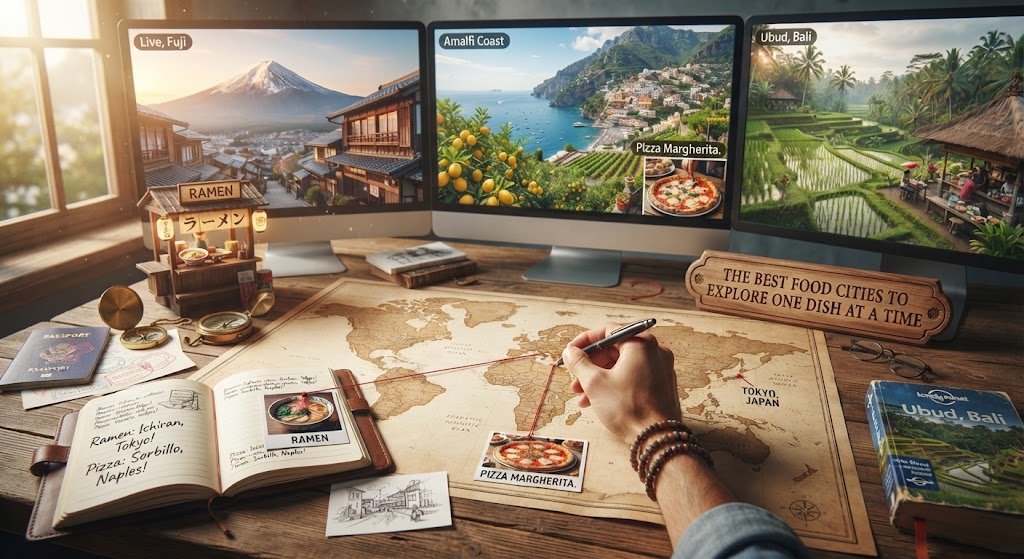

Some cities are best understood through their food. Their streets, markets, restaurants, bakeries, cafés, and neighborhood kitchens reveal stories about history, migration, traditions, and everyday life. Instead of trying to visit every famous attraction in a few days, travelers can build an entire trip around local dishes and allow each meal to introduce them to another part of the city.
A food-focused trip does not have to mean eating at expensive restaurants from morning until night. Some of the most memorable experiences can come from a simple breakfast, a busy market stall, a neighborhood bakery, or a small family-run restaurant. Cities such as Tokyo, Rome, Bangkok, Istanbul, Mexico City, New Orleans, Lisbon, and Seoul offer enough variety to make each meal feel like a new part of the journey.
Why Explore a City One Dish at a Time?
Food provides an easy way to slow down and experience a destination. Instead of moving quickly between landmarks, travelers can choose one dish, learn where it comes from, and then explore the neighborhoods where it is traditionally prepared. A single meal can lead to a market, a historic street, a local café, or an entirely different part of the city.
This approach also makes trip planning easier because you do not need to create an enormous sightseeing schedule. Choose a few foods you want to try, find different places that prepare them, and let the rest of the day develop naturally. The result can be a more relaxed vacation where meals become part of the exploration rather than interruptions between attractions.
Tokyo, Japan
Tokyo is one of the world’s most exciting cities for travelers who want to explore food through individual dishes. The city offers everything from ramen and sushi to tempura, yakitori, soba, curry, and countless regional specialties. Different neighborhoods have their own food personalities, meaning that moving only a short distance can introduce you to a completely different dining experience.
The best way to approach Tokyo is not to attempt every famous restaurant in one trip. Choose a few dishes and experience them in different settings. You might start with ramen, explore a market afterward, and finish the day with yakitori in a small neighborhood restaurant. This creates a food itinerary that also encourages you to discover the city beyond its most famous attractions.
Rome, Italy
Rome is a natural destination for travelers who want to build a trip around simple but deeply established dishes. Pasta dishes such as cacio e pepe, carbonara, and amatriciana are closely associated with Roman cuisine, while pizza, supplì, gelato, and traditional pastries provide plenty of opportunities for smaller meals throughout the day.
A food-focused Roman itinerary can be wonderfully flexible. Instead of scheduling every hour, travelers can explore a historic neighborhood in the morning, stop for a traditional lunch, continue walking through nearby streets, and then choose another local specialty in the evening. The city’s compact central areas make it possible to combine food stops with architecture and history without spending the entire day in transit.
Bangkok, Thailand
Bangkok offers an enormous range of flavors, textures, and cooking styles, making it particularly rewarding for travelers who enjoy trying different dishes. Pad Thai, tom yum, green curry, mango sticky rice, grilled meats, noodles, and countless street-food creations can all become part of a food-centered adventure.
One of the best things about exploring Bangkok through food is that excellent meals are not limited to formal restaurants. Markets, food stalls, neighborhood shops, and small eateries can provide completely different experiences. Travelers can choose one dish at a time, compare different preparations, and discover how the same basic ingredients can produce very different flavors.
Mexico City, Mexico
Mexico City is an excellent destination for travelers who want to explore a cuisine with deep regional traditions and enormous variety. Tacos, tamales, chilaquiles, mole, quesadillas, and many other dishes can introduce visitors to different ingredients and cooking techniques.
A slow food itinerary works particularly well here because meals can be combined with neighborhood exploration. A traveler might begin with breakfast at a local restaurant, spend the afternoon visiting markets or museums, and then explore a different neighborhood for an evening meal. Rather than searching only for highly photographed restaurants, visitors can also look for established local spots and traditional markets.
Istanbul, Türkiye
Istanbul provides an especially interesting food experience because its cuisine reflects the city’s position between different cultural and geographic influences. Travelers can encounter dishes ranging from kebabs and pide to meze, simit, baklava, seafood, and traditional breakfast foods.
The city’s neighborhoods provide a natural structure for food exploration. Instead of trying to taste everything in one central area, visitors can choose a neighborhood and spend several hours discovering its cafés, bakeries, markets, and restaurants. This approach turns eating into a way of understanding the city itself, with different meals providing reasons to explore beyond the most famous sightseeing locations.
Lisbon, Portugal
Lisbon offers a relaxed food culture that works particularly well for travelers who enjoy combining small meals with long walks. Pastéis de nata, bacalhau dishes, grilled seafood, bifana sandwiches, and traditional pastries provide plenty of choices without requiring a complicated itinerary.
A traveler can easily structure a day around a few food experiences while exploring different neighborhoods between them. Start with a pastry and coffee, spend the morning walking through historic streets, stop for a traditional lunch, and then continue toward another neighborhood for dinner. This creates a natural rhythm where food and sightseeing support each other.
New Orleans, United States
New Orleans has a distinctive culinary identity shaped by multiple cultural traditions. Gumbo, jambalaya, po’boys, beignets, red beans and rice, and other local specialties give travelers plenty of opportunities to explore the city through food.
The city is especially suitable for travelers who want food to be connected with music, architecture, and local culture. A meal can become the starting point for exploring another neighborhood, while a café or bakery can provide a relaxed break between activities. Instead of treating food as something to fit into a sightseeing schedule, visitors can make it one of the main reasons for exploring different parts of the city.
Seoul, South Korea
Seoul offers an enormous range of traditional and modern Korean food. Travelers can explore dishes such as bibimbap, Korean barbecue, tteokbokki, japchae, fried chicken, soups, stews, and numerous small side dishes that accompany meals.
Food exploration in Seoul can also introduce travelers to different social and dining traditions. Some meals are designed around shared dishes, while others are quick and casual. Markets provide another opportunity to try smaller portions and sample several foods without committing to a full restaurant meal. This makes it easier to explore one dish after another throughout the trip.
Singapore
Singapore is an ideal destination for travelers who want to experience many culinary traditions within one city. Its food culture includes Chinese, Malay, Indian, Peranakan, and other influences, creating an unusually broad selection of dishes.
Hawker centers are particularly useful for a one-dish-at-a-time itinerary because they allow travelers to sample different foods without spending a large amount of time or money at formal restaurants. A traveler can try one specialty, walk around, choose another stall, and continue exploring. This makes meals feel like small discoveries throughout the day.
Naples, Italy
Naples is closely associated with pizza, but limiting the city’s food culture to one dish would miss much of what makes it interesting. Pizza Napoletana can certainly be the centerpiece of a trip, but travelers can also explore pasta, fried street foods, seafood, pastries, and coffee.
The city is particularly enjoyable when approached without an overly complicated schedule. Spend part of the day exploring historic streets, stop for pizza, continue toward a bakery or café, and leave the evening open for another meal. The informal rhythm of eating and walking makes Naples well suited to travelers who prefer experiences over strict itineraries.
Osaka, Japan
Osaka has a strong reputation for casual and approachable food, making it an excellent destination for travelers who want to explore through smaller meals. Takoyaki and okonomiyaki are two well-known examples, while noodles, grilled foods, sushi, and other specialties provide plenty of alternatives.
The city can be explored in sections, with food providing a reason to move from one neighborhood to another. Rather than having one large meal, travelers can sample smaller portions at different locations. This allows them to try more dishes while keeping the day flexible.
San Sebastián, Spain
San Sebastián is particularly appealing to travelers who enjoy small plates and relaxed dining. Pintxos provide an easy way to explore different flavors because travelers can visit several establishments and try a small selection at each one.
This style of eating naturally encourages walking between neighborhoods and restaurants. Instead of sitting in one restaurant for the entire evening, travelers can experience several different places and discover their own preferences. It also creates opportunities to explore the city’s streets, waterfront, and local atmosphere between food stops.
How to Plan a Food-Focused City Trip
Start by selecting several dishes that you genuinely want to try rather than creating a huge list of restaurants. Research the origins of those dishes and identify different neighborhoods where they can be found. This gives your itinerary a purpose without making it too rigid.
Try to spread your food experiences across the day. A large breakfast followed by several heavy meals can make it difficult to enjoy everything. Smaller portions, snacks, markets, and shared dishes can allow you to taste more without becoming uncomfortable. Leave room between meals for walking and sightseeing.
Explore Markets Before Restaurants
Markets can provide a useful introduction to a city’s food culture because they bring different ingredients, snacks, and local specialties together. They can also show travelers what people buy for everyday meals rather than only what appears on restaurant menus.
Spend some time walking through the market before deciding what to eat. Look at what local shoppers are purchasing, observe how food is prepared, and consider trying something you did not originally plan to order. Some of the most memorable dishes can come from an unexpected discovery.
Choose Neighborhoods Over Restaurant Lists
A long list of restaurants can make a trip feel like a series of reservations rather than an exploration. Choosing neighborhoods instead gives you more flexibility. Pick an area known for a particular cuisine, arrive without a strict schedule, and explore several options.
This also helps you discover smaller businesses that may not appear on every international travel list. A neighborhood can provide cafés, bakeries, markets, street food, and restaurants within a relatively small area. You can follow your curiosity instead of spending the entire day traveling between reservations.
Try the Same Dish in Different Places
One of the most interesting ways to understand a city’s food culture is to order the same dish from several different places. The ingredients may be similar, but preparation, seasoning, portion size, presentation, and cooking methods can vary significantly.
For example, a traveler might try ramen from different restaurants in Tokyo or pizza from several establishments in Naples. Comparing the experiences makes the trip more interactive and helps you understand why locals may have strong preferences about particular styles.
Leave Room for Breakfast and Snacks
Travelers sometimes focus so heavily on famous lunch and dinner dishes that they forget about breakfast and smaller snacks. In many cities, morning food provides a different perspective on local culture.
Bakeries, cafés, markets, and breakfast restaurants can become some of the most relaxing parts of the trip. A simple breakfast can also be a useful time to plan the day’s neighborhood exploration while enjoying something that locals regularly eat.
Take a Food Tour
A food tour can be a practical introduction to a city’s cuisine, especially during the first few days. Local guides can explain ingredients, traditions, neighborhood history, and the background behind specific dishes.
After the tour, travelers can use what they learned to plan the rest of the trip. If one particular food becomes a favorite, you can search for additional places that specialize in it. This turns the tour into a starting point rather than the entire food experience.
Don’t Forget the Cultural Side of Food
Food is not only about flavor. Dining customs, meal times, ingredients, preparation methods, and restaurant etiquette can tell travelers a great deal about a destination.
Take time to notice how meals are served and how people interact around food. Learn a few basic local expressions related to ordering or thanking someone. Showing curiosity and respect can make dining experiences more comfortable and meaningful.
Avoid Turning the Trip Into a Competition
Trying many dishes can be fun, but there is no need to treat food exploration as a challenge. Eating too much simply to follow a list can make the rest of the day uncomfortable.
Choose quality experiences over quantity. If a particular meal is excellent, give yourself time to enjoy it rather than immediately rushing toward the next food stop. A successful food trip is about memorable experiences, not the number of dishes you manage to photograph.
Frequently Asked Questions
1. What makes a city good for a food-focused vacation?
A strong food destination usually has a distinctive local cuisine, a variety of restaurants and markets, accessible neighborhoods, and enough different dishes to keep travelers interested throughout several days.
2. Should I book restaurants before traveling?
For highly popular restaurants or special dining experiences, reservations can be useful. However, leaving some meals open allows you to discover neighborhood restaurants, markets, cafés, and unexpected local favorites.
3. Is street food safe for international travelers?
Food safety conditions vary by destination and establishment. Travelers should use normal precautions, choose busy places with good food turnover, and pay attention to cleanliness and food-handling practices.
4. How many dishes should I try in one day?
There is no ideal number. Smaller portions and snacks can make it possible to sample several foods, but travelers should leave enough time between meals to enjoy them comfortably.
5. Is a food tour worth adding to a city trip?
A food tour can be useful for learning about local dishes, ingredients, and traditions early in a trip. It can also help travelers discover foods and neighborhoods they might not have found independently.
Conclusion
Food can turn an ordinary city break into a much richer travel experience. Tokyo, Rome, Bangkok, Mexico City, Istanbul, Lisbon, New Orleans, Seoul, Singapore, Naples, Osaka, and San Sebastián each offer different ways to explore local culture through individual dishes. By focusing on meals, markets, neighborhoods, cafés, and traditional specialties, travelers can experience a destination through more than its famous landmarks.
The best approach is to slow down and let each dish become part of the journey. Choose a few foods you want to understand, explore the neighborhoods where they are prepared, compare different versions, and leave enough time to enjoy unexpected discoveries. When every meal becomes an opportunity to learn something about a city, the food itself becomes one of the most memorable parts of the entire trip.