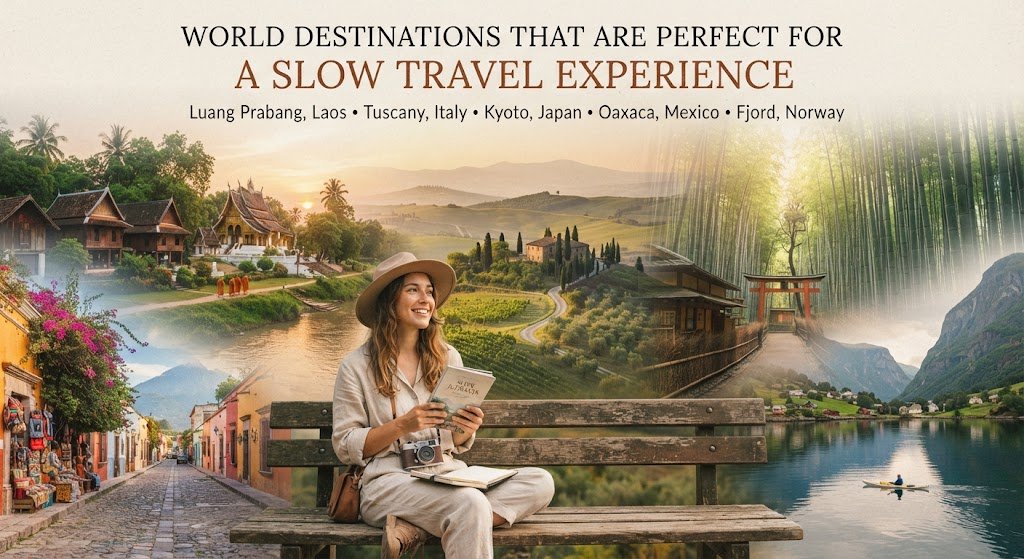

Slow travel is about experiencing a destination rather than simply collecting places from a checklist. Instead of rushing between major attractions, travelers stay longer, explore local neighborhoods, enjoy regional food, use public transportation, and allow their days to develop naturally. The idea is especially appealing for people who want their vacations to feel less like a race against the clock and more like an opportunity to understand how a place actually feels.
A slow travel experience can work almost anywhere, but some destinations naturally encourage this style of exploration. Smaller cities, historic towns, scenic islands, countryside regions, and places with strong local traditions often reward travelers who stay for several days or weeks. From Mediterranean villages to peaceful Asian cities and European countryside, these destinations provide plenty to discover without requiring a packed itinerary.
What Makes a Destination Good for Slow Travel?
A good slow-travel destination gives visitors reasons to stay rather than constantly move somewhere else. Walkable neighborhoods, local markets, independent cafés, public parks, historic streets, scenic surroundings, and accessible day trips can make a place interesting even when you are not visiting a major attraction. The best experiences often happen during ordinary moments, such as having breakfast at a neighborhood café or watching locals go about their daily routines.
Transportation also matters because slow travel becomes much easier when you do not need to rent a car or change hotels every night. Destinations with reliable trains, buses, ferries, or walkable town centers allow travelers to settle into one location. Instead of spending several hours packing and traveling between destinations, you can use that time to explore more deeply.
Kyoto, Japan
Kyoto is well suited to slow travel because its appeal extends far beyond its famous temples. Travelers can spend several days exploring traditional neighborhoods, quiet gardens, small restaurants, local markets, and residential streets without feeling the need to constantly search for another destination. Staying in one area for longer also makes it easier to discover places that are not part of a typical first-time itinerary.
A slower approach allows visitors to experience Kyoto at different times of the day. An early morning walk can reveal a much quieter side of the city, while an afternoon can be spent enjoying a meal or exploring a neighborhood without rushing toward another attraction. The city’s cultural traditions, architecture, food, and seasonal scenery provide plenty of reasons to slow down.
Lisbon, Portugal
Lisbon works particularly well for travelers who enjoy wandering without a strict schedule. Its neighborhoods have distinct personalities, and a single afternoon can easily turn into a long walk involving viewpoints, cafés, small shops, historic streets, and local restaurants. Instead of trying to see every landmark in one day, travelers can choose one neighborhood and allow themselves time to explore it properly.
The city also provides opportunities for relaxed day trips without requiring travelers to relocate. Spending several nights in the same accommodation creates a comfortable rhythm: explore in the morning, pause for lunch, continue walking in the afternoon, and return to a familiar area in the evening. This simple routine captures much of what makes slow travel appealing.
Florence, Italy
Florence is compact enough to explore at a relaxed pace while offering an extraordinary concentration of art, architecture, food, and history. Rather than attempting to visit every museum and landmark immediately, travelers can divide their sightseeing across several days and leave time for less structured experiences.
A slower itinerary might include a morning museum visit followed by a long lunch, an afternoon walk along historic streets, and an evening spent in a local neighborhood. Travelers can also use Florence as a base for exploring nearby Tuscan towns without constantly changing hotels. This combination of city culture and surrounding countryside makes it easy to create a balanced trip.
Tuscany, Italy
Tuscany is particularly suitable for travelers who want to move away from busy city schedules. Rolling countryside, vineyards, historic villages, small restaurants, and scenic roads create an environment where the journey between places can be as enjoyable as the destination itself.
Instead of trying to visit numerous villages in a single day, travelers can choose one area and spend several days exploring nearby communities. A slower itinerary might include a morning market, a leisurely lunch, a countryside walk, and an evening in a small town. The experience becomes less about checking locations off a list and more about appreciating the character of the region.
Provence, France
Provence offers a mixture of countryside landscapes, historic villages, local markets, food traditions, and outdoor experiences that naturally suit a slower pace. Travelers can base themselves in one town or village and explore nearby areas without constantly packing and unpacking.
Markets are especially useful for slow travelers because they provide an opportunity to experience local life rather than simply viewing a landmark. A morning spent shopping for regional products can be followed by a relaxed meal and an afternoon exploring nearby streets or countryside. The slower rhythm allows travelers to appreciate details that can easily disappear during a tightly scheduled tour.
San Sebastián, Spain
San Sebastián combines a compact urban environment with beaches, food culture, and attractive walking areas. Its size makes it possible to explore much of the city without spending large portions of the day on transportation.
Food can become a major part of a slow itinerary here. Instead of planning an entire day around sightseeing, travelers can spend time discovering different local restaurants and enjoying leisurely meals. Beach walks, neighborhood exploration, and relaxed evenings can fill the rest of the day without requiring a long list of scheduled activities.
The Azores, Portugal
The Azores are an appealing option for travelers who want nature, quiet surroundings, and a less hurried experience. The islands feature volcanic landscapes, lakes, coastal scenery, small communities, and outdoor activities that can be enjoyed without creating an extremely crowded schedule.
A slow trip can involve staying several nights in one location and exploring the surrounding area at a comfortable pace. Travelers can dedicate different days to viewpoints, hiking, coastal areas, local food, or simply enjoying the scenery. Weather conditions can change, so keeping the itinerary flexible is particularly useful in an island environment.
Crete, Greece
Crete provides enough variety to support a long stay without requiring constant movement. Travelers can combine beaches, mountain villages, archaeological sites, local food, and coastal communities while using one or two bases.
Slow travel in Crete works especially well when visitors avoid trying to cross the entire island in a few days. Staying longer in one region gives travelers time to discover smaller restaurants, quiet beaches, village streets, and local landscapes. A relaxed schedule also leaves room for unexpected stops along the way.
Ljubljana, Slovenia
Ljubljana is a relatively compact European capital where travelers can combine urban exploration with easy access to nature. The city center can be explored on foot, with cafés, riverside areas, markets, parks, and cultural attractions providing plenty of reasons to stay for several days.
The surrounding region also makes the city useful as a base for slower exploration. Instead of changing hotels for every excursion, travelers can return to the same accommodation after visiting nearby natural or cultural attractions. This creates a comfortable balance between discovering new places and maintaining a familiar daily routine.
Salzburg, Austria
Salzburg offers historic architecture, music, gardens, cafés, and access to beautiful alpine surroundings. The city can be explored comfortably over several days without requiring visitors to rush from one attraction to another.
Travelers who stay longer can combine city experiences with relaxed excursions into the surrounding region. The key to a slower Salzburg itinerary is leaving enough time between activities. A morning spent exploring the historic center can be followed by lunch, a leisurely walk, and an afternoon enjoying the scenery rather than immediately moving to another major attraction.
Chiang Mai, Thailand
Chiang Mai offers a different form of slow travel through temples, markets, cafés, food culture, crafts, and nearby mountain landscapes. The city has enough variety to keep travelers occupied while still allowing a relaxed daily rhythm.
Instead of trying to visit every attraction, travelers can choose a neighborhood or area each day and explore it gradually. Local markets and food experiences can become part of the itinerary, while nearby outdoor destinations provide opportunities for a change of scenery. Staying for a week or longer can make the city feel less like a tourist stop and more like a temporary home.
Hoi An, Vietnam
Hoi An is especially attractive for slow travelers because of its historic character, walkable areas, food culture, and relaxed atmosphere. Visitors can spend time exploring the old town while also discovering markets, cafés, riverside areas, and nearby countryside.
The destination becomes even more enjoyable when travelers resist the temptation to fill every day with organized activities. A morning bicycle ride, a long lunch, an afternoon café stop, and an evening walk can provide a complete day without a demanding schedule. Nearby beaches also give visitors another option when they want to step away from the historic center.
Ubud, Bali
Ubud is known for its combination of cultural experiences, greenery, wellness activities, local food, and surrounding landscapes. It can be particularly suitable for travelers who want to spend several days in one place rather than changing accommodation frequently.
A slow itinerary might include a morning walk, time at a local café, a cultural experience, and an afternoon devoted to relaxation. Travelers can also explore surrounding villages and natural areas at their own pace. Choosing accommodation slightly away from the busiest streets can provide a quieter environment while keeping local attractions accessible.
Queenstown, New Zealand
Queenstown is often associated with adventure activities, but it can also support a slower travel experience. Mountains, lakes, walking trails, restaurants, and scenic viewpoints provide enough variety for travelers who want to stay longer.
The advantage of slowing down here is that you can choose activities based on the weather and your energy level. One day might involve a demanding outdoor adventure, while another can simply involve walking near the lake and enjoying the scenery. A flexible schedule allows travelers to appreciate the landscape rather than rushing from one activity to another.
How to Plan a Slow Travel Itinerary
The biggest change required for slow travel is reducing the number of destinations on your itinerary. Instead of trying to visit five cities in one week, choose one or two bases and explore them more thoroughly. This immediately reduces time spent packing, checking out, traveling, and finding new accommodation.
Give yourself unplanned time every day. You do not need to know exactly where you will be at every hour. Choose one major activity and allow the rest of the day to develop naturally. This creates opportunities to discover a small restaurant, return to a favorite neighborhood, or simply rest when you feel tired.
Stay Longer in Fewer Places
Longer stays make it easier to develop a temporary routine. After several days in the same neighborhood, you may recognize local streets, find a favorite café, understand the transportation system, and feel more comfortable navigating the area.
This also reduces travel fatigue. Moving between hotels may seem efficient when planning a trip on paper, but frequent changes can consume more time and energy than expected. Staying longer allows you to unpack properly and enjoy the destination without constantly thinking about your next departure.
Explore Like a Local
Slow travel encourages visitors to look beyond major tourist attractions. Visit a neighborhood market, use local transportation, eat where residents eat, spend time in public parks, and walk through areas that are not listed on every sightseeing guide.
You do not need to imitate local residents or avoid tourist attractions completely. Instead, add ordinary experiences alongside famous landmarks. A museum visit can be followed by a local market, while a historic site can be combined with an afternoon sitting in a neighborhood café.
Avoid Overplanning
A detailed itinerary can be useful for transportation and reservations, but planning every hour can remove much of the freedom that makes slow travel enjoyable. Leave gaps between activities so that you can adjust your plans.
If you discover an interesting street, market, restaurant, or viewpoint, you should have enough time to explore it. If you are tired after several hours of walking, you should also feel comfortable returning to your accommodation without worrying about missing five scheduled activities.
Use Local Transportation
Public transportation can be an important part of slow travel because it allows visitors to experience destinations differently. Trains, buses, trams, ferries, and local walking routes can connect travelers with neighborhoods that might otherwise be overlooked.
Walking is equally valuable where practical. A short route between two attractions may reveal cafés, architecture, shops, parks, and local streets that would be invisible from a car. The journey itself becomes part of the experience rather than merely transportation between two points.
Eat Slowly and Locally
Food can transform a slow travel itinerary because meals naturally create opportunities to pause. Instead of grabbing something quickly between attractions, travelers can choose a local restaurant or market and spend time enjoying the experience.
Trying regional dishes also helps connect travelers with the culture of a destination. Cooking classes, food markets, bakeries, cafés, and neighborhood restaurants can all become memorable parts of a trip. You do not need an expensive dining experience every day; even a simple local meal can become meaningful when there is enough time to enjoy it.
Make Time for Rest
Rest should not be considered wasted travel time. A slow trip becomes difficult to enjoy if every day is filled with walking, sightseeing, and transportation.
Schedule mornings or afternoons when you have no major plans. Sit at a café, read, enjoy your accommodation, or simply watch the city around you. These quiet periods can help you return to sightseeing with more energy and make the entire trip feel more sustainable.
Frequently Asked Questions
1. What is slow travel?
Slow travel is an approach that focuses on spending more time in fewer places and experiencing local culture, food, neighborhoods, and everyday life rather than rushing between attractions.
2. How long should I stay in one destination for slow travel?
There is no fixed length, but staying several days or a week in one place can make a noticeable difference. Longer stays allow travelers to explore beyond the main tourist attractions.
3. Is slow travel more expensive than a normal vacation?
Not necessarily. Staying longer can sometimes reduce transportation and accommodation changes, while local restaurants and public transportation may also help control costs. Expenses depend on the destination and travel style.
4. Can I use slow travel for an international trip?
Yes. International destinations can be excellent for slow travel, especially when you choose one or two bases and spend enough time understanding each location rather than trying to cross several countries quickly.
5. Do I need to avoid famous tourist attractions?
No. Slow travel does not mean avoiding popular landmarks. It means giving yourself enough time to enjoy major attractions without allowing them to completely control your itinerary.
Conclusion
Slow travel offers a different way to experience the world by replacing constant movement with curiosity, flexibility, and time. Destinations such as Kyoto, Lisbon, Florence, Tuscany, Provence, Crete, Ljubljana, Chiang Mai, Hoi An, and Queenstown each provide opportunities to slow down and experience more than their most recognizable attractions. Their neighborhoods, food, landscapes, markets, and everyday routines can become just as memorable as famous landmarks.
The most important part of a slow travel experience is giving yourself permission to do less. Stay longer, explore on foot, use local transportation, enjoy unhurried meals, leave gaps in your schedule, and allow unexpected discoveries to become part of the journey. When there is no pressure to see everything, travelers often notice more, remember more, and return home with a stronger connection to the places they visited.