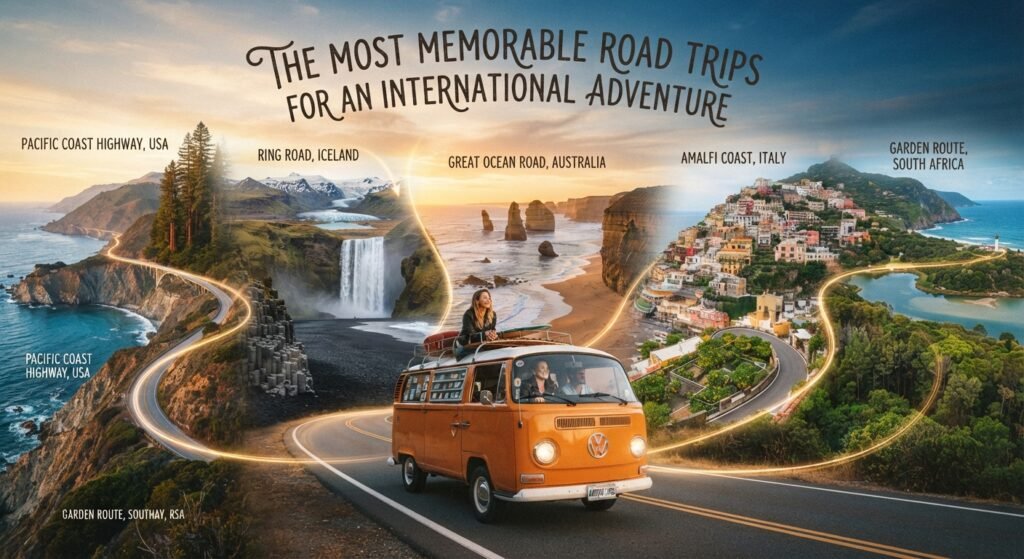

There is something uniquely exciting about an international road trip. Instead of flying into one city and staying there, you have the freedom to watch the landscape change through the windshield, stop at unexpected viewpoints, and change your plans when something interesting appears along the route. The journey becomes just as important as the destination.
International road trips can also reveal a side of a country that is easy to miss when traveling between major cities. Coastal roads, mountain passes, rural villages, forests, deserts, vineyards, and countryside markets create experiences that are difficult to reproduce on a traditional itinerary. With the right planning, a road trip can turn a vacation into a collection of memorable moments rather than a simple list of places visited.
Why International Road Trips Feel Different
A road trip gives travelers more control over their schedule. You can decide when to leave, where to stop, and how long to stay in a particular area. If a small village looks interesting from the road, you can pull over and explore instead of watching it disappear through a train window.
The flexibility is especially valuable in destinations where natural scenery is spread across large areas. Instead of choosing one city as your entire base, you can connect several regions and experience the differences between them. One morning might begin beside the ocean, while the afternoon brings mountain roads, forests, or historic villages.
The Wild Atlantic Way, Ireland
Ireland’s Wild Atlantic Way offers a dramatic coastal journey filled with cliffs, beaches, small villages, green landscapes, and ocean views. The route gives travelers plenty of opportunities to slow down and explore areas that would be difficult to appreciate from a quick city-based itinerary.
A road trip through western Ireland can be shaped around scenic stops rather than a strict schedule. Travelers can spend time walking along coastal viewpoints, visiting small communities, enjoying traditional food, and continuing when they are ready. The changing weather often adds another layer to the scenery, making the same landscape feel completely different from one hour to the next.
Ring Road, Iceland
Iceland’s Ring Road is one of the most recognizable road-trip routes in Europe because it connects travelers with an extraordinary variety of landscapes. Waterfalls, volcanic terrain, glaciers, black-sand beaches, mountains, and wide open spaces appear throughout the journey.
The route is particularly rewarding when travelers resist the temptation to rush around the entire country. Spending additional nights in selected areas allows more time for hiking, photography, local food, and weather-dependent experiences. Conditions can change quickly, so a flexible schedule is useful when planning an Icelandic road adventure.
South Island, New Zealand
New Zealand’s South Island provides a remarkable combination of mountains, lakes, coastlines, forests, and small communities. A road trip here can move between dramatically different landscapes without requiring international flights or complicated transportation changes.
Travelers can build a route around destinations such as Queenstown, Wanaka, the Southern Alps, and the western coastline while leaving room for smaller stops along the way. Scenic drives can become major experiences rather than simply transportation between attractions. The key is allowing enough time because distances and driving conditions can make ambitious schedules tiring.
Great Ocean Road, Australia
Australia’s Great Ocean Road combines coastal scenery, beaches, forests, cliffs, and small seaside communities. The route is accessible for travelers who want an international road trip without committing to an extremely long journey.
Rather than treating the drive as a single-day sightseeing experience, travelers can stay overnight along the coast and explore at a slower pace. This creates opportunities for early-morning walks, quiet viewpoints, local restaurants, and less hurried stops. The coastline provides enough variety to keep the journey interesting even when the main attraction is simply the road itself.
Garden Route, South Africa
South Africa’s Garden Route offers a diverse road-trip experience with beaches, forests, mountains, lagoons, and small coastal towns. The changing scenery makes the journey feel varied, while numerous outdoor activities provide opportunities to leave the car and explore.
Travelers can combine scenic drives with hiking, coastal walks, local food, and time in smaller communities. Instead of rushing from one major attraction to another, staying a few nights in different areas allows you to experience the route at a comfortable rhythm and adjust your plans based on weather and personal interests.
Provence and the French Countryside
A road trip through Provence can combine historic villages, vineyards, lavender landscapes, markets, countryside roads, and Mediterranean scenery. The region is particularly enjoyable for travelers who prefer scenic drives and leisurely stops over long stretches of highway.
The beauty of a Provence road trip lies in the smaller places between major destinations. Travelers can stop at village markets, local bakeries, viewpoints, and countryside restaurants. Spending several days in the region allows the route to remain flexible, with enough time to explore places that were not necessarily part of the original plan.
Tuscany, Italy
Tuscany is almost designed for a relaxed road trip. Rolling hills, vineyards, olive groves, medieval towns, and countryside roads create an atmosphere where driving itself becomes part of the vacation.
Instead of creating a packed list of towns, choose a few areas and allow time for spontaneous stops. A long lunch, a small winery, a village square, or a scenic viewpoint can easily become one of the highlights of the day. The region also makes it possible to combine cultural experiences with food and countryside scenery.
The Scottish Highlands
A road trip through the Scottish Highlands provides dramatic mountains, lochs, valleys, castles, and remote landscapes. The area is especially suited to travelers who enjoy scenery more than a packed list of attractions.
The route can be adapted according to weather and daylight conditions. Travelers may spend one day exploring a historic location and another following a scenic road or walking through a valley. Because some roads are narrow and driving distances can take longer than expected, allowing extra time is essential for enjoying the journey rather than constantly watching the clock.
The Norwegian Fjords
Norway’s fjord region offers an impressive combination of mountains, waterfalls, waterways, villages, and winding roads. Road trips here often include ferries, tunnels, bridges, and scenic routes that make transportation itself part of the adventure.
A flexible itinerary allows travelers to stop at viewpoints and small communities without feeling rushed. Some areas are particularly beautiful when viewed from hiking trails rather than from the car, so it is worth leaving time for short walks. Travelers should also check seasonal road conditions before choosing a route through mountainous areas.
The Dalmatian Coast, Croatia
Croatia’s Adriatic coastline provides a mixture of clear water, historic towns, islands, mountains, and coastal roads. A road trip can connect major destinations while still allowing travelers to stop in smaller communities along the way.
The coastline works particularly well when combined with ferry travel. Travelers can drive through one section, leave the car where appropriate, explore an island, and continue the journey later. This creates a varied experience that combines driving, coastal scenery, historic architecture, and time on the water.
The Peloponnese, Greece
The Peloponnese offers travelers a broad mixture of beaches, mountains, archaeological sites, villages, olive groves, and coastal landscapes. Its size makes it possible to create a road trip that feels substantial without crossing enormous distances between every stop.
A flexible route can combine historic locations with quiet coastal communities and mountain towns. Travelers can spend one day exploring ancient ruins and another relaxing beside the sea. Because the region offers different types of scenery, it works well for travelers who want variety without changing countries or constantly taking flights.
The Garden Villages and Mountains of Japan
Japan is famous for its efficient rail network, but a road trip through less urban areas can reveal a different side of the country. Mountain villages, countryside landscapes, traditional architecture, lakes, and rural food experiences provide reasons to travel beyond the major cities.
A countryside road trip can be especially rewarding during seasons when landscapes change dramatically. Travelers should research driving requirements, road conditions, and local transportation carefully before choosing this approach. In some areas, a rental car provides access to places that would otherwise require complicated connections.
The Pacific Coast of Portugal
Portugal’s coastline offers an appealing combination of beaches, fishing communities, historic towns, cliffs, and countryside. A road trip can begin around Lisbon and continue through coastal areas while leaving enough time for smaller stops.
The journey works particularly well for travelers who enjoy mixing sightseeing with relaxed days. You can stop at a seaside town for lunch, walk along a cliff, visit a historic center, and continue toward another coastal community before sunset. The relatively varied scenery keeps the route interesting without requiring an exhausting schedule.
How to Plan an International Road Trip
Start by deciding what type of experience you want. Some road trips are primarily about dramatic landscapes, while others focus on food, history, beaches, villages, or outdoor activities. Choosing the main theme makes it easier to select a route without trying to include every possible attraction.
Once you have chosen the region, estimate realistic driving times rather than simply measuring distances on a map. Mountain roads, coastal routes, traffic, ferries, border crossings, and scenic stops can make a short-looking journey take much longer. Building extra time into the schedule can make the trip considerably more enjoyable.
Don’t Pack Every Day With Driving
One of the biggest mistakes on a road trip is treating every day as a transportation day. Spending six or seven hours behind the wheel repeatedly can turn a beautiful vacation into an exhausting one.
Try to include rest days or shorter driving days throughout the journey. Staying two or three nights in certain locations gives you time to explore without luggage constantly moving between hotels. It also creates room for unexpected discoveries and weather changes.
Choose Scenic Roads When Practical
The fastest route is not always the most memorable. If you have enough time, consider choosing a scenic road where appropriate rather than automatically following the quickest highway.
Scenic routes may take longer, but they can provide viewpoints, villages, forests, beaches, and other experiences that become part of the journey. Always check road conditions and local recommendations before choosing a remote route, especially in mountainous or winter environments.
Research Rental Car Rules
International travelers should check driving requirements before arriving. Depending on your nationality and destination, you may need an international driving permit, specific documentation, insurance coverage, or additional identification.
Rental companies can also have their own requirements regarding age, payment methods, deposits, vehicle categories, and cross-border travel. Confirm these details before finalizing your booking so you do not discover an unexpected restriction at the rental counter.
Understand Local Driving Customs
Driving rules and habits can vary significantly between countries. Learn which side of the road vehicles use, common speed-limit practices, toll systems, parking rules, and requirements involving headlights or safety equipment.
Pay particular attention when entering cities after spending several days on quiet rural roads. Urban traffic can be significantly more complicated than countryside driving. A few minutes of preparation can help reduce stress when conditions change.
Plan Fuel and Charging Stops
Fuel stations can become less frequent in rural and remote regions. Electric vehicle travelers should pay even closer attention to charging availability before entering areas with long distances between communities.
Do not wait until the tank or battery is nearly empty before looking for the next opportunity. Knowing where your next fuel or charging stop will be can prevent unnecessary stress, particularly when traveling through mountains, islands, or remote countryside.
Leave Room for Unexpected Stops
Some of the best road-trip memories happen when the original plan changes. A roadside viewpoint, small bakery, village festival, local market, or scenic trail can become the highlight of the day.
A flexible schedule gives you permission to stop. If every hour has already been assigned to a destination, you may drive past interesting places simply because there is no time to explore them. Leave gaps whenever possible and treat unexpected discoveries as part of the adventure.
Book Important Accommodation Early
Flexibility is useful, but some destinations have limited accommodation, especially during peak travel periods. If you know you will be visiting a popular region during a busy season, reserve essential overnight stays in advance.
You do not necessarily need to book every night months ahead. One practical approach is to secure accommodation in areas where options are limited while leaving other parts of the itinerary more flexible. This provides a balance between security and freedom.
Pack for Changing Conditions
Road trips often cross several environments, so weather can change quickly. A coastal morning may become a cold mountain afternoon, while a sunny day can turn rainy without much warning.
Pack layers, comfortable footwear, basic travel essentials, and any equipment required for outdoor activities. Keeping important items accessible in the car can also make it easier to adapt when the weather changes or an unexpected stop appears.
Take Breaks Regularly
Long drives can become tiring even when the scenery is beautiful. Schedule regular breaks rather than waiting until you feel exhausted.
Stopping at a café, viewpoint, park, or small town gives you an opportunity to stretch and refresh yourself. It also breaks up the journey and allows you to experience places that you might otherwise pass without noticing.
Keep Safety Ahead of Adventure
Remote roads can be beautiful, but travelers should not take unnecessary risks simply to reach an isolated viewpoint or photograph. Follow local signs, respect road closures, stay on permitted routes, and pay attention to weather warnings.
If you are unfamiliar with local driving conditions, allow extra time and avoid aggressive driving. The purpose of an international road trip is to experience the destination, so arriving safely is more important than maintaining a perfect schedule.
Frequently Asked Questions
1. How long should an international road trip be?
There is no fixed length. A short coastal route can work over several days, while larger countries or regions may require two weeks or more. The ideal length depends on the distance, driving conditions, and number of stops you want to make.
2. Do I need an international driving permit?
Requirements vary by country and by the driver’s home license. Check the official requirements for your destination and rental company before traveling rather than assuming your regular license will always be sufficient.
3. Should I book every hotel before starting a road trip?
Not always. Booking key locations in advance can be useful during busy periods, while leaving some nights flexible can make it easier to adjust your route.
4. Is it better to drive every day on a road trip?
Driving every day is possible, but frequent long drives can become tiring. Including shorter driving days and nights in the same location often creates a more comfortable experience.
5. What makes a road trip memorable?
The most memorable road trips usually combine beautiful scenery with flexibility. Small towns, unexpected viewpoints, local food, scenic roads, conversations with locals, and unplanned stops can become just as important as the destinations originally listed on the itinerary.
Conclusion
International road trips offer a special kind of freedom because the journey itself becomes part of the adventure. Routes through Ireland, Iceland, New Zealand, Australia, South Africa, Italy, Norway, Croatia, Greece, Japan, and Portugal can introduce travelers to landscapes and communities that are difficult to experience from a conventional city-based vacation. Each route offers its own combination of scenery, culture, food, outdoor activities, and unexpected discoveries.
The key is to avoid turning the road trip into a race. Choose a realistic route, allow extra driving time, take regular breaks, stay longer in places that interest you, and leave room for spontaneous stops. When you have enough freedom to pull over for an unexpected view or spend an extra evening in a beautiful town, the road itself becomes one of the most memorable parts of the entire international adventure.