
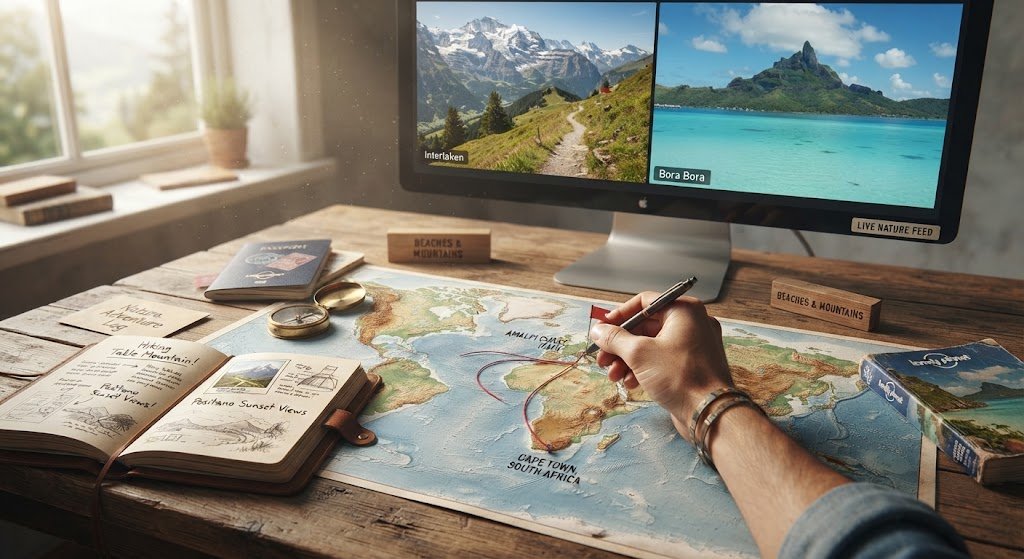

Some travel destinations force you to choose between a relaxing beach vacation and an adventurous mountain escape. Others offer both experiences in the same trip, allowing you to enjoy sunny coastlines in the morning and dramatic mountain scenery later in the day. These destinations are especially appealing to travelers who want variety without spending an entire vacation moving between completely different regions.
A beach-and-mountain trip can also create a better balance between relaxation and adventure. You might spend one day swimming, walking along the coast, or enjoying a seaside café, then dedicate the next day to hiking, scenic drives, or exploring a mountain village. From Mediterranean islands to tropical coastlines and dramatic volcanic landscapes, there are places around the world where beaches and mountains naturally come together.
Why Combine Beaches and Mountains in One Trip?
A vacation that includes both landscapes can feel more varied than a traditional beach holiday. Spending several days beside the ocean can be relaxing, but some travelers eventually want a change of scenery. Mountains provide that contrast through hiking trails, viewpoints, forests, waterfalls, and cooler elevations.
The combination also gives travelers more options when weather or personal preferences change. If you do not want to spend the entire day on the beach, you can explore the hills or mountains nearby. Similarly, after a demanding hike, returning to a coastal town for a relaxed dinner or sunset walk can provide the perfect way to end the day.
Madeira, Portugal
Madeira is one of the most interesting destinations for travelers who want dramatic mountains and ocean scenery in the same place. The Portuguese island features steep volcanic landscapes, rugged coastlines, green valleys, waterfalls, and small communities spread across its mountainous terrain.
Travelers can spend part of their trip exploring coastal areas before heading into the interior for hiking and scenic viewpoints. The island’s compact nature makes it possible to combine different landscapes without constantly changing accommodation. Roads can be steep and winding, so travelers planning to drive should allow extra time and remain comfortable with mountainous routes.
Amalfi Coast, Italy
The Amalfi Coast offers a striking combination of Mediterranean water and steep hillsides. Colorful towns appear to cling to the slopes above the sea, while winding roads connect coastal communities and viewpoints.
A trip here can combine swimming and seaside dining with hiking routes and scenic walks through the hills. Travelers can spend a morning exploring a coastal village and then move inland for a completely different perspective. Because the region can become busy during peak periods, planning transportation and accommodation ahead of time is particularly useful.
Tenerife, Spain
Tenerife offers an unusually diverse landscape within a relatively small island. The coastline provides beaches and ocean activities, while the interior rises toward the dramatic volcanic landscape of Mount Teide and its surrounding national park.
This makes Tenerife particularly useful for travelers who do not want a vacation limited to one type of scenery. A beach day can be followed by a mountain excursion on another day, creating a varied itinerary without requiring an international flight between destinations. Travelers should remember that temperatures can change considerably with elevation, so conditions at the coast may not reflect conditions in the mountains.
Cape Town, South Africa
Cape Town is a strong example of a destination where mountains and beaches are integrated into the same urban experience. Table Mountain dominates the city landscape, while beaches and coastal neighborhoods stretch along the surrounding shoreline.
Travelers can combine city sightseeing with outdoor activities, including mountain walks and coastal exploration. Different beaches offer different atmospheres, while areas around the mountains provide panoramic views over the city and ocean. Because outdoor conditions can change quickly, checking weather information before hiking is important.
Rio de Janeiro, Brazil
Rio de Janeiro is famous for the way its mountains rise directly beside the coastline. The city’s landscape combines beaches, forested hills, rocky peaks, and dense urban neighborhoods, creating dramatic views from many different locations.
A traveler can spend the morning near the beach and later explore a mountain viewpoint or forested area. This mixture means you do not have to choose between an urban vacation, a beach escape, and an outdoor adventure. The city is large, however, so planning transportation between different areas can save considerable time.
Oahu, Hawaii
Oahu provides an easy combination of beaches and mountains, with coastal areas surrounding a mountainous interior. Travelers can enjoy well-known beaches while also exploring hiking trails, valleys, viewpoints, and scenic roads.
One of the advantages of Oahu is the range of experiences available within a relatively manageable area. A traveler might begin the day near the water, spend the afternoon exploring a mountain trail, and return to the coast for dinner. Popular locations can become busy, so visiting some outdoor areas earlier in the day can provide a more comfortable experience.
Corsica, France
Corsica offers a combination of Mediterranean coastline and rugged mountainous terrain that can appeal to travelers who want both relaxation and adventure. Beaches around the island range from developed seaside areas to quieter stretches of coastline, while the interior features mountains, forests, and traditional villages.
A road trip can be an effective way to experience the island because different regions offer noticeably different landscapes. Travelers can combine coastal stops with mountain towns instead of staying in one location for the entire trip. Driving times should be estimated carefully because mountainous roads can make journeys take longer than they appear on a map.
Crete, Greece
Crete combines long stretches of coastline with mountainous landscapes and historic communities. Travelers can spend time at beaches and coastal towns before heading inland toward mountain villages, gorges, and scenic landscapes.
The island’s size means that a longer stay is useful for travelers who want to experience both sides of its character. Instead of attempting to cover everything in a few days, choose one or two regions as bases and explore nearby areas from there. This approach reduces time spent packing and changing accommodation.
Montenegro
Montenegro is a particularly interesting choice for travelers who want dramatic scenery in a relatively compact country. The Adriatic coastline provides beaches and seaside towns, while the interior quickly rises into mountainous terrain.
The Bay of Kotor is especially notable because steep mountains surround the water, creating views that combine the appearance of a mountain landscape with a coastal setting. Travelers can explore historic towns, enjoy the waterfront, and then venture toward higher viewpoints or mountain areas.
Vancouver, Canada
Vancouver offers a different type of beach-and-mountain experience. Instead of tropical coastlines, travelers get access to waterfront areas, urban beaches, forests, and major mountain landscapes nearby.
This makes the city appealing to travelers who want nature without giving up urban conveniences. A day can include a waterfront walk and local restaurants, while another can focus on hiking or exploring nearby mountain areas. Seasonal conditions should be considered carefully because mountain weather can be very different from conditions at sea level.
How to Plan a Beach and Mountain Vacation
The easiest way to plan this type of trip is to divide your itinerary into complementary experiences rather than trying to do everything every day. For example, you could schedule beach-focused activities on lighter days and reserve mountain excursions for days when you have more energy.
It is also useful to consider where you will stay. Some destinations have towns positioned between the coast and mountains, making them convenient bases. In other places, staying in two different areas may provide a better experience. The right choice depends on transportation, trip length, and how much time you want to spend moving around.
Choose the Right Base
A central base can be extremely useful when beaches and mountains are both major priorities. Look for accommodation that provides reasonable access to the coast as well as roads or transportation leading toward higher elevations.
Coastal base: Better for travelers who want easy access to beaches, restaurants, and waterfront activities.
Mountain base: More suitable for travelers whose main interests include hiking, scenery, and outdoor activities.
Central location: Can provide a balance between both landscapes and reduce the need to change hotels.
Before booking, check actual travel times rather than relying only on distance. Mountain roads, traffic, ferries, and seasonal transportation can make a short distance take considerably longer.
Balance Relaxation and Adventure
One of the easiest mistakes on a beach-and-mountain trip is trying to combine too many demanding activities. A long mountain hike followed immediately by a full day of sightseeing can leave you exhausted.
Instead, alternate more active days with slower ones. After a challenging hike, plan a relaxed coastal morning. After a beach day, consider a shorter scenic walk rather than another major excursion. This creates a rhythm that lets you enjoy both landscapes without turning the vacation into an endurance challenge.
What to Pack
Packing for two very different environments requires a little planning. Mountain conditions can be cooler and less predictable than coastal weather, even when the beach is warm.
Comfortable walking shoes: Useful for trails, historic streets, and uneven coastal paths.
Light layers: Temperatures can change significantly with elevation.
Swimwear: Essential if beaches, pools, or water activities are part of the itinerary.
Sun protection: Sunglasses, sunscreen, and a hat can be useful in both coastal and mountain environments.
Light rain protection: Weather can change quickly in mountainous areas.
Reusable water bottle: Helpful for longer outdoor days.
Keeping clothing versatile can reduce luggage while still allowing you to handle different conditions.
Plan Around the Weather
Weather should play an important role when combining beaches and mountains. Coastal weather can be pleasant while higher elevations experience clouds, wind, or rain. A mountain viewpoint that looks perfect in a photograph may offer very different conditions on the day you visit.
Check local forecasts before major outdoor activities and remain willing to change the order of your itinerary. If the mountains are covered by clouds, you might enjoy a coastal activity that day and move the mountain excursion to a clearer morning.
This flexibility is particularly valuable because mountain experiences often depend heavily on visibility. A small adjustment can sometimes make the difference between an ordinary outing and an unforgettable landscape.
Consider Transportation Carefully
Transportation can determine how easily you combine beaches and mountains. Some destinations have excellent public transportation, while others are much easier to explore with a rental car or organized excursion.
If you plan to drive, research road conditions and parking before arriving. Mountain roads may be narrow or winding, and travel times can be longer than expected. If you prefer not to drive, look for destinations where buses, trains, ferries, or organized tours connect the main areas.
The goal is to spend more time experiencing the destination and less time dealing with complicated logistics.
Add Local Villages to the Itinerary
The most memorable beach-and-mountain trip does not have to revolve entirely around natural scenery. Mountain villages and coastal communities can provide a cultural dimension through architecture, markets, food, and local traditions.
A small village can also provide a welcome break from busy tourist areas. Travelers can stop for a local meal, explore a few streets, and continue toward another scenic location. These slower experiences often help connect the different landscapes into one complete travel story.
Combine Hiking With Coastal Walks
Not every mountain experience needs to be a difficult hike. Many destinations offer shorter trails, scenic viewpoints, and coastal paths that allow travelers to enjoy dramatic landscapes without spending an entire day climbing.
Coastal walks can also provide excellent opportunities for photography because they often combine water, cliffs, vegetation, and mountains in the same view. Choose routes according to your fitness level and check local conditions before setting out.
Common Mistakes to Avoid
Trying to cover too much: A destination may look compact on a map but take much longer to cross because of mountain roads.
Ignoring elevation: Mountain temperatures can be significantly different from those at the coast.
Packing only beach clothing: Even warm destinations can have cool mountain conditions.
Overloading the itinerary: Too many hikes and beach activities can leave little time for rest.
Skipping transportation research: Remote beaches and mountain trails may not have frequent public transportation.
Assuming every trail is easy: Check distance, elevation, terrain, and current conditions before hiking.
A successful trip is not about seeing the maximum number of locations. It is about creating enough space to enjoy each environment properly.
A Simple Seven-Day Beach and Mountain Itinerary
A seven-day trip can provide enough time to experience both landscapes without becoming overly complicated. The first day can be reserved for arrival and a relaxed coastal evening. This allows you to recover from travel while getting your first impression of the destination.
The second and third days can focus primarily on beaches and nearby coastal towns. The fourth day can introduce a mountain experience, followed by a slower fifth day. The sixth day can combine a village visit or scenic drive with another coastal stop, while the seventh day can remain flexible for a final beach morning before departure.
This structure can be adjusted depending on the destination. The important idea is to avoid placing several demanding activities next to one another. A balanced itinerary leaves enough energy to appreciate both the coastline and the mountains.
Frequently Asked Questions
1. What is the best type of destination for combining beaches and mountains?
Destinations with mountains located close to the coastline are the most convenient. Islands, Mediterranean regions, volcanic destinations, and coastal cities surrounded by high terrain can offer particularly strong combinations.
2. Can I enjoy beaches and mountains during the same day?
Yes, in some destinations. However, travel times, weather, elevation, and the difficulty of outdoor activities should be considered before planning both experiences for one day.
3. Do I need a rental car for a beach and mountain vacation?
Not always. Some destinations have strong public transportation or organized tours, while others are much easier to explore with a car. Research the specific destination before deciding.
4. What should I pack for a beach and mountain trip?
Versatile clothing, comfortable walking shoes, swimwear, sun protection, light layers, and some rain protection are useful starting points. The exact packing list should depend on the season and elevation.
5. How many days are ideal for this type of vacation?
Around seven days can provide a good introduction to both environments, while longer trips allow travelers to explore multiple coastal and mountain areas without rushing.
Conclusion
Beach-and-mountain destinations offer travelers the opportunity to experience two very different sides of a region during one vacation. Madeira, the Amalfi Coast, Tenerife, Cape Town, Rio de Janeiro, Oahu, Corsica, Crete, Montenegro, and Vancouver each demonstrate how coastlines and mountains can create a naturally varied travel experience. Instead of choosing between relaxing by the water and exploring higher landscapes, travelers can build an itinerary that includes both.
The key is to plan for balance. Choose a practical base, understand transportation times, check weather conditions, pack for changing environments, and alternate active adventures with slower coastal days. Whether you spend the morning hiking above the clouds and the evening watching waves from a seaside restaurant or simply divide your week between mountains and beaches, combining these landscapes can create a trip filled with variety, scenery, and memorable experiences.