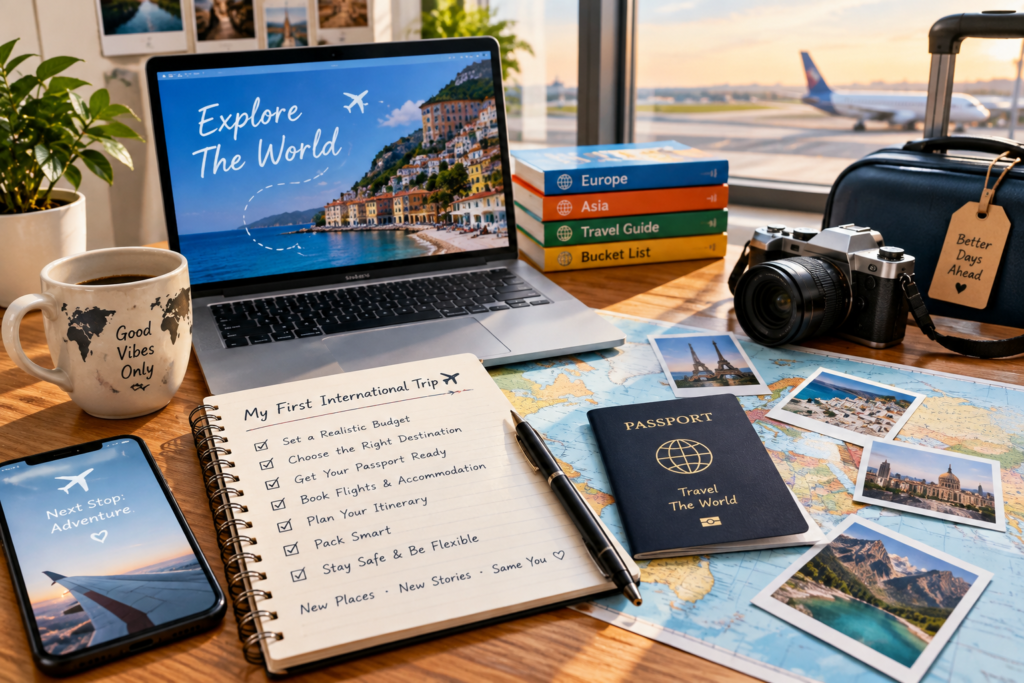

Planning your first international trip can feel exciting and confusing at the same time. There are flights to compare, accommodation to choose, documents to prepare, transportation to understand, and countless destinations competing for your attention. When everything is new, it is easy to spend hours researching without feeling any closer to an actual plan. The good news is that an international trip does not have to be complicated if you divide the process into smaller decisions.
The most enjoyable trips usually begin with a realistic plan rather than an enormous itinerary. You do not need to know every restaurant, attraction, bus route, or activity before leaving home. Instead, focus on the important details first, create a comfortable schedule, and leave some space for unexpected discoveries. With the right preparation, your first trip abroad can feel organized without becoming rigid or stressful.
Start by Deciding What You Want From the Trip
Before searching for flights or hotels, think about the experience you actually want. Some travelers dream about historic cities and museums, while others want beaches, nature, food, shopping, or a combination of several things. Choosing the type of trip first can immediately narrow down the number of destinations you need to consider.
Your travel style also matters. A solo traveler may prefer a destination with convenient transportation and walkable neighborhoods, while a family might place greater importance on accommodation, safety, and easy logistics. Couples may want a slower itinerary, whereas travelers visiting friends or attending an event may have completely different priorities. Knowing what matters to you makes later decisions much easier.
Choose One Destination Before Adding More
First-time international travelers often make the mistake of trying to visit too many countries during one trip. Seeing multiple destinations can sound exciting, but constantly packing, checking out, traveling to another city, and checking in again can make a vacation exhausting.
If you have around a week, consider focusing on one main destination or a small group of nearby locations. Longer trips can support a more complicated route, but even then, it is worth asking whether every additional stop genuinely improves the experience. A slower trip can leave you with better memories than a rushed itinerary filled with transportation.
Check Your Passport and Entry Requirements Early
Travel documents should be among the first things you investigate because some requirements can take time to arrange. Check your passport’s validity and research the current entry rules for the country you plan to visit. Depending on your nationality and destination, electronic travel authorization, proof of onward travel, or other documentation.
Do not rely only on information from old travel videos or social media posts. Entry requirements can change, so travelers should check official government or embassy sources close to the time of travel. Keep digital and physical copies of important documents where appropriate, but make sure sensitive information is stored securely.
Build a Realistic Travel Budget
A travel budget should include more than the price of a plane ticket. Accommodation, local transportation, meals, attractions, travel insurance, baggage fees, airport transfers, mobile connectivity, and unexpected expenses can all affect the final cost. Building your budget around the entire trip gives you a more realistic picture.
Flights: Compare the total price rather than looking only at the basic fare. Baggage, seat selection, and other charges can change the final amount.
Accommodation: Consider both the nightly rate and the location. A cheaper hotel far from the center may cost more in transportation and time.
Food: Estimate daily meals realistically, including occasional restaurants rather than assuming every meal will be inexpensive.
Transportation: Research airport transfers, public transportation, trains, taxis, and other options before arriving.
Emergency reserve: Keep some money available for unexpected costs, or emergencies.
A useful budget does not need to predict every dollar. Instead, it should give you enough flexibility to understand what you can comfortably afford. It is usually better to leave room for unexpected expenses than to create an itinerary that only works if everything goes perfectly.
How to Choose the Right Flight
Once you know your destination and approximate dates, start comparing flights. Price is important, but it should not be the only factor. A very cheap ticket with several long connections may leave you exhausted before your vacation even begins.
- Check the total journey: Look at departure time, arrival time, layovers, and overall travel duration.
- Compare baggage rules: Some low fares may have restrictive baggage policies.
- Consider the airport: A flight arriving at a distant airport can create additional transportation costs.
- Review connection times: Extremely short connections can create unnecessary stress.
- Look at the return journey: A convenient outbound flight may be less useful if the return schedule is difficult.
For a first international trip, simplicity can be valuable. A slightly more convenient route may be worth considering if it reduces the number of connections and makes the beginning of your vacation easier.
Choose Accommodation Based on Location
A hotel should not be selected only because the room looks attractive in photographs. Location can affect almost every part of your trip. A centrally located property may allow you to walk to restaurants, attractions, and public transportation, while a cheaper property in an inconvenient area can add significant travel time.
Read recent reviews carefully and look for comments about noise, cleanliness, transportation, neighborhood atmosphere, and the distance to places you actually want to visit. Also check whether the accommodation offers useful facilities such as luggage storage, breakfast, Wi-Fi, or a 24-hour reception if those services matter to you.
Create a Flexible Daily Itinerary
An itinerary is useful because it gives your trip structure, but it should not control every minute. Choose one or two major activities for each day and place them into a logical geographic area. This reduces unnecessary travel and gives you room to explore nearby places spontaneously.
Morning priority: Put an important attraction or activity earlier in the day if it becomes crowded later.
Afternoon flexibility: Leave space for lunch, shopping, rest, or an unexpected discovery.
Evening option: Choose one main evening plan instead of scheduling several activities far apart.
A flexible itinerary also protects you when things do not go according to plan. A delayed flight, rainy afternoon, tiredness, or an unexpectedly interesting neighborhood can change your schedule. If every hour is booked, even a small delay can disrupt the entire day.
Research Transportation Before You Arrive
Transportation can be one of the biggest sources of confusion in a new country. Before departure, research how you will get from the airport to your accommodation and how you will move around during your stay. Understanding the basics before landing can make the first few hours considerably easier.
Find out whether the destination uses trains, buses, metro systems, trams, taxis, rideshare services, ferries, or other transportation. Check how tickets are purchased and whether digital passes or travel cards are available. If you plan to rent a car, research driving rules, parking, tolls, insurance requirements, and road conditions beforehand.
What to Pack for Your First International Trip
Packing becomes much easier when you stop trying to prepare for every possible situation. Focus on versatile clothing, essential documents, medications or personal necessities, and items appropriate for the destination’s weather and activities.
- Travel documents: Passport, visa or authorization if required, booking details, and important confirmations.
- Comfortable clothing: Choose items that can be combined rather than packing separate outfits for every day.
- Walking shoes: Particularly important if your itinerary includes cities or historic districts.
- Phone and charger: Keep your devices ready for navigation, communication, and digital tickets.
- Weather protection: Pack according to the destination and season.
- Basic personal items: Include anything difficult or expensive to replace during the trip.
Avoid filling your suitcase simply because there is available space. Traveling with lighter luggage can make airport transfers, trains, hotel changes, and walking considerably easier. If you forget a non-essential item, you can often purchase a replacement after arriving.
Understand Your Phone and Internet Options
Being connected can make international travel much easier, particularly when you need maps, translation, transportation information, reservations, or emergency communication. Before leaving, check whether your current mobile provider offers international roaming and understand the costs involved.
Depending on your destination, travelers may also consider a local SIM or eSIM. Research compatibility and activation requirements before departure rather than waiting until you arrive at the airport. Downloading maps or important travel information for offline use can also provide a useful backup when mobile service is unavailable.
Keep Important Information Organized
Instead of searching through dozens of emails while standing at an airport or hotel reception desk, organize your important information before leaving. Keep flight details, accommodation information, transportation reservations, travel insurance information, and relevant contact details somewhere that is easy for you to access securely.
Create a simple travel folder: Store your key confirmations together rather than keeping them scattered across different apps.
Save offline copies: Important reservations may be difficult to access without internet service.
Keep emergency contacts available: Know how to reach your accommodation, airline, insurance provider, and relevant local services.
Share essential plans: If appropriate, make sure someone you trust knows your basic itinerary and accommodation details.
Organization does not mean carrying every document everywhere. Keep only what you need accessible during each stage of the journey and protect sensitive information carefully. A little preparation before departure can prevent unnecessary stress later.
Plan for Your First Day
The first day of an international trip deserves special consideration because long flights, time-zone changes, and unfamiliar surroundings can leave travelers tired. Avoid filling your first day with a long list of attractions that require you to cross the entire city.
After checking in, consider taking a short walk around the neighborhood, finding a nearby meal, and getting familiar with your surroundings. If you still have energy, add one simple activity. This approach allows you to settle into the destination before beginning more ambitious sightseeing.
How to Handle Money Abroad
Before departure, research the local currency and common payment methods. Many destinations accept cards widely, but travelers should not assume that every small shop, market, transportation service, or rural business will accept the same payment methods.
Notify your financial institutions when necessary and understand any international transaction or ATM fees that may apply. It is also useful to have access to a backup payment method in case your primary card is lost, blocked, or unavailable.
Do not carry more cash than you reasonably need. Keeping financial resources in more than one secure place can provide additional flexibility if something goes wrong. Travelers should also be cautious when using ATMs and avoid accepting unsolicited assistance around financial machines.
Stay Flexible When Things Go Wrong
Even a carefully planned trip can experience delays, cancellations, weather changes, lost luggage, or unexpected closures. These situations can feel much more stressful when your schedule has no flexibility. Building some breathing room into your itinerary makes it easier to adjust when circumstances change.
If a planned attraction closes, look for another activity nearby rather than immediately assuming the entire day is ruined. If transportation is delayed, use the extra time to eat, rest, or reorganize your plans. International travel becomes easier when you accept that not everything will happen exactly as expected.
Common Mistakes First-Time International Travelers Should Avoid
1. Overpacking: Heavy luggage can make every transfer more difficult.
2. Planning too many destinations: Frequent hotel changes can consume valuable vacation time.
4. Booking only by price: The cheapest flight or hotel may not provide the best overall value.
5. Scheduling every minute: A rigid itinerary leaves little room for delays or spontaneous experiences.
6. Forgetting local customs: Research basic cultural expectations so you can interact respectfully with residents.
7. Skipping travel insurance research: Understanding what protection is available can be important when unexpected problems occur.
The purpose of preparation is to reduce avoidable stress, not to control every part of the journey. A good plan gives you a foundation while still allowing you to make decisions as circumstances change.
Five Questions to Ask Before You Leave
Before departure, take a final look at your trip from a practical perspective. Confirm your transportation, accommodation, required documents, and basic budget. Make sure you know how you will reach your accommodation after landing and whether you need to arrange anything in advance.
It is also worth checking the weather forecast, local holidays, opening schedules, and any important destination-specific information. These small checks can help you avoid arriving on a day when a major attraction is closed or when transportation operates differently.
Frequently Asked Questions
1. How far in advance should I plan my first international trip?
There is no single ideal timeline because it depends on the destination, season, documents, and type of trip. Starting early gives you more time to compare options and handle any required paperwork without unnecessary pressure.
2. How many destinations should I visit on my first international trip?
For a first trip, limiting the number of destinations can make the experience easier. Spending several days in one city or region often allows you to explore more comfortably than changing locations every day.
3. Should I book everything before leaving home?
Important transportation and accommodation are often worth arranging in advance, particularly during busy travel periods. However, not every restaurant, activity, or local experience needs to be scheduled before departure.
4. What is the most important thing to prepare before an international flight?
Start with your passport, entry requirements, flight details, accommodation information, and transportation plan for arrival. Once those basics are secure, you can focus on activities and other details.
5. How can I make my first international trip less stressful?
Keep the itinerary realistic, avoid unnecessary destination changes, organize important documents, research transportation, and leave free time in your schedule. A flexible plan is usually easier to manage than one that depends on everything happening perfectly.
Conclusion
Planning your first international trip does not require becoming an expert traveler overnight. Start with a destination that matches your interests, understand the entry requirements, create a realistic budget, choose practical flights and accommodation, and organize the basic transportation before you leave. Once those foundations are in place, the rest of the trip becomes much easier to manage.
The goal is not to create a perfect vacation on paper but to give yourself enough preparation to enjoy the real experience. Leave room for slow mornings, unexpected discoveries, local food, changing plans, and simple moments that were never included in your itinerary. With thoughtful preparation and a flexible attitude, your first international journey can feel exciting and manageable rather than overwhelming.